Keep up to date with our latest company news and relevant industry knowledge.
Time: 2026-01-13 08:44:33 Source: Henan Province Jianyun Cable Co., Ltd.
The question “At what point does a wire become a cable?” is one of the most common in the electrical world. While the terms are often used interchangeably in everyday language, there is a clear technical distinction between **wire vs cable** that affects safety, code compliance and performance.
This practical 2026 guide explains the real difference, shows the transition point, and helps you choose correctly for any project.
In electrical engineering, a **wire** and a **cable** are not the same thing. The confusion usually arises because a cable contains wires, yet they serve different purposes and have different construction requirements.
Understanding **wire vs cable** is essential for correct specification, safe installation and compliance with national and international standards.
Let’s break it down clearly and practically.
A **wire** is a single metallic conductor (usually copper or aluminium) covered with insulation. It is designed to carry electrical current from one point to another.
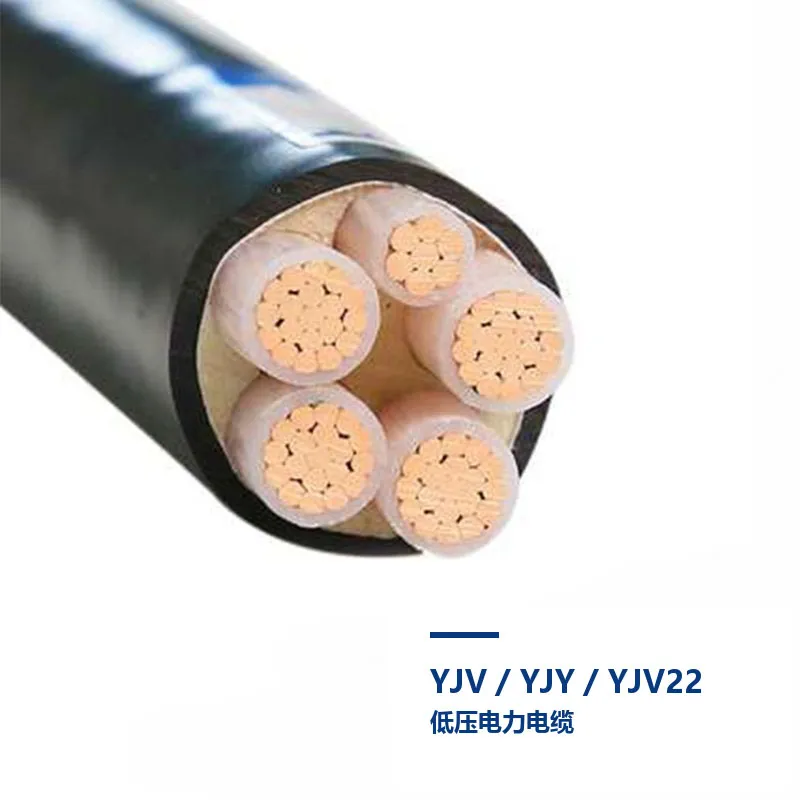
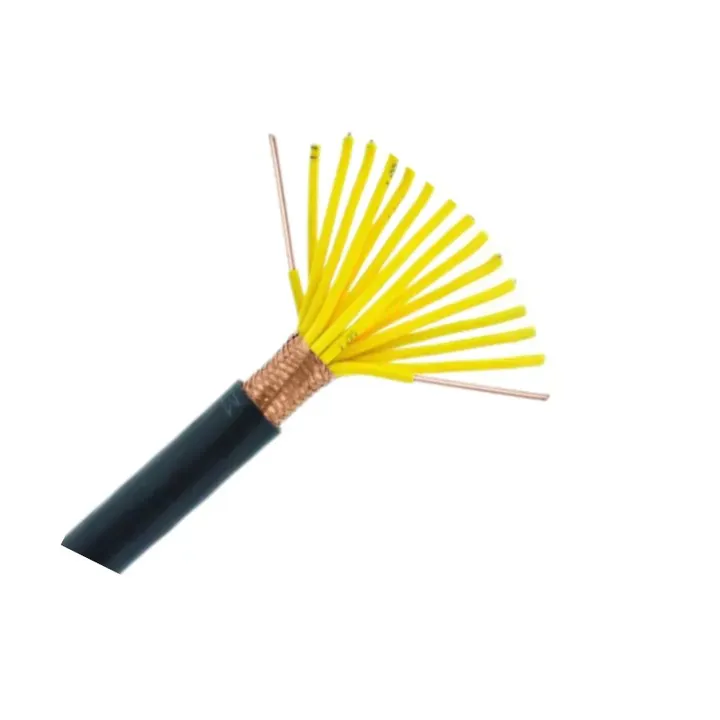
A **cable** is an assembly of two or more insulated conductors (wires) bundled together under a common protective sheath or jacket.
Simply put: one insulated conductor = wire; multiple insulated conductors in one jacket = cable.
A single wire (e.g., THHN, building wire) has only one conductor + insulation layer. It is lightweight and flexible but offers no mechanical protection.
A cable adds complexity: multiple conductors, individual insulation, optional fillers, overall shielding or armour, and an outer jacket for durability and grouping.
This extra structure makes cables suitable for fixed installations, direct burial, or environments needing organization and protection.
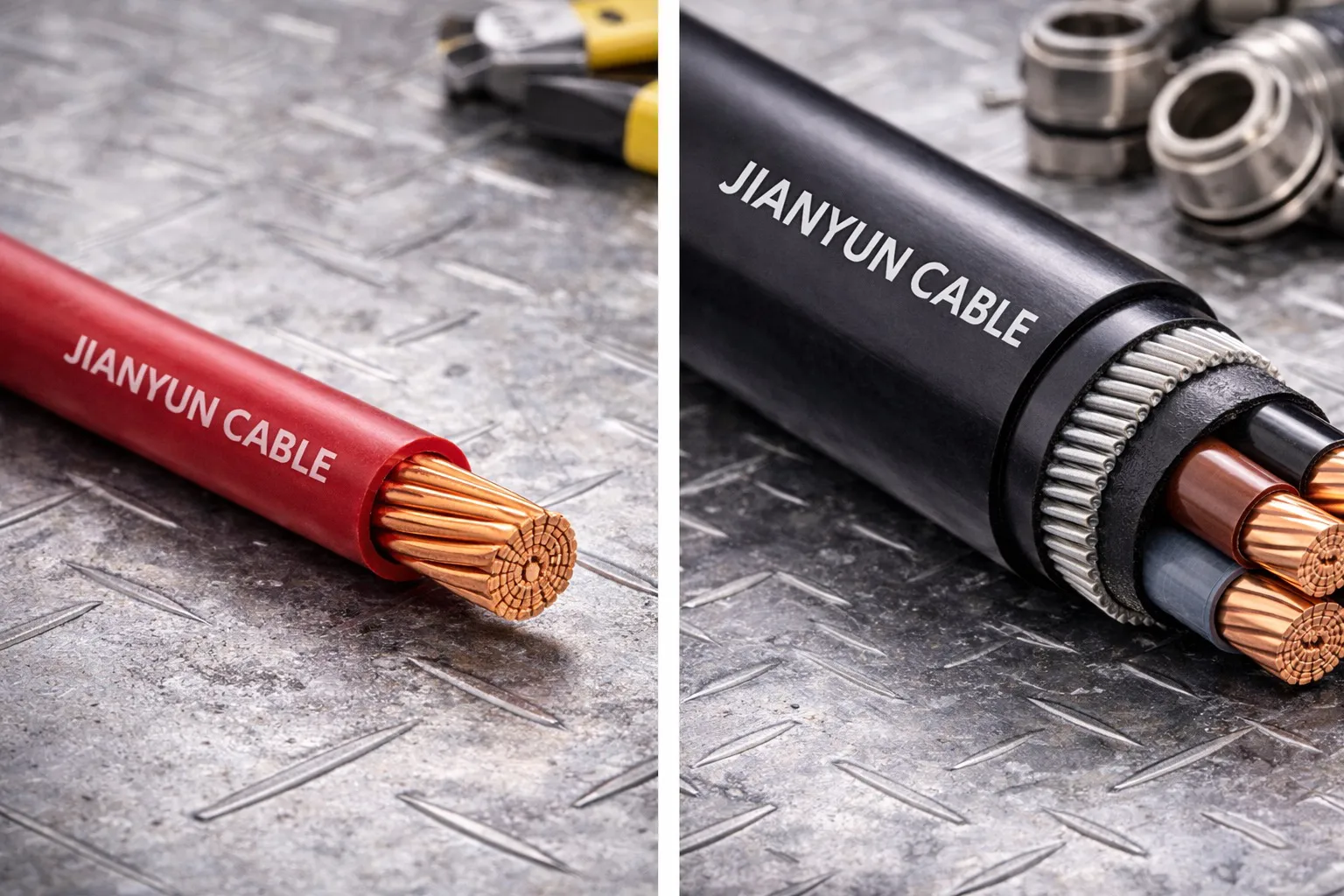
Technically, the transition happens as soon as you have **two or more insulated conductors** enclosed in a common outer jacket or sheath.
Even a simple twin-core flex (two wires inside one sheath) is classified as a cable. A single conductor with just insulation remains a wire.
Industry standards (IEC, NEC, BS) consistently define a cable as a multi-conductor assembly — there is no grey area once the second conductor is grouped under one sheath.
Wires are used inside panels, conduits, appliances and for point-to-point connections where individual routing is needed.
Cables are used for complete circuits: from consumer unit to sockets, underground feeders, machine wiring, and multi-phase power distribution.
Examples: 1.5 mm² single-core = wire; 3-core 2.5 mm² SWA = cable; 4-pair Cat6 = cable.
| Feature | Wire (Single Conductor) | Cable (Multi-Conductor) |
|---|---|---|
| Conductors | One | Two or more |
| Outer Protection | Insulation only | Overall sheath/jacket + optional armour |
| Typical Use | Inside panels, conduit pulls | Complete circuits, fixed installations |
| Mechanical Protection | Minimal | High (especially armoured) |
| Flexibility | High | Varies (lower with armour) |
| Cost per Meter | Lower | Higher |
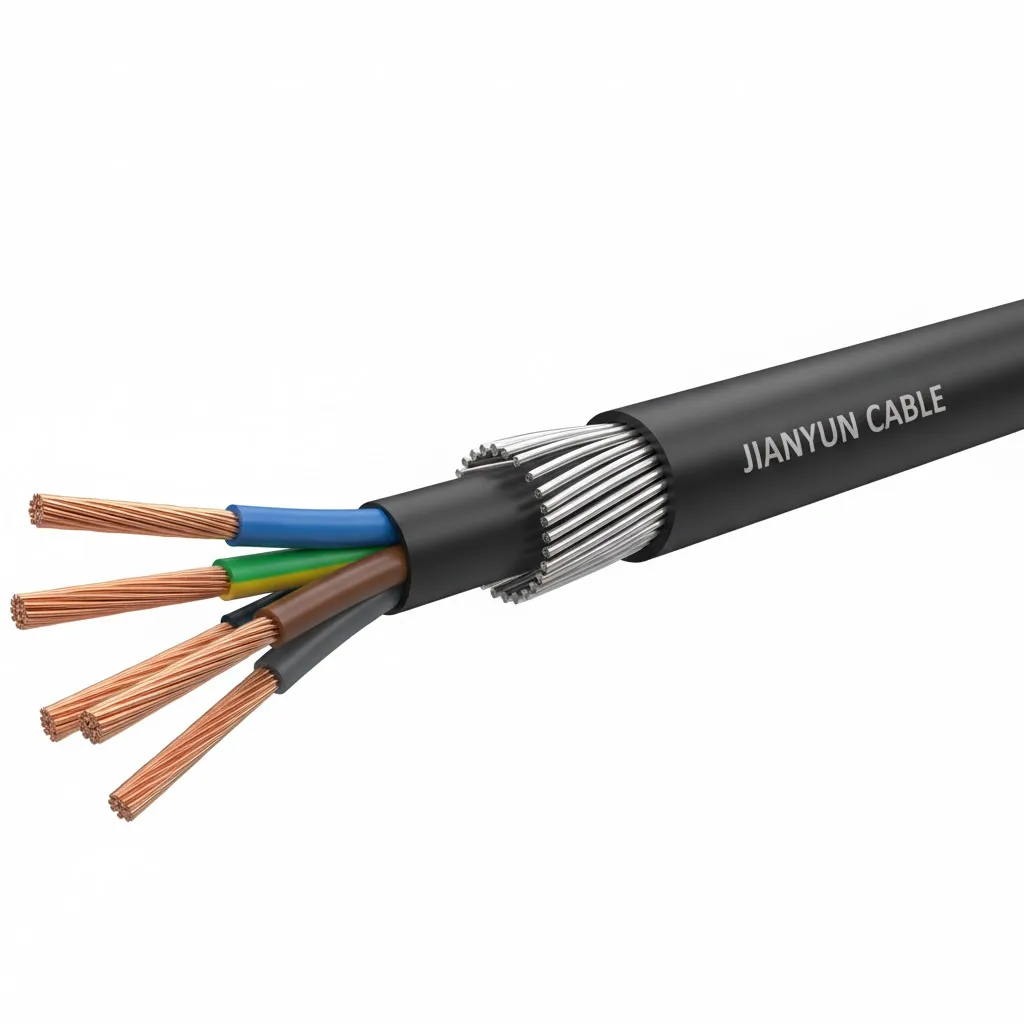
Use single wires when pulling through conduit, wiring inside panels or connecting appliances point-to-point.
Choose cables for complete fixed circuits, underground runs, multi-phase supply or where grouping and protection are required.
Always follow local electrical codes — many residential and commercial installations mandate cables for final circuits.
It is a cable – two conductors inside one outer sheath meet the definition.
Only inside conduit or panels. Most codes require sheathed cables for fixed wiring to sockets and lights.
Yes – once two or more insulated conductors share a common outer jacket, it becomes a cable.
Need the right solution for your next project? Browse our full range of premium Armoured Power Cables and Flexible Control Cables. Contact us today for expert advice!
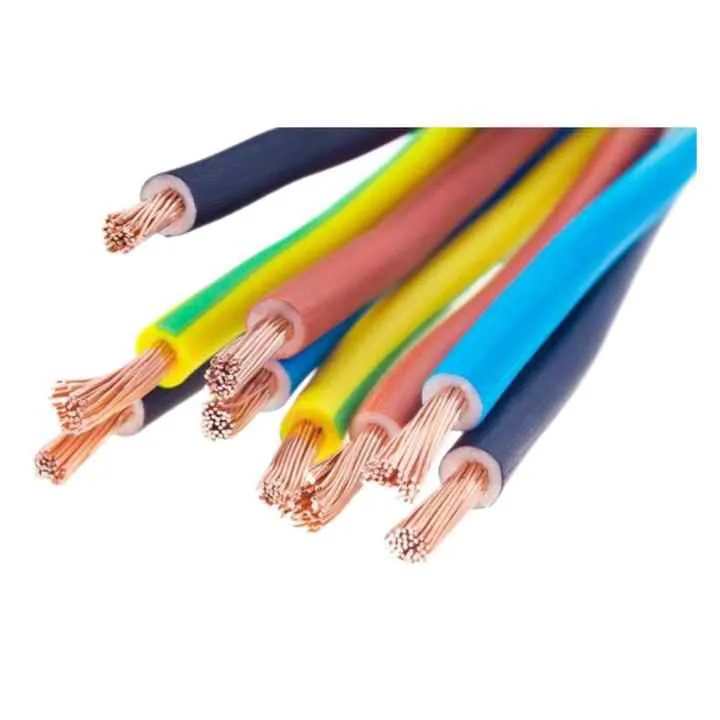
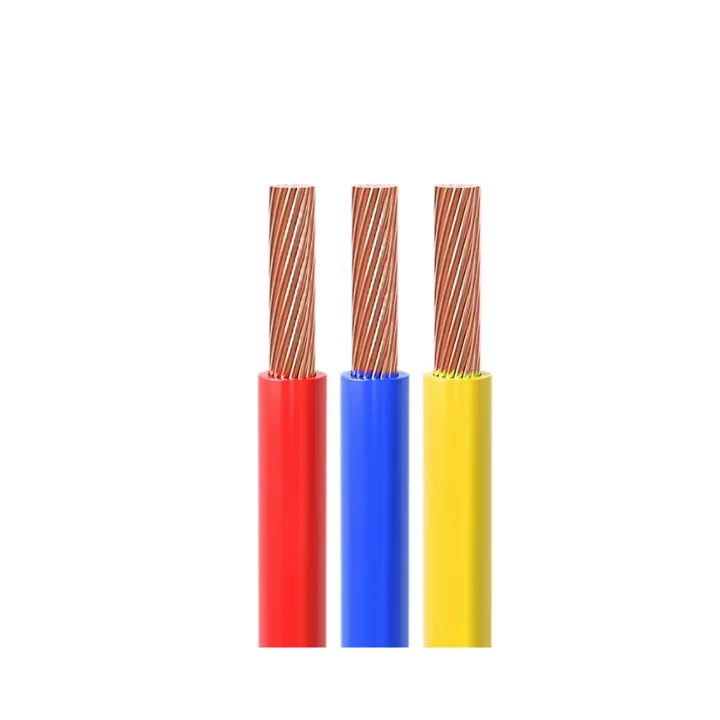
Flexible copper electrical wire with stranded copper conductor, PVC insulation a
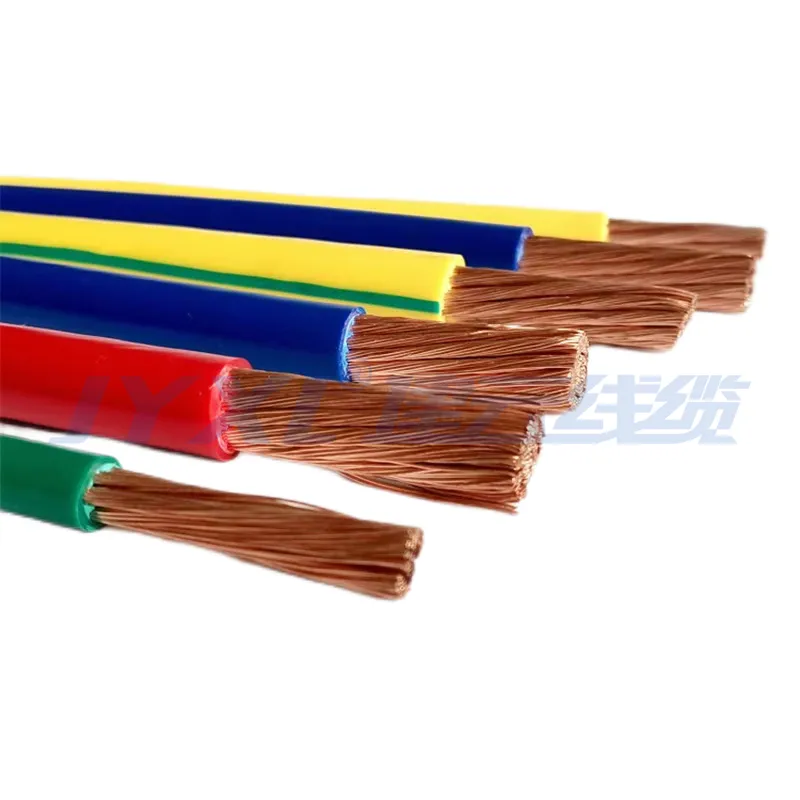
H07V-K flexible electrical wire with 1.5mm² and 2.5mm² stranded copper conductor
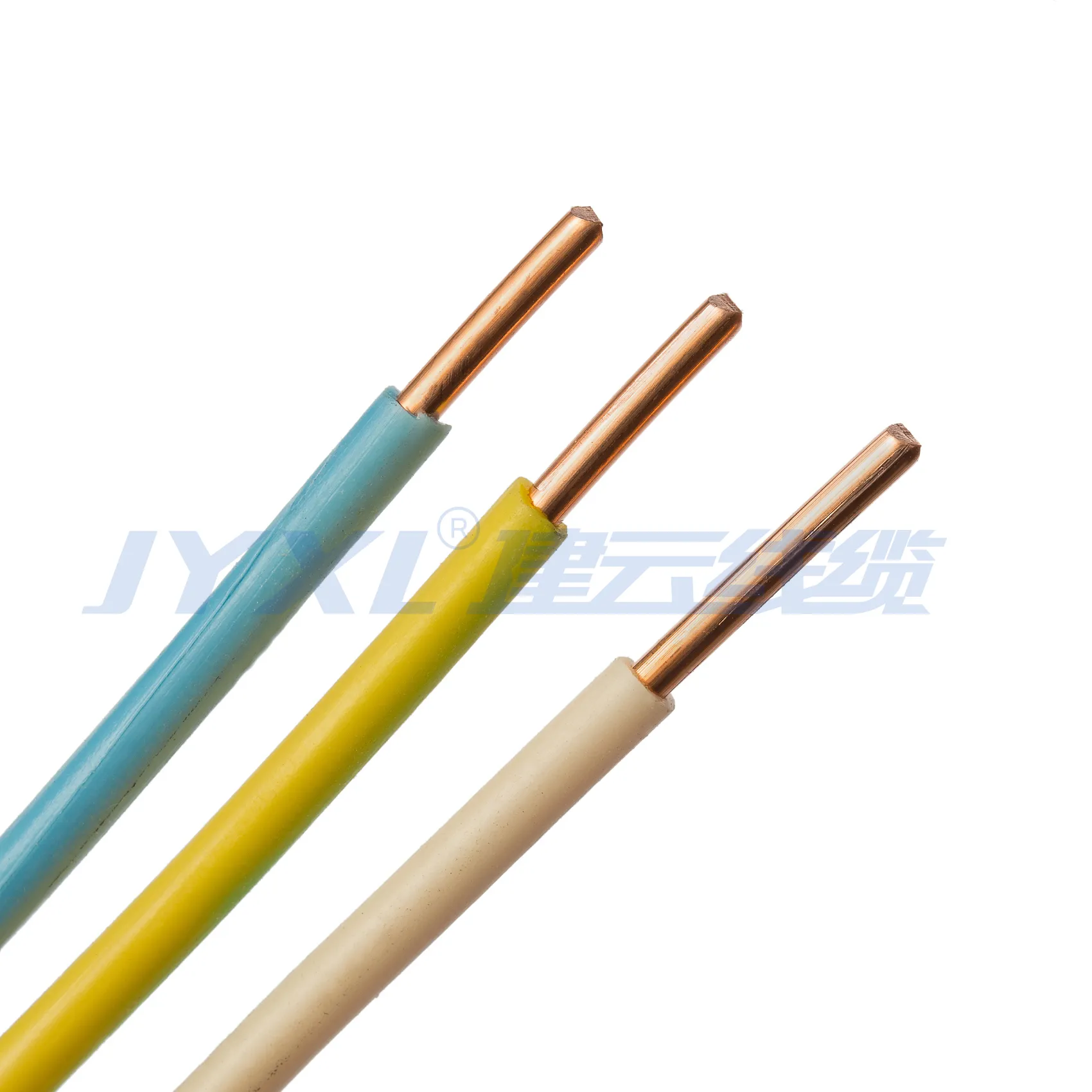
Jianyun H07V-U Solid Copper PVC Wire is a single core rigid electrical wire manu
CE Certification 450/750v H07VVF Flexible Copper PVC Insulated Ac Cable 3*2.5 Mm