Keep up to date with our latest company news and relevant industry knowledge.
Time: 2026-02-05 11:30:56 Source: Henan Province Jianyun Cable Co., Ltd.
By Jianyun Cable – Professional Manufacturer of Quality Electrical Cables
AAC, AAAC, and ACSR are the three most widely used bare overhead conductors in power transmission and distribution lines worldwide. Each type has distinct material composition, mechanical properties, electrical performance, and ideal applications. Understanding their key differences helps engineers, utilities, and contractors select the most appropriate conductor for specific projects — balancing cost, strength, conductivity, corrosion resistance, and span capability. This guide explains each type clearly and compares them directly.
Bare overhead conductors carry electricity without any insulation layer. The choice between AAC, AAAC, and ACSR depends on line voltage, span length, environmental conditions (corrosion, ice, wind), and economic factors. All three use aluminum as the primary current-carrying material because of its excellent conductivity-to-weight ratio, but they differ significantly in reinforcement and alloy composition.
AAC consists entirely of pure aluminum strands (usually 1350-H19 grade). It offers the highest electrical conductivity among the three types but has the lowest mechanical strength.
Key characteristics:
AAAC uses aluminum alloy wires (typically 6201 or 6101 series) instead of pure aluminum. The alloy provides significantly higher mechanical strength while retaining good conductivity.
Key characteristics:
ACSR combines aluminum outer strands (for conductivity) with a galvanized steel core (for mechanical strength). The steel core allows very long spans and high loading.
Key characteristics:
| Parameter | AAC | AAAC | ACSR |
|---|---|---|---|
| Material Composition | 100% pure aluminum | Aluminum alloy (6201/6101) | Aluminum + galvanized steel core |
| Electrical Conductivity | Highest (~61% IACS) | Medium (~52–53% IACS) | Good (~60% IACS, depending on Al/steel ratio) |
| Tensile Strength | Low | Medium–High | Very High |
| Weight per Unit Length | Lightest | Light | Heaviest |
| Maximum Span Capability | Short–Medium | Medium–Long | Longest |
| Corrosion Resistance | Good | Excellent | Moderate (steel core vulnerable) |
| Sag Performance | Higher sag | Good | Lowest sag |
| Cost | Lowest | Medium | Higher |
| Typical Application | Short spans, urban LV distribution | Coastal, corrosive areas, MV/LV lines | Transmission lines, long spans |
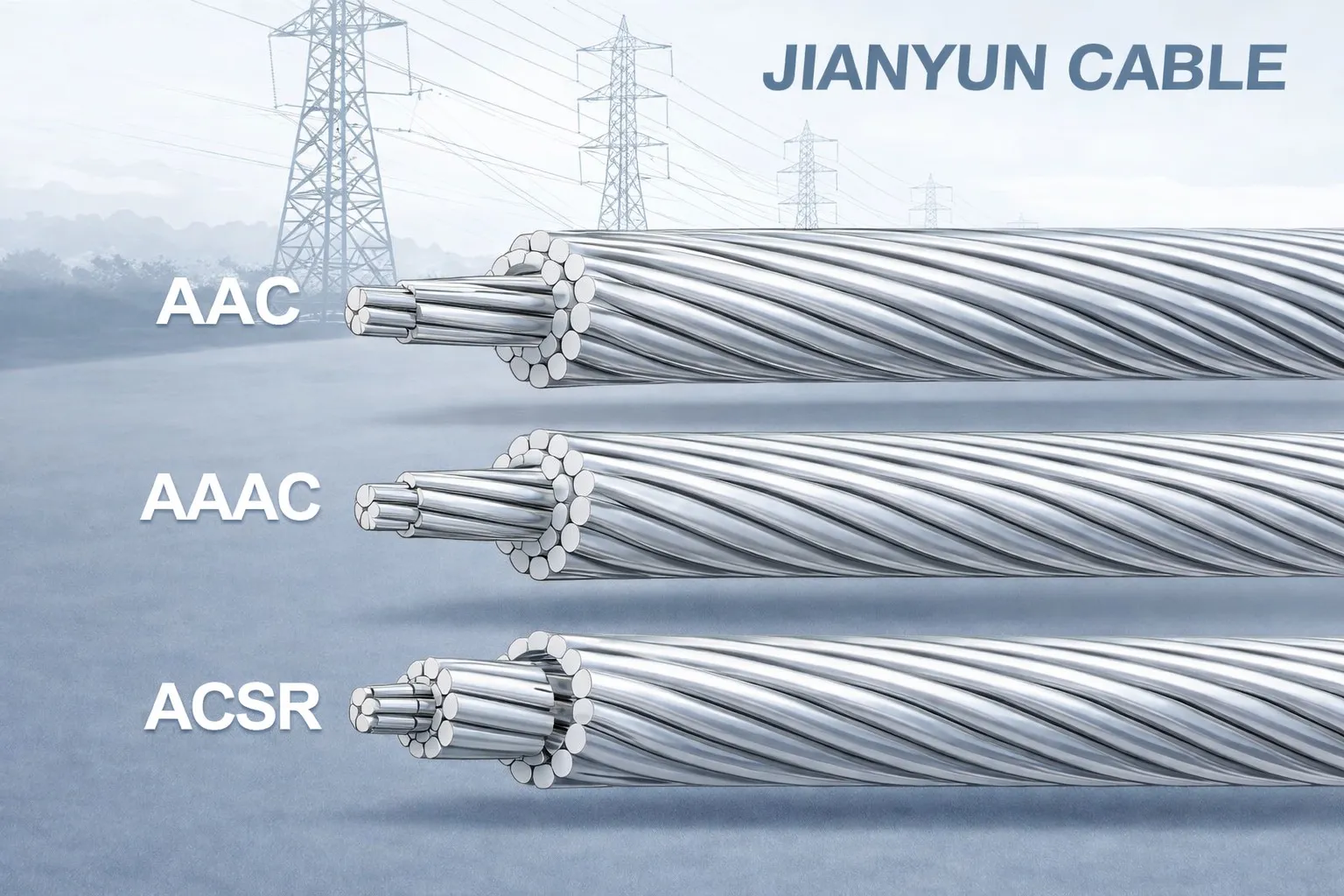
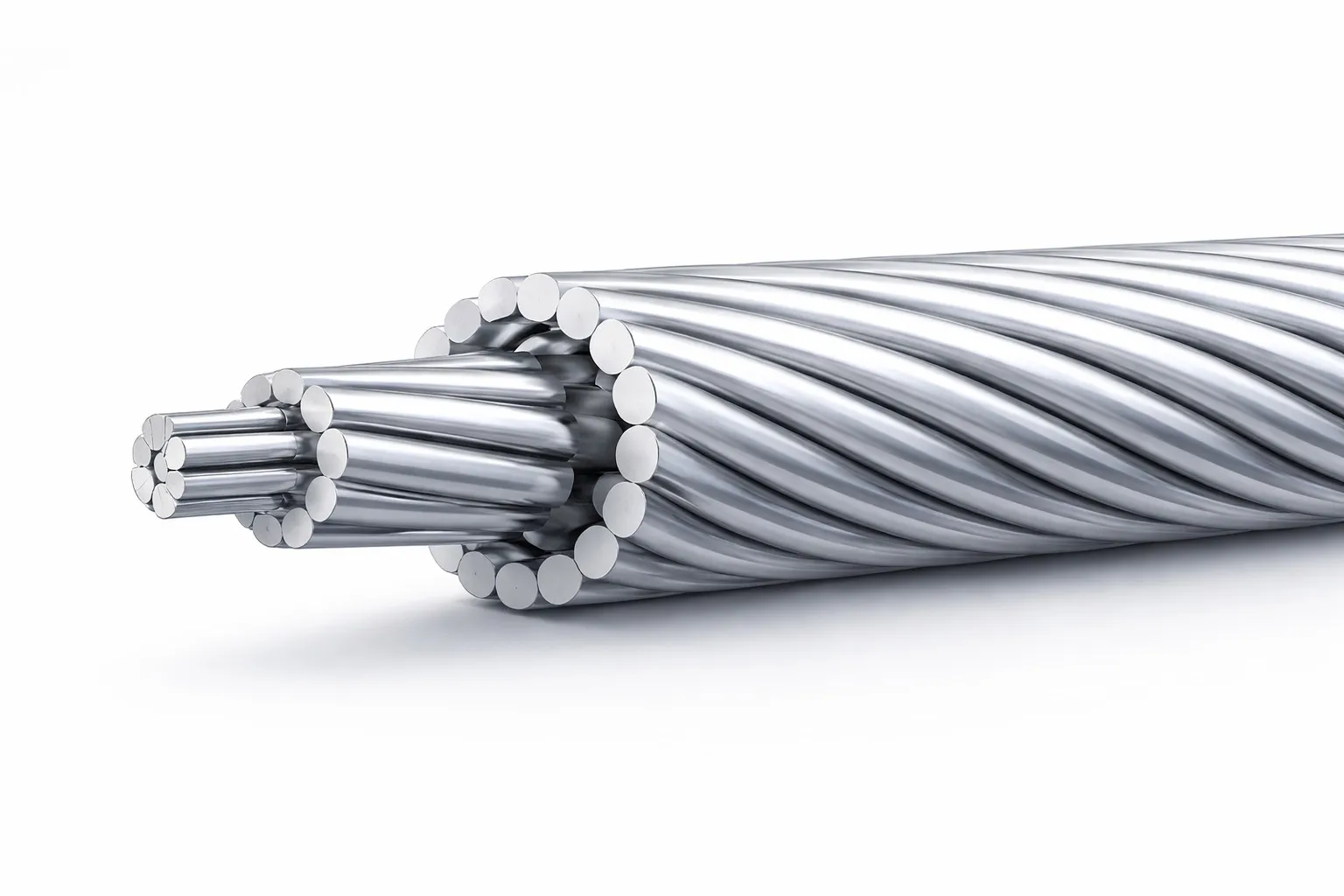
AAC, AAAC, and ACSR each excel in specific scenarios — there is no single “best” conductor. AAC offers the highest conductivity at the lowest cost but limited strength. AAAC provides an excellent balance of strength, conductivity, and corrosion resistance. ACSR delivers unmatched mechanical performance and span capability, making it the backbone of high-voltage transmission networks worldwide. Modern projects often combine these types strategically across different sections of the network to optimize performance and economics.
Need high-quality AAC, AAAC, or ACSR conductors manufactured to international standards? Contact Henan Province Jianyun Cable Co., Ltd. — your reliable partner for bare overhead conductor solutions tailored to your transmission and distribution requirements.
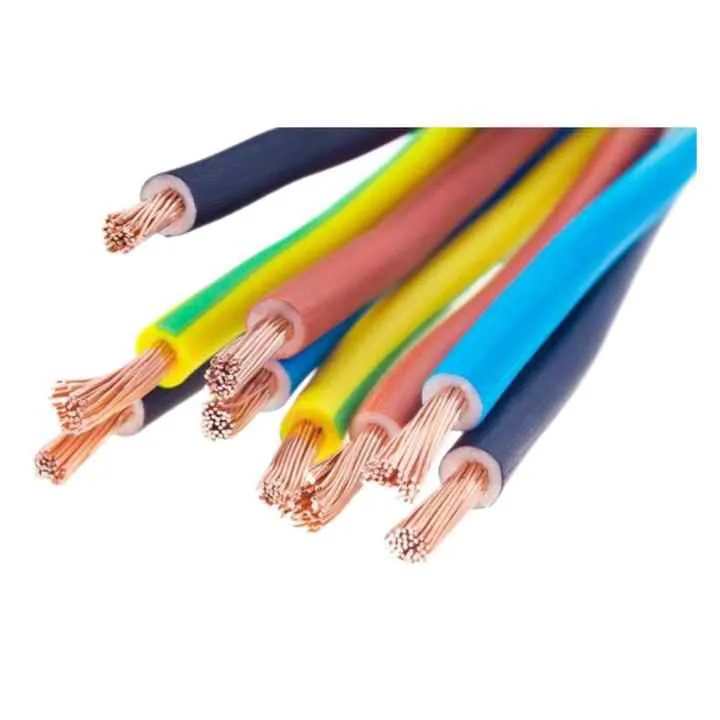
Flexible copper electrical wire with stranded copper conductor, PVC insulation a
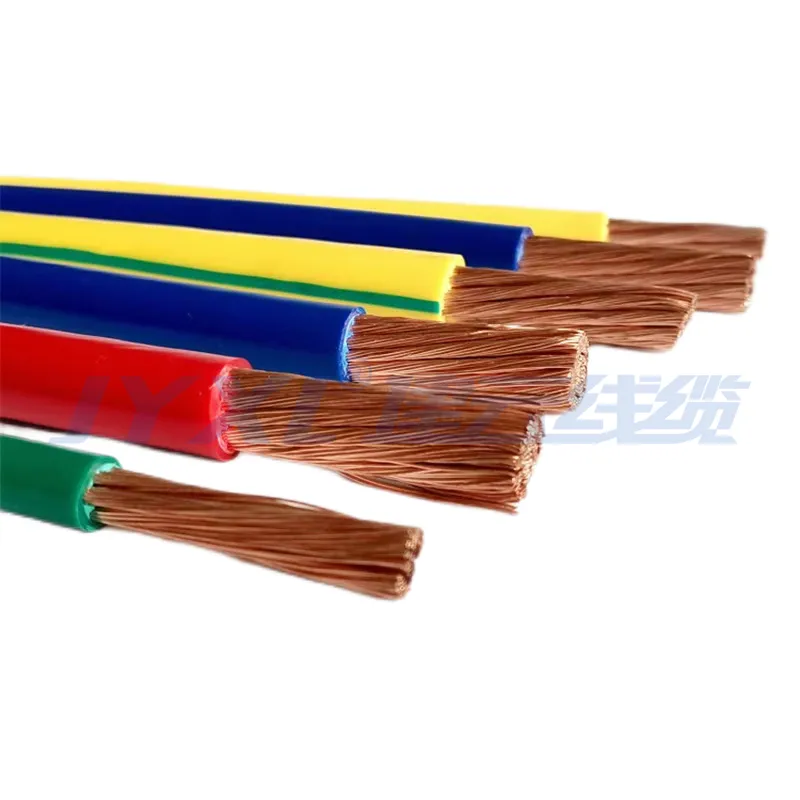
H07V-K flexible electrical wire with 1.5mm² and 2.5mm² stranded copper conductor
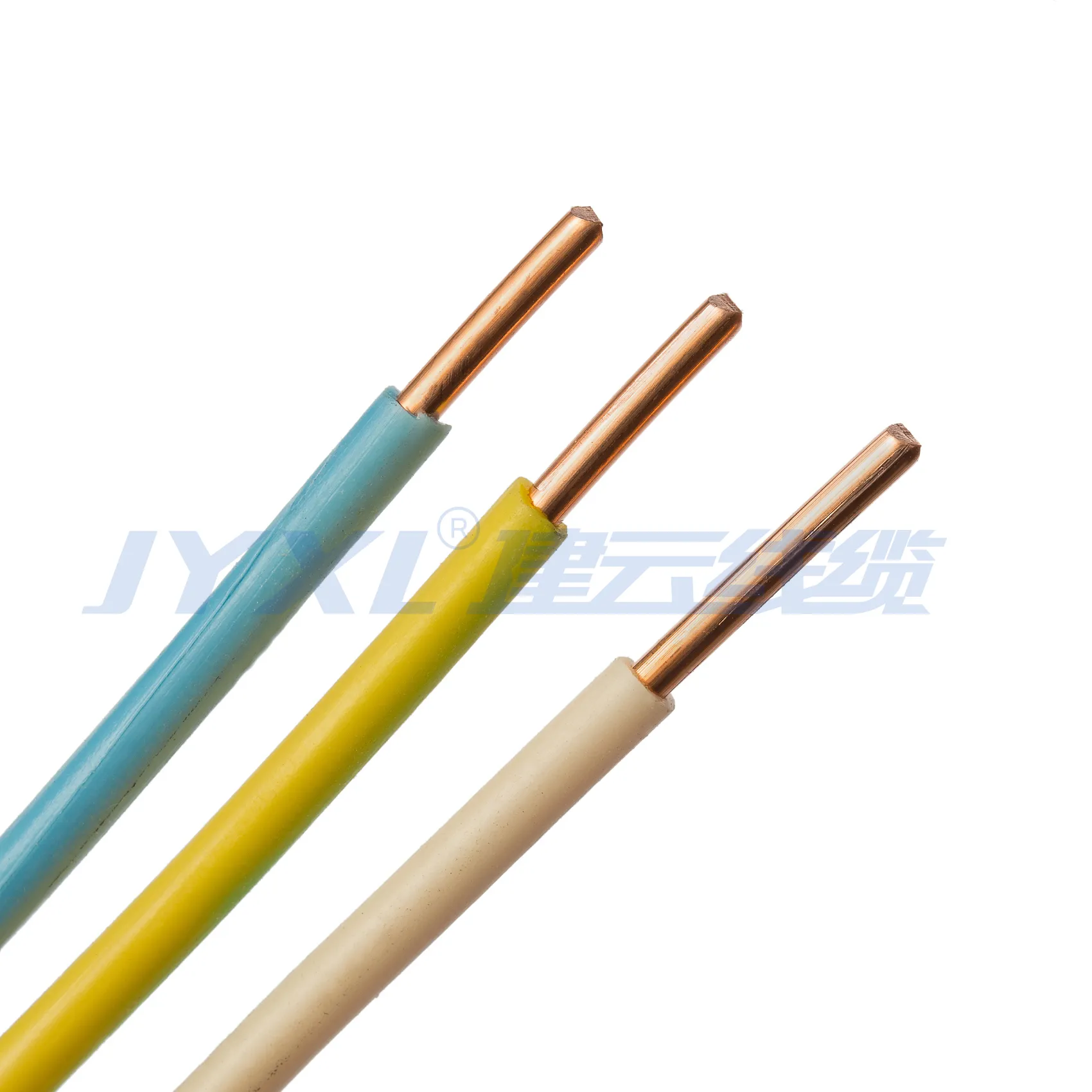
Jianyun H07V-U Solid Copper PVC Wire is a single core rigid electrical wire manu
CE Certification 450/750v H07VVF Flexible Copper PVC Insulated Ac Cable 3*2.5 Mm