Top Certifications to Look for When Buying Electrical Cables
Time: 2026-01-06 08:43:09
Source: Henan Province Jianyun Cable Co., Ltd.
Contents
When purchasing electrical cables, certifications are your assurance of safety, quality, and compliance. Poorly certified or counterfeit electrical cables can lead to fires, shocks, or system failures. This 2025 guide highlights the top certifications to look for in electrical cables, explains their significance, and provides a practical buying guide to help you choose reliable electrical cables for home, commercial, or industrial use.
1. Introduction: Why Certifications Matter for Electrical Cables
Certifications verify that electrical cables meet rigorous testing for electrical performance, fire resistance, mechanical strength, and environmental impact. They ensure electrical cables comply with international or regional standards, reducing risks and ensuring compatibility. Always prioritize certified electrical cables from reputable manufacturers to protect your investment and safety.
2. Top Certifications for Electrical Cables
-
UL (Underwriters Laboratories): US-based, tests electrical cables for safety against fire and shock. Look for UL-listed or UL-recognized marks on electrical cables for North American compliance.
-
CSA (Canadian Standards Association): Ensures electrical cables meet Canadian safety codes, similar to UL but with cold-weather testing. Essential for cross-border use of electrical cables.
-
CE Mark: Indicates conformity with EU health, safety, and environmental requirements for electrical cables. Mandatory for selling electrical cables in Europe.
-
VDE (Verband der Elektrotechnik): German certification for high-quality electrical cables, focusing on durability and performance. VDE-marked electrical cables are trusted globally.
-
CPR (Construction Products Regulation): EU fire performance classification for electrical cables (Eca to B2ca). Critical for building-installed electrical cables to minimize fire spread.
-
RoHS (Restriction of Hazardous Substances): Ensures electrical cables are free from toxic materials like lead and mercury. Important for eco-friendly electrical cables.
-
BASEC (British Approvals Service for Cables): UK third-party testing for electrical cables, verifying consistency in manufacturing. BASEC-approved electrical cables guarantee reliability.
-
HAR (Harmonized Approval): European harmonized standard for electrical cables, ensuring uniform quality across countries.
-
ISO 9001: Quality management certification for manufacturers of electrical cables, indicating consistent production processes.
-
IEC Standards (e.g., IEC 60502): International benchmarks for electrical cables performance, widely referenced for global trade.
3. Certifications Comparison Table
|
Certification
|
Region/Focus
|
Key Benefits for Electrical Cables
|
Why It's Essential
|
|
UL
|
US/Safety
|
Fire/shock resistance
|
Meets NEC codes
|
|
CSA
|
Canada/Environmental
|
Cold-weather durability
|
CEC compliance
|
|
CE Mark
|
EU/General
|
Health/environmental safety
|
EU market access
|
|
VDE
|
Germany/Quality
|
Performance testing
|
Global trust
|
|
CPR
|
EU/Fire Safety
|
Flame/smoke ratings
|
Building regulations
|
|
RoHS
|
Global/Environmental
|
No hazardous substances
|
Eco-compliance
|
4. Buying Guide: How to Use Certifications When Selecting Electrical Cables
-
Identify your needs: For home wiring, prioritize UL/CSA/CE; for industrial, add VDE/CPR.
-
Check labels: Look for printed certification marks on electrical cables and packaging.
-
Verify authenticity: Cross-check with manufacturer documentation or third-party databases.
-
Match to environment: Use CPR-rated electrical cables in buildings; RoHS for green projects.
-
Consider voltage/load: Ensure certifications cover your electrical cables' ampacity and insulation.
-
Buy from trusted sources: Reputable suppliers guarantee certified electrical cables.
-
Budget wisely: Certified electrical cables may cost more but save on risks and replacements.
5. Common Mistakes to Avoid When Buying Electrical Cables
-
Ignoring regional certifications – e.g., using non-CE electrical cables in Europe.
-
Overlooking fire ratings – non-CPR electrical cables fail building codes.
-
Buying cheap fakes – uncertified electrical cables pose serious hazards.
-
Mismatching applications – indoor electrical cables won't survive outdoor use.
6. Final Thoughts
Prioritizing top certifications ensures your electrical cables are safe, durable, and compliant. By following this guide, you'll confidently select quality electrical cables that protect your home or business.
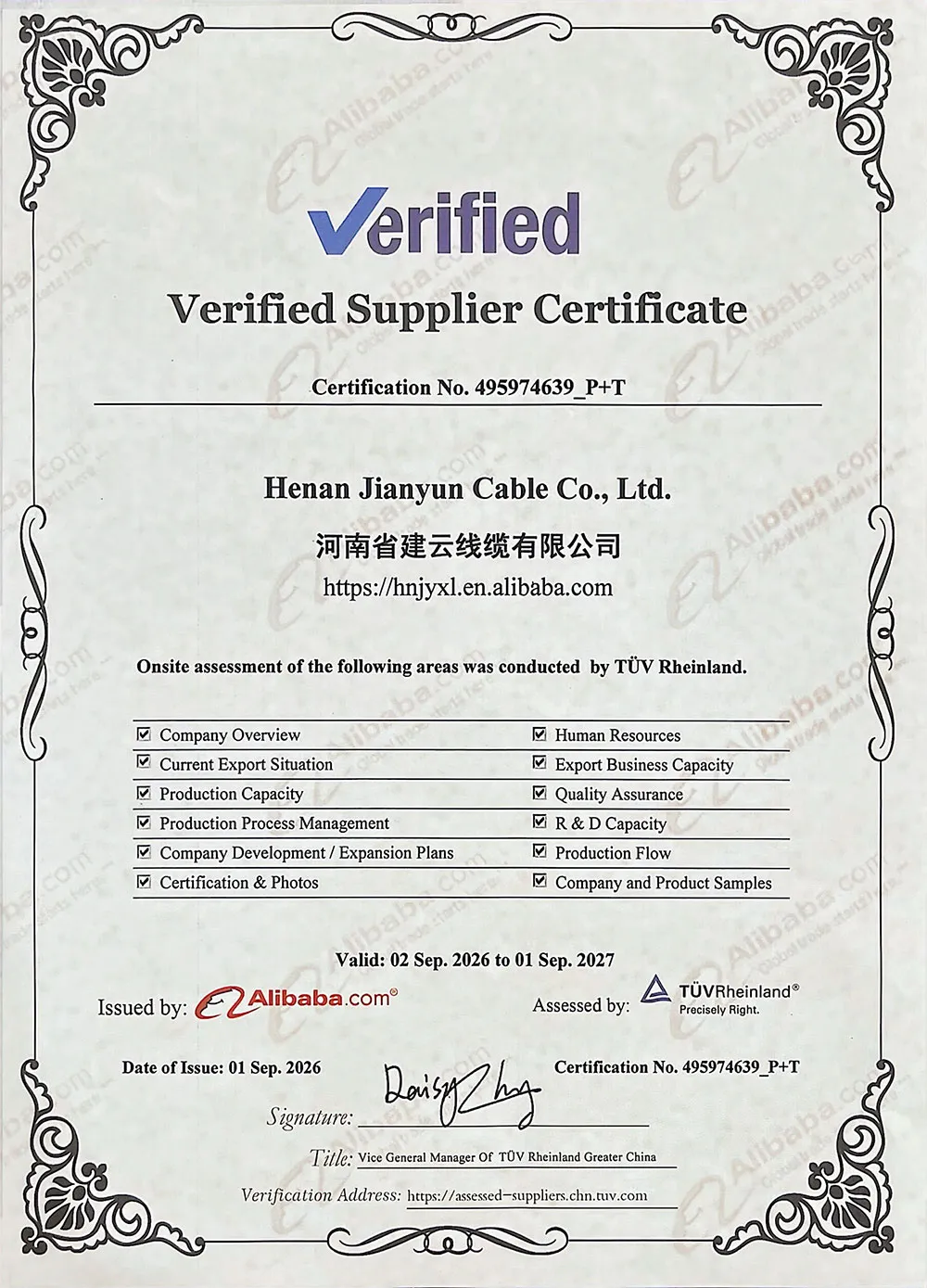
Need certified electrical cables for your project? Contact Henan Province Jianyun Cable Co., Ltd. for reliable options and expert advice.