Keep up to date with our latest company news and relevant industry knowledge.
Time: 2026-01-20 11:49:56 Source: Henan Province Jianyun Cable Co., Ltd.
XLPE (Cross-Linked Polyethylene) power cables have become the gold standard in modern power distribution and transmission systems worldwide. Replacing traditional PVC-insulated cables in most medium and high-voltage applications, XLPE offers superior thermal, electrical, and mechanical performance. This 2025 technical guide explains what XLPE cable is, how it is constructed, its major advantages, and why it is the preferred choice for reliable, long-life power networks.
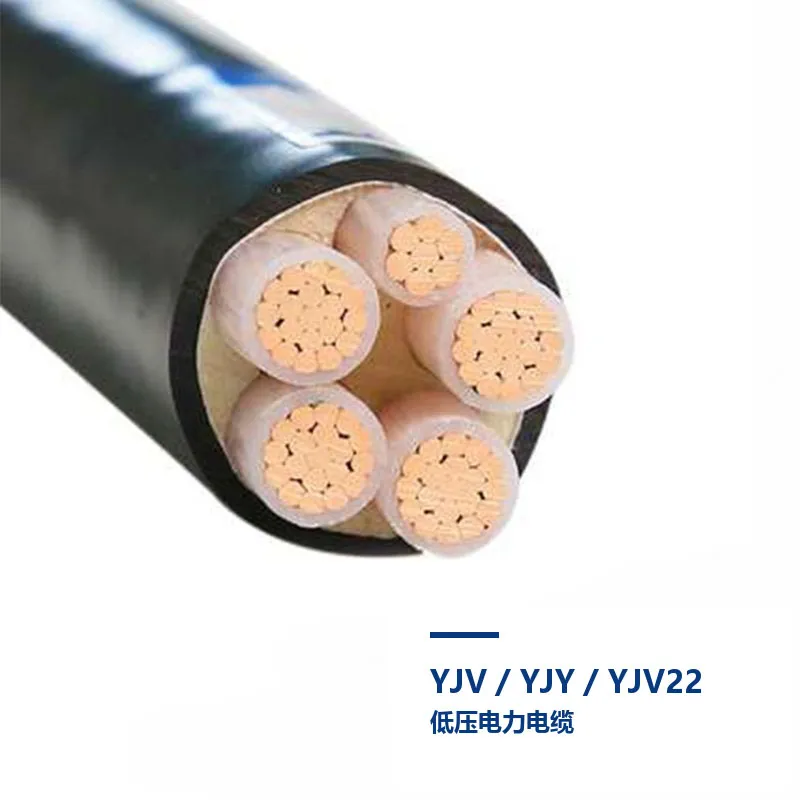
XLPE cable is a power cable with Cross-Linked Polyethylene as the primary insulation material. The polyethylene is chemically or physically cross-linked (using peroxide, silane, or electron beam irradiation) to form a three-dimensional molecular structure. This cross-linking dramatically improves the material's thermal stability, mechanical strength, and electrical properties compared to thermoplastic polyethylene or PVC.
XLPE cables are rated for continuous operation at 90°C (compared to 70°C for PVC), with short-circuit withstand temperatures up to 250°C, making them ideal for high-load and high-reliability applications.
A typical XLPE power cable consists of the following layers:
XLPE cables offer significant technical and economic benefits over traditional PVC-insulated cables:
| Advantage | XLPE Cable | Benefit |
|---|---|---|
| Higher Operating Temperature | 90°C continuous / 250°C short-circuit | Up to 30% higher current-carrying capacity |
| Better Electrical Properties | Lower dielectric loss, higher dielectric strength | Reduced power loss & longer life |
| Mechanical Strength | Higher tensile strength & abrasion resistance | Better handling & installation |
| Chemical & Water Resistance | Excellent resistance to moisture & chemicals | Ideal for underground & harsh environments |
| Longer Service Life | 40+ years expected life | Lower lifecycle cost |
| Fire Performance Options | Available in LSZH & fire-resistant versions | Safer in occupied buildings |
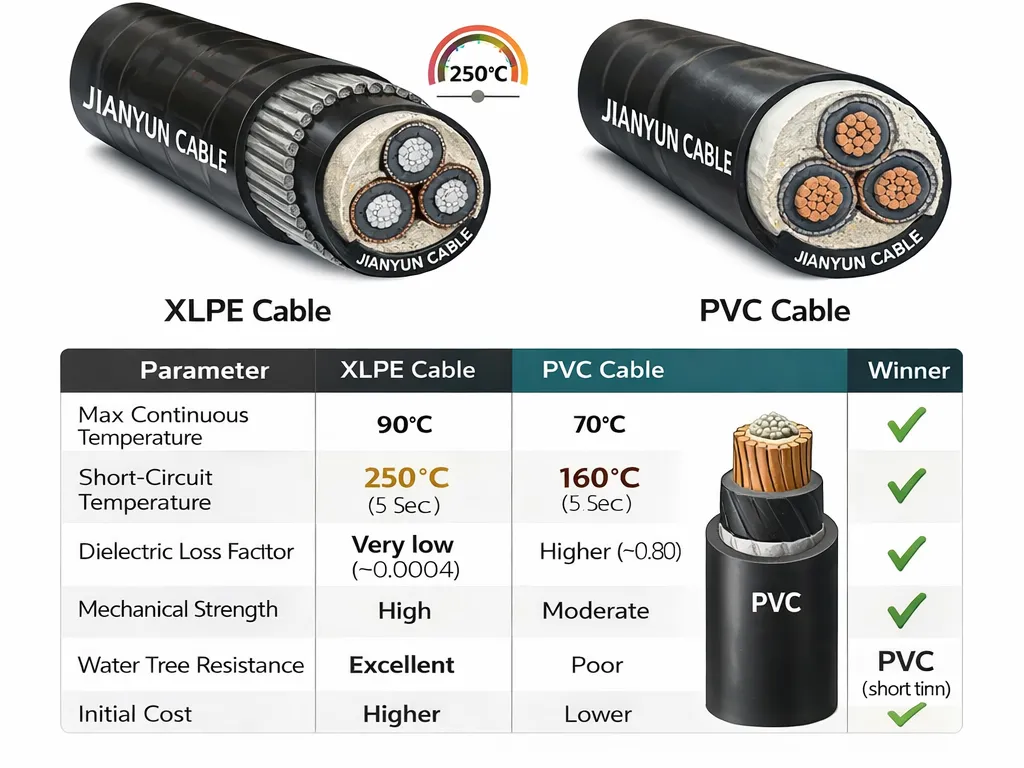
| Parameter | XLPE Cable | PVC Cable | Winner |
|---|---|---|---|
| Max Continuous Temperature | 90°C | 70°C | XLPE |
| Short-Circuit Temperature | 250°C (5 s) | 160°C (5 s) | XLPE |
| Dielectric Loss Factor | Very low (~0.0004) | Higher (~0.08) | XLPE |
| Mechanical Strength | High | Moderate | XLPE |
| Water Tree Resistance | Excellent | Poor | XLPE |
| Cost | Higher initial cost | Lower initial cost | PVC (short-term) |
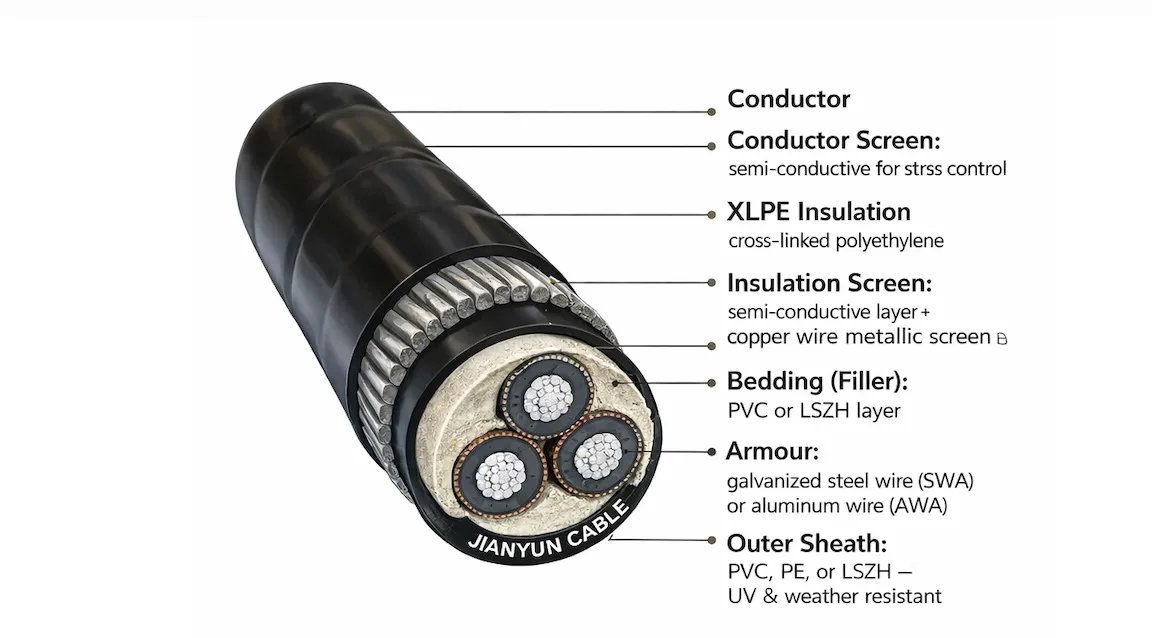
XLPE power cables represent the modern standard for reliable, high-performance power distribution. Their superior thermal stability, electrical properties, and long service life make them the first choice for most new and upgraded networks worldwide. Whether for underground distribution, industrial plants, or renewable energy connections, XLPE delivers safety, efficiency, and cost savings over the cable's entire lifecycle.
For premium XLPE power cables – single-core, three-core, armored, LSZH, fire-resistant – with full IEC compliance, rigorous testing, and dedicated technical support, contact Henan Province Jianyun Cable Co., Ltd. – your trusted partner for high-quality low and medium voltage XLPE solutions.
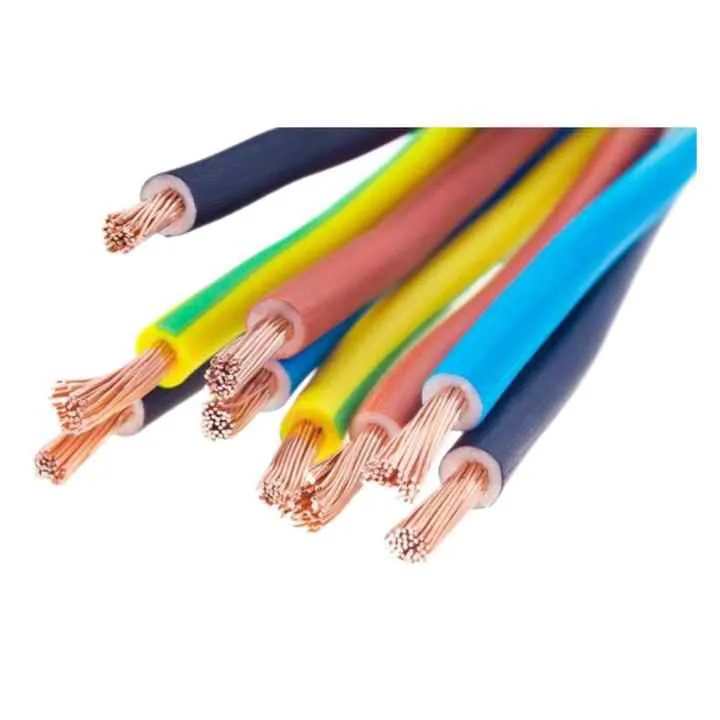
Flexible copper electrical wire with stranded copper conductor, PVC insulation a
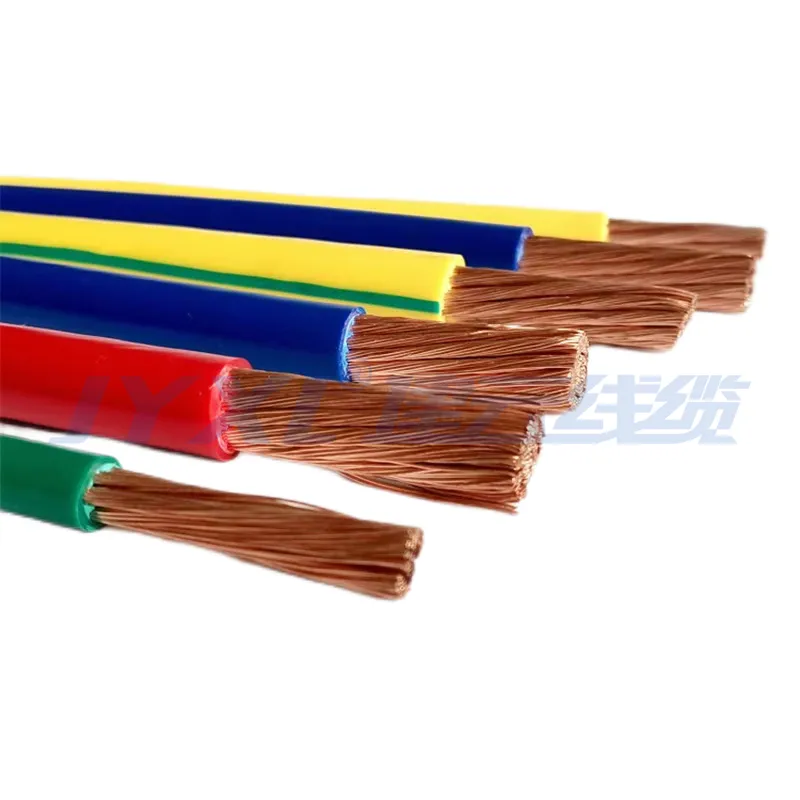
H07V-K flexible electrical wire with 1.5mm² and 2.5mm² stranded copper conductor
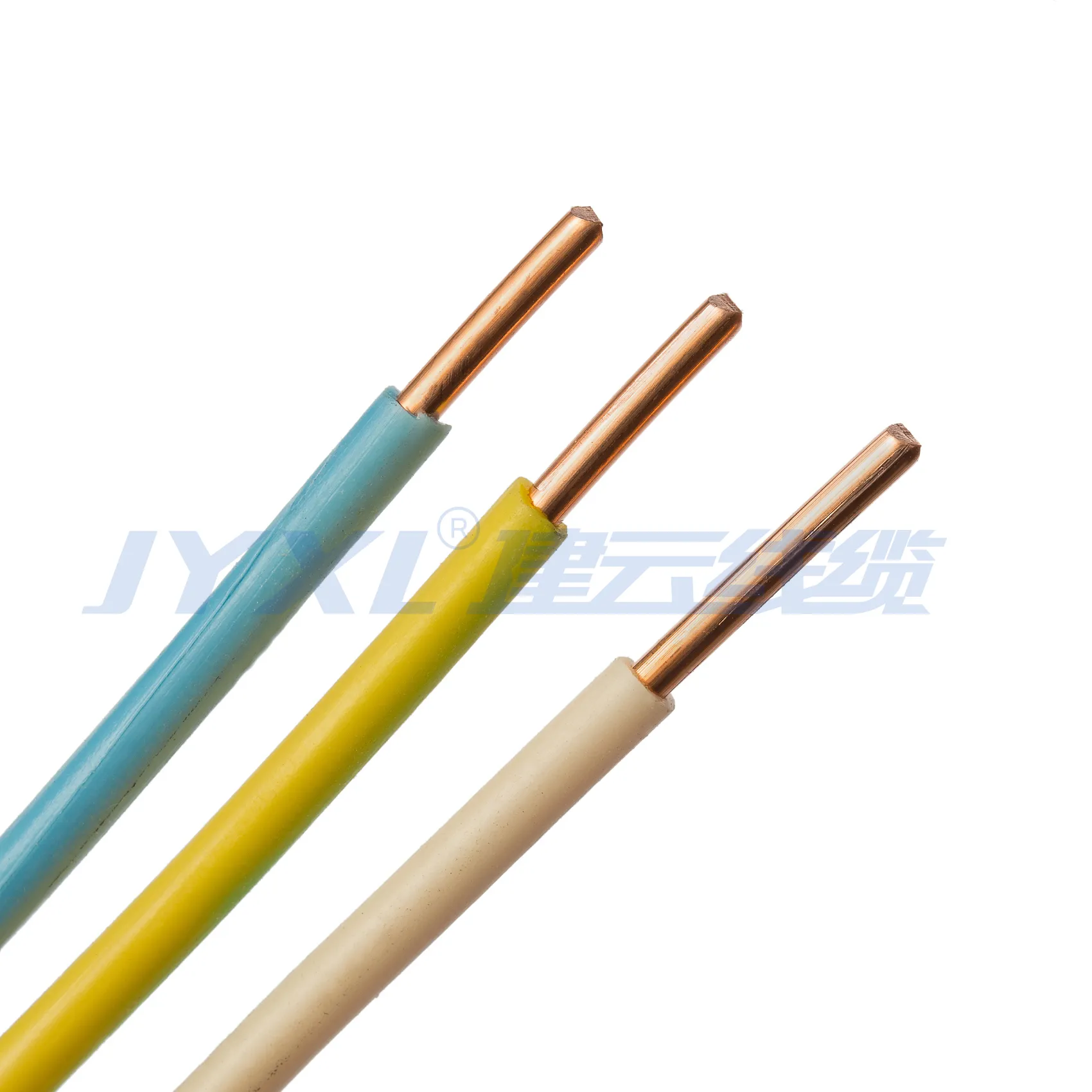
Jianyun H07V-U Solid Copper PVC Wire is a single core rigid electrical wire manu
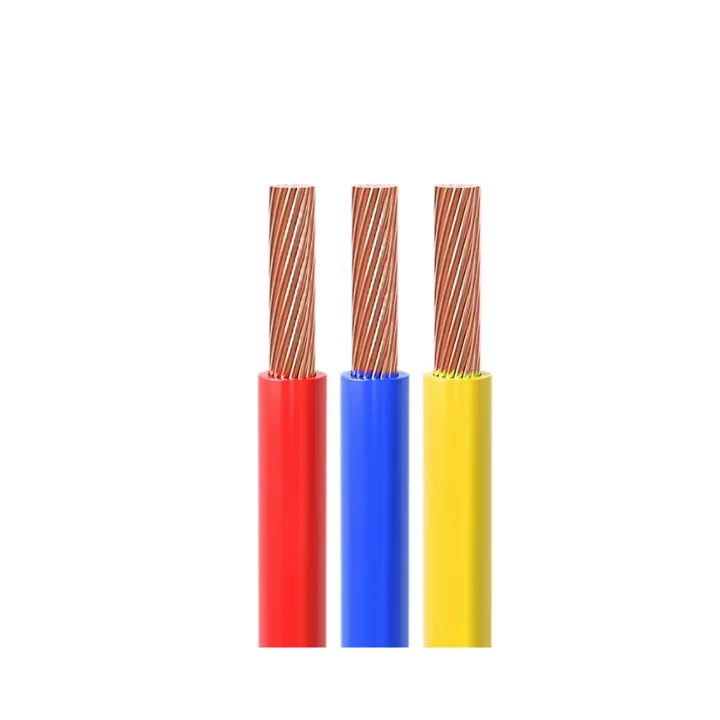
CE Certification 450/750v H07VVF Flexible Copper PVC Insulated Ac Cable 3*2.5 Mm