+86 13938808058 sales@jianyuncable.com
Blog
Blog

Keep up to date with our latest company news and relevant industry knowledge.

Home / Blog >Low, Medium, and High Voltage Cables: Technical Differences Explained

Low, Medium, and High Voltage Cables: Technical Differences Explained

Time: 2026-01-28 11:18:56 Source: Henan Province Jianyun Cable Co., Ltd.

By Jianyun Cable – Professional Manufacturer of Quality Electrical Cables

1. Introduction to Voltage Classification in Power Cables

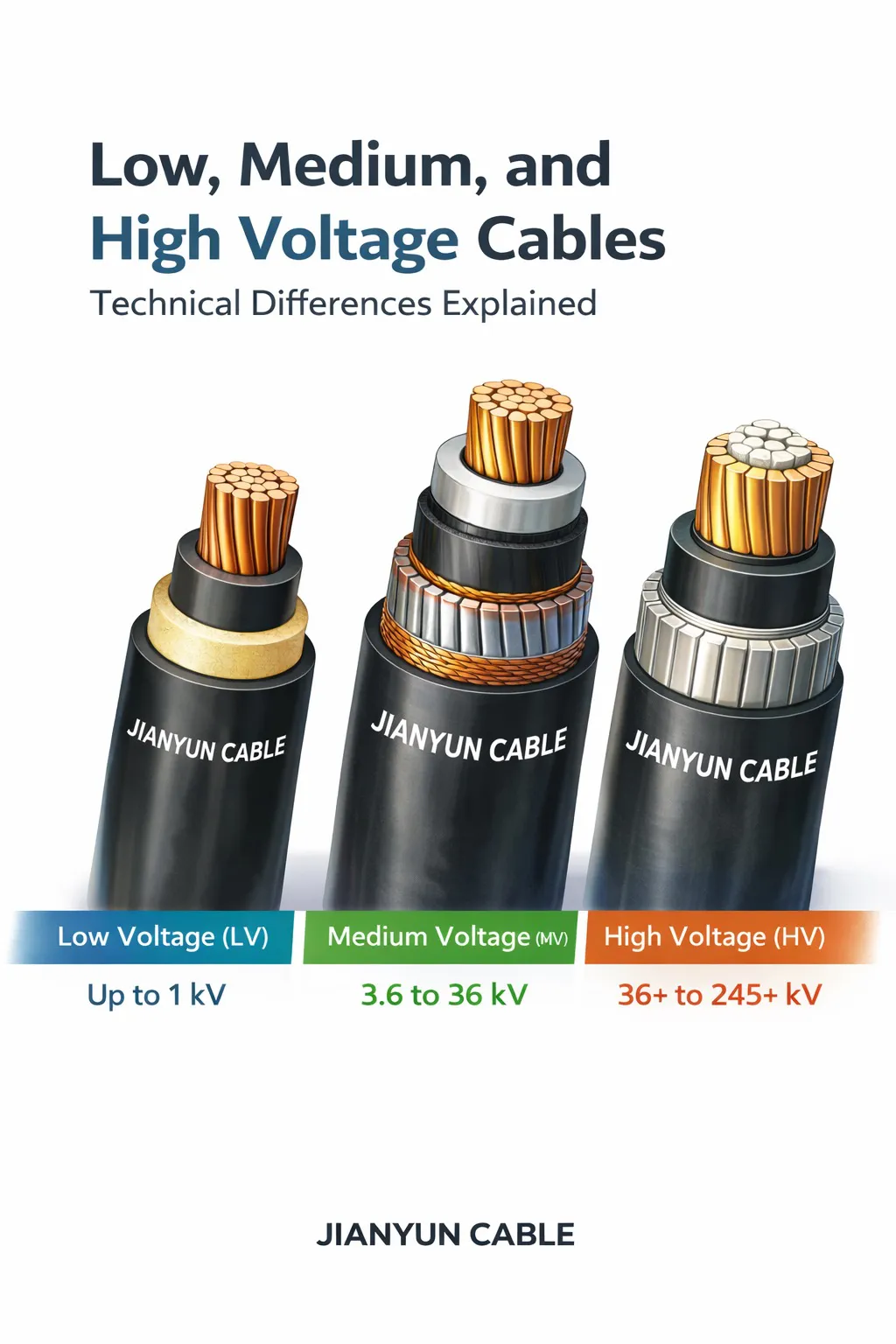
Power cables are classified by their rated voltage to ensure safe and efficient transmission of electrical energy from generation to end-user. The three primary categories — Low Voltage (LV)Medium Voltage (MV), and High Voltage (HV) cables — differ significantly in construction, insulation, testing, and application. Correct classification is critical for safety, cost optimization, and system reliability. This technical guide explains the key differences between low, medium, and high voltage cablesaccording to international standards (IEC, IEEE, ANSI) as of 2025.

2. Definitions and Voltage Ranges

International standards (IEC 60038, IEC 60183) define voltage classes as follows:

  • Low Voltage (LV) Cables: Rated voltage U₀/U(Uₘ) up to 0.6/1 kV (1.2 kV max) – most common for final distribution.
  • Medium Voltage (MV) Cables: U₀/U(Uₘ) from 1.8/3 kV to 18/30 kV (36 kV max) – primary distribution networks.
  • High Voltage (HV) Cables: U₀/U(Uₘ) from 36/66 kV to 150/245 kV and above – bulk power transmission and large industrial feeds.

Note: Extra High Voltage (EHV) starts above 245 kV and Ultra High Voltage (UHV) above 800 kV — these are specialized and less common in industrial contexts.

3. Construction Differences

Construction complexity increases with voltage:
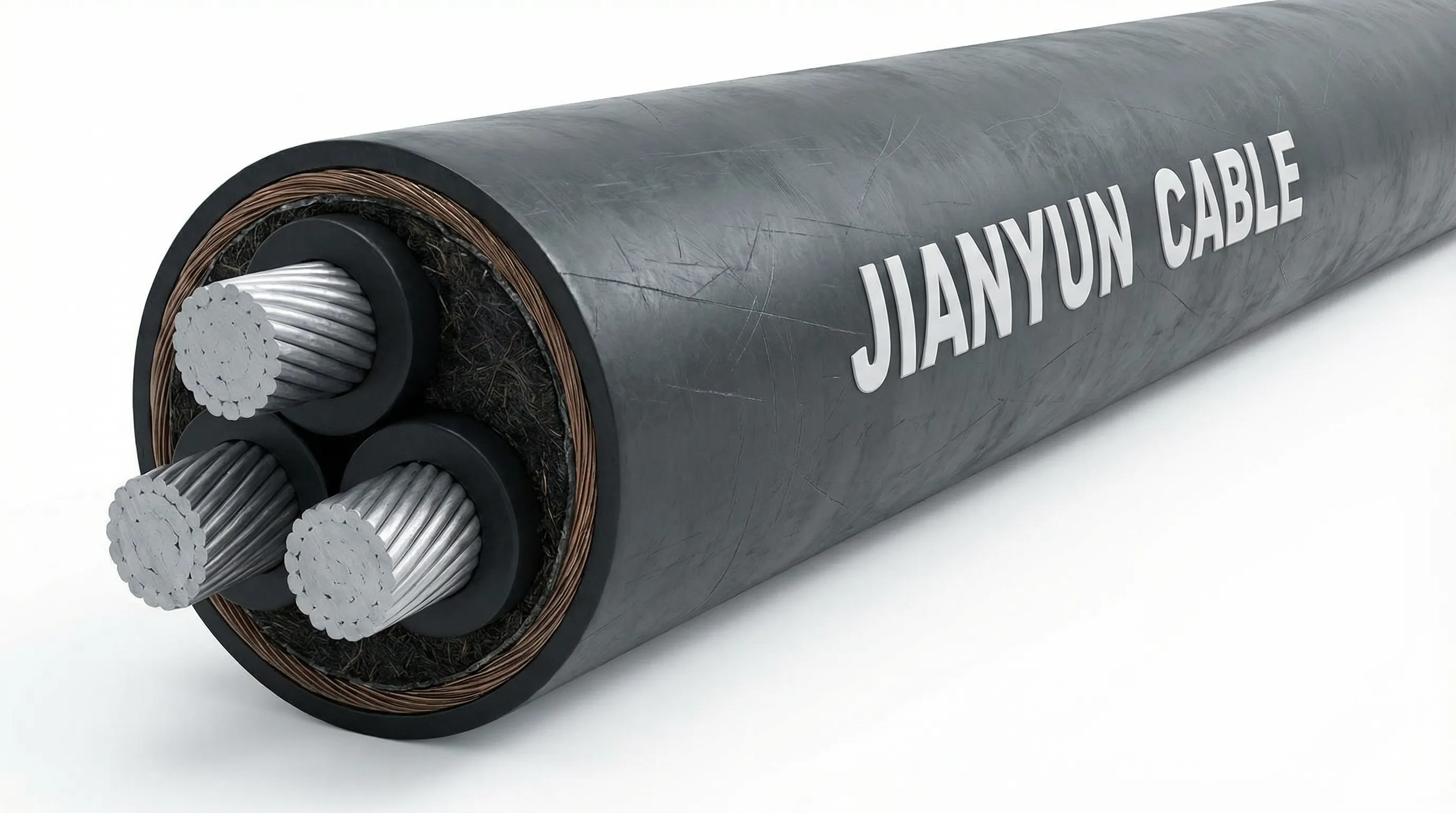
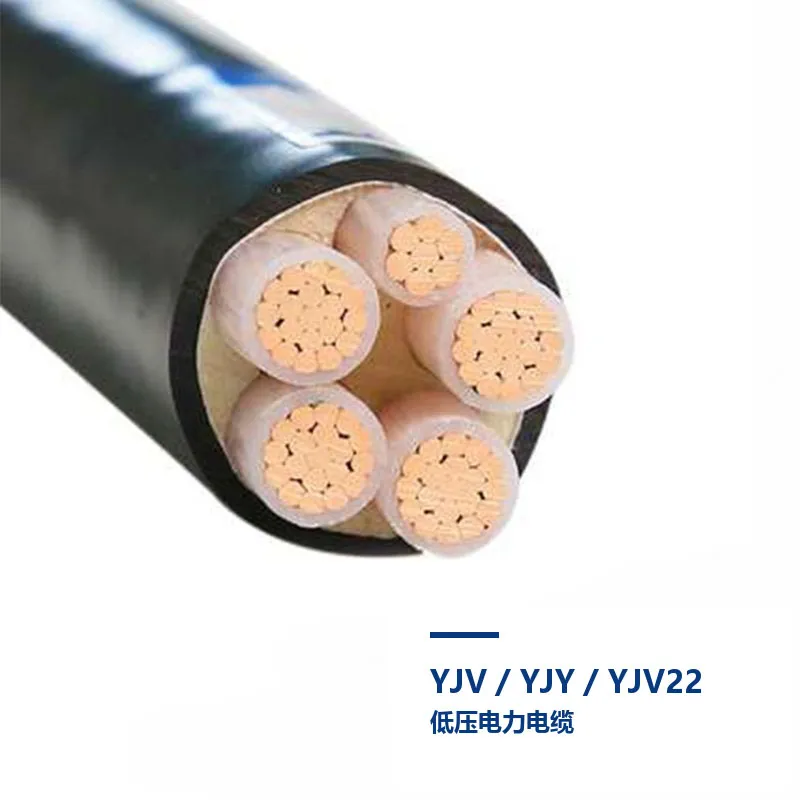
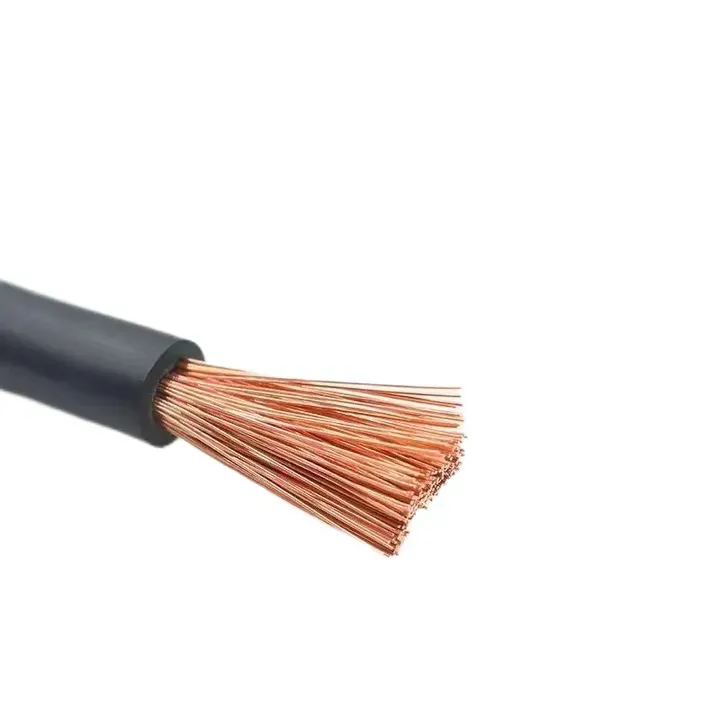
  • LV Cables: Simple – stranded copper/aluminum conductors, extruded insulation (PVC/XLPE), optional PVC sheath, light armor if needed.
  • MV Cables: Triple-extruded insulation + semiconductive layers (conductor screen & insulation screen) + metallic screen (copper tape/wires) + outer sheath/armor.
  • HV Cables: Single-core dominant, super-clean XLPE insulation, corrugated aluminum or lead sheath for moisture barrier, strong metallic screen, anti-corrosion layers, often fiber optic elements for temperature monitoring.

4. Insulation Materials & Temperature Ratings

  • LV: PVC (70°C), XLPE (90°C) – PVC still common for indoor, XLPE preferred for underground.
  • MV: Almost exclusively XLPE (90°C continuous, 250°C short-circuit) – EPR used in special cases (flexibility, wet environments).
  • HV: High-purity XLPE (90–105°C) with very low contamination levels; EPR or PPLP (paper-polypropylene laminate) in legacy or submarine cables.


5. Testing Requirements & Standards

Testing rigor increases dramatically with voltage:

  • LV: IEC 60502-1 – routine (conductor resistance, HV withstand), sample (dimensional, tensile), type (ageing, fire).
  • MV: IEC 60502-2 – partial discharge (≤5 pC), tan δ, heating cycle + HV withstand, lightning impulse (for outdoor terminations).
  • HV: IEC 60840/62067 – very stringent PD, tan δ over temperature, switching/lightning impulse, long-duration withstand, pre-qualification test (cables + accessories, 1-year load cycle).

6. Typical Applications by Voltage Class

  • Low Voltage Cables: Final distribution to motors, lighting, control panels, building services, small industrial loads.
  • Medium Voltage Cables: Main feeders in factories, substations to large motors (500 kW+), renewable energy collection (solar/wind farms), urban underground networks.
  • High Voltage Cables: Utility transmission lines, large industrial site interconnections, offshore wind farm export cables, grid reinforcement projects.

7. Side-by-Side Comparison: LV vs MV vs HV Cables

Parameter Low Voltage (LV) Medium Voltage (MV) High Voltage (HV)
Rated Voltage (U₀/U) 0.6/1 kV 3.6/6 kV to 18/30 kV 36/66 kV to 150/245 kV+
Conductor Screen Not required Required (semiconductive) Required + very uniform
Insulation Thickness 0.6–1.2 mm 2.5–8 mm 10–30+ mm
Metallic Screen Optional (concentric) Mandatory (Cu wires/tape) Mandatory + high cross-section
Partial Discharge Test Not required ≤5 pC at 1.5–2U₀ ≤5 pC at 1.7U₀ + long preconditioning
Typical Conductor Size 1.5–300 mm² 25–630 mm² 300–2500 mm²
Installation Method Conduit, tray, direct burial Underground ducts, direct burial Underground tunnels, submarine, overhead

Low, Medium, and High Voltage Cables

8. How to Select the Correct Voltage Class

  1. Determine system voltage and fault level from electrical single-line diagram.
  2. Calculate maximum load current and required ampacity (with derating).
  3. Evaluate route length and allowable voltage drop (≤3–5%).
  4. Assess installation environment (buried, tray, wet, chemical exposure).
  5. Check local codes and project specifications (IEC, NEC, IEEE, utility requirements).
  6. Balance cost vs performance – higher voltage often reduces conductor size and losses but increases termination complexity.

9. Final Thoughts

The technical differences between low, medium, and high voltage cables are far more than just voltage ratings — they involve insulation thickness, screening, testing rigor, mechanical design, and long-term reliability. Choosing the correct class ensures safe, efficient power delivery while optimizing cost and minimizing downtime. Understanding these distinctions is essential for engineers, specifiers, and installers working on industrial, utility, or renewable energy projects.

Need expert assistance selecting the right low, medium, or high voltage cables for your application? Contact Henan Province Jianyun Cable Co., Ltd. – we manufacture certified, high-performance cables tailored to the most demanding requirements.
Related Products
Related News