Keep up to date with our latest company news and relevant industry knowledge.
Time: 2025-12-10 12:37:35 Source: Henan Province Jianyun Cable Co., Ltd.
Electrical cables are the unsung heroes of modern infrastructure, powering everything from homes to industrial complexes. However, exposure to fire, sunlight, and moisture can compromise their integrity, leading to failures, hazards, or costly replacements. Rigorous testing—flame tests for fire retardancy, UV tests for weathering resistance, and water resistance tests for ingress protection—ensures cables meet global safety standards. This guide explores these essential procedures, drawing on standards like IEC 60332, ISO 4892, and IEC 60529, to help manufacturers, installers, and engineers select durable, compliant products in an increasingly demanding 2025 landscape.
Cable testing verifies that insulation, sheathing, and conductors withstand environmental stresses without degrading performance. These tests are mandated by international bodies like the IEC and ISO, preventing risks such as electrical shorts, fires, or corrosion. In 2025, with rising renewable energy installations and outdoor deployments, robust testing is more critical than ever for longevity and compliance.
The flame test evaluates a cable's ability to resist ignition and flame propagation, crucial for minimizing fire spread in buildings or vehicles. Governed by IEC 60332, it simulates real-world fire scenarios using controlled flames.
Procedure: For single cables (IEC 60332-1-2), a 1 kW pre-mixed flame is applied vertically to a mounted sample for 60 seconds (or up to 8 minutes based on diameter). The cable must self-extinguish within 60 seconds post-flame removal, with charring limited to 50 mm below the upper clamp. For bunched cables (IEC 60332-3), multiple cables are vertically arranged and exposed to a ladder flame, assessing spread over 120 minutes. Classes range from C (basic) to A (highest retardancy).
Passing ensures low flame propagation, vital for public safety—e.g., in high-rises where cables must not fuel blazes.
| IEC 60332 Category | Test Type | Key Criteria | Application |
|---|---|---|---|
| 60332-1-2 | Single Vertical Cable | Self-extinguish in 60s; char <50 mm | Individual wires in conduits |
| 60332-2-2 | Single Small Cable | Diffusion flame; no persistent burn | Low-voltage indoor cables |
| 60332-3 | Bunched Vertical | Flame height <2.5 m after 120 min | Cable trays in buildings |
| Classes A-D | Graded Retardancy | Increasing bundle size resistance | High-risk environments |
UV testing assesses how cable jackets withstand solar radiation, preventing brittleness, cracking, or color fading that could expose conductors. ISO 4892 outlines methods using accelerated weathering chambers.
Procedure: For outdoor exposure (ISO 4892-2), samples face xenon-arc lamps simulating sunlight (300-400 nm, 60 W/m²) for 720+ hours, cycled with water spray and darkness. Indoor (ISO 4892-3) uses fluorescent UV lamps (UVA-340) at 50°C for 1000 hours. Post-exposure, measure tensile strength and elongation—must retain ≥80% of original values. This ensures cables endure years of outdoor use without failure.
| ISO 4892 Method | Light Source | Exposure Duration | Pass Criteria |
|---|---|---|---|
| 4892-2 (Xenon-Arc) | Xenon lamps + spray | 720+ hours | ≥80% tensile/elongation retention |
| 4892-3 (Fluorescent UV) | UVA-340 lamps | 1000 hours at 50°C | No cracking; property retention |
| Cycle Parameters | UV + humidity cycles | 4h UV/4h dark | Visual/mechanical integrity |
Water resistance testing, via IEC 60529 IP ratings, checks enclosures and cables against liquid ingress, preventing corrosion or shorts in wet environments.
Procedure: The second digit (X4-X9) rates water protection. IPX4: Spray from all directions (10 min). IPX7: Immersion at 1m for 30 min. IPX8: Custom immersion (e.g., 3m/24h). For cables, test under voltage post-immersion—no breakdown. This is key for outdoor or marine applications.
| IP Rating | Test Description | Duration/Conditions | Typical Cable Use |
|---|---|---|---|
| IPX4 | Splash-proof | 10 min oscillating spray | Outdoor general |
| IPX6 | Powerful jet | 3 min high-pressure hose | Industrial washdown |
| IPX7 | Immersion 1m | 30 min at 1m depth | Temporary submersion |
| IPX8 | Continuous immersion | Custom (e.g., 3m/24h) | Underwater/marine |
As electrification surges—with EVs, solar farms, and smart grids—cables face harsher conditions. Flame tests reduce fire risks (global electrical fires claim thousands yearly); UV tests extend outdoor lifespans amid climate change; water tests safeguard against floods. Integrated testing ensures holistic durability, cutting downtime and liabilities.
Flame, UV, and water resistance tests are non-negotiable for safe, reliable cables. By adhering to IEC 60332, ISO 4892, and IEC 60529, stakeholders mitigate risks and innovate confidently. In 2025's connected world, tested cables aren't just compliant—they're essential.
For cables passing these rigorous tests, contact Henan Province Jianyun Cable Co., Ltd. for certified solutions and expert guidance.
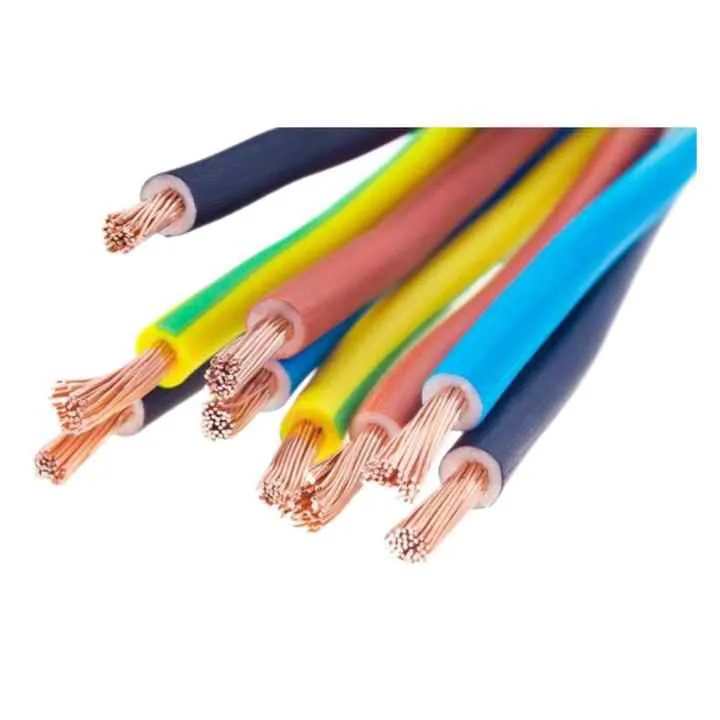
Flexible copper electrical wire with stranded copper conductor, PVC insulation a
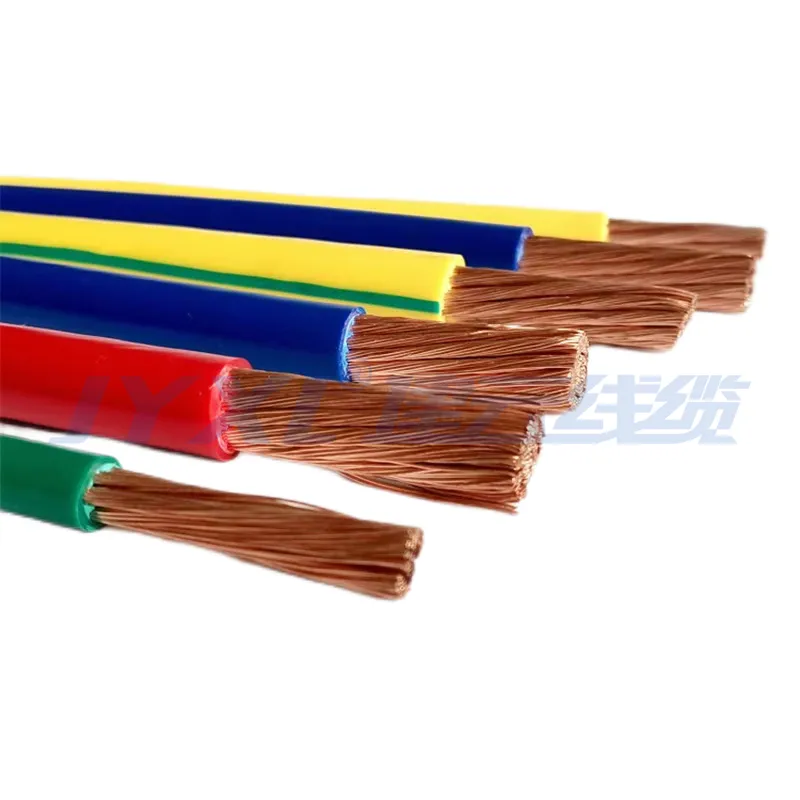
H07V-K flexible electrical wire with 1.5mm² and 2.5mm² stranded copper conductor
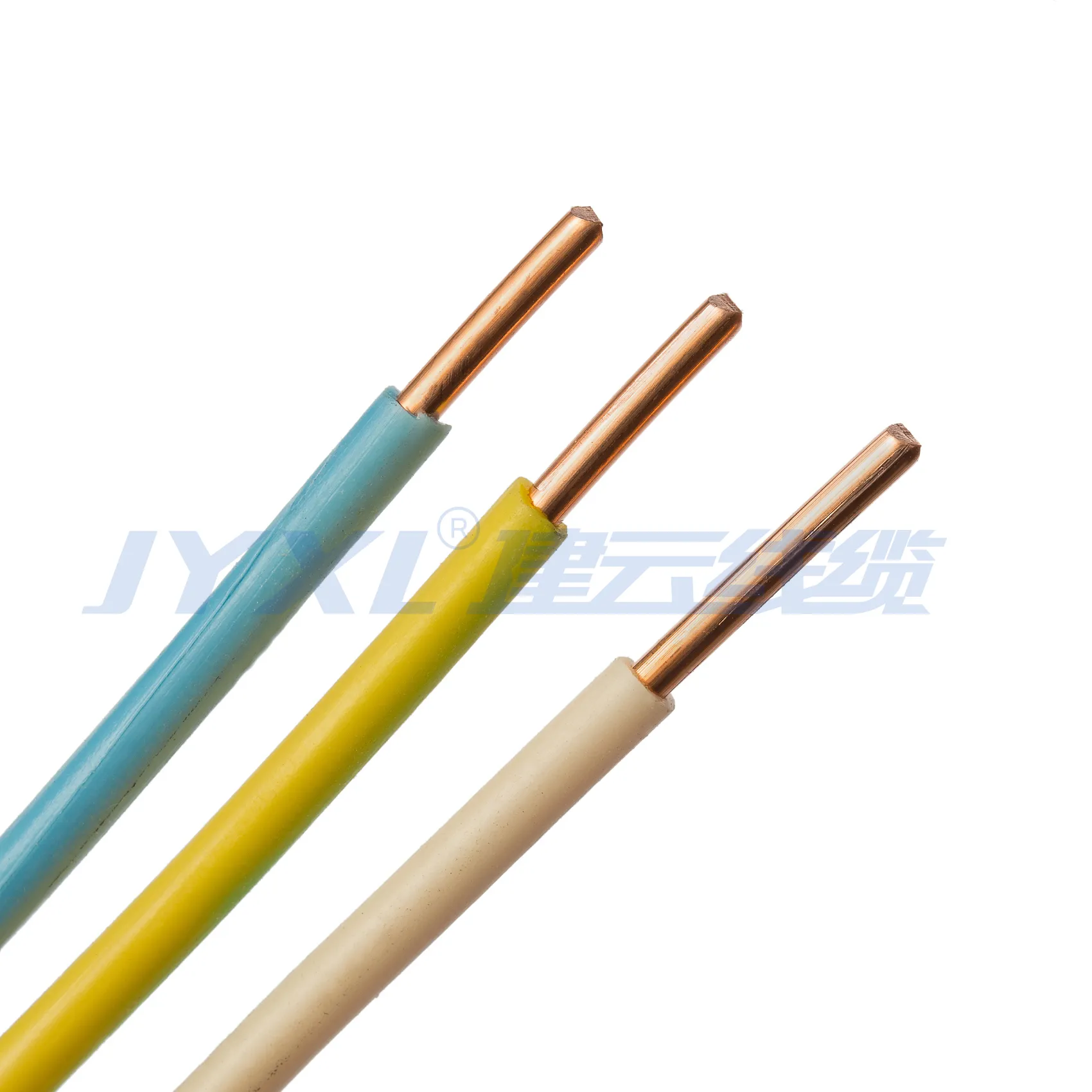
Jianyun H07V-U Solid Copper PVC Wire is a single core rigid electrical wire manu
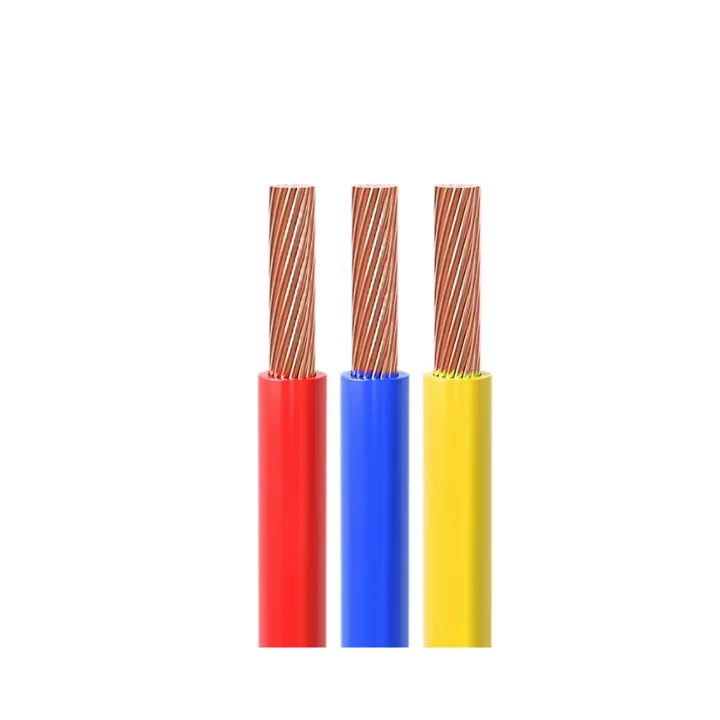
CE Certification 450/750v H07VVF Flexible Copper PVC Insulated Ac Cable 3*2.5 Mm