Keep up to date with our latest company news and relevant industry knowledge.
Time: 2026-01-14 11:45:37 Source: Henan Province Jianyun Cable Co., Ltd.
When you see “AWG” printed on electrical wire, you’re looking at the American Wire Gauge – the standard system used in North America (and many other countries) to specify the diameter (and therefore current-carrying capacity) of wire. Understanding what AWG means is essential for anyone working with electrical installations, from DIY home projects to professional engineering.
AWG stands for American Wire Gauge. It is a standardized system that defines the diameter (thickness) of solid, round, non-ferrous electrically conducting wire – primarily copper and aluminum. The AWG number indicates wire size: the lower the AWG number, the thicker the wire. For example, 12 AWG wire is thicker (and can carry more current) than 18 AWG wire.
The AWG system originated in the 19th century from the wire-drawing industry. Each time a wire is pulled through a die to make it thinner, it increases the gauge number. The system was formalized in 1857 and remains the dominant standard in the United States, Canada, and parts of Latin America, even as metric sizing gains popularity globally.
AWG follows a geometric progression: every decrease of 3 gauge numbers roughly doubles the cross-sectional area (and current-carrying capacity). Every 6 steps approximately quadruple it. The formula is:
Area (circular mils) = 92^((36 – AWG)/39) × 0.005 in²
Key point: AWG 0000 (4/0) is the thickest commonly used size; numbers go higher (thinner) up to 40+ AWG for very fine wires.
| AWG Size | Diameter (inches) | Diameter (mm) | Cross-Section Area (mm²) | Typical Ampacity (Copper, 90°C, NEC) |
|---|---|---|---|---|
| 14 AWG | 0.0641 | 1.63 | 2.08 | 25 A |
| 12 AWG | 0.0808 | 2.05 | 3.31 | 30 A |
| 10 AWG | 0.1019 | 2.59 | 5.26 | 40 A |
| 8 AWG | 0.1285 | 3.26 | 8.37 | 55 A |
| 6 AWG | 0.1620 | 4.11 | 13.3 | 75 A |
| 4 AWG | 0.2043 | 5.19 | 21.2 | 95 A |
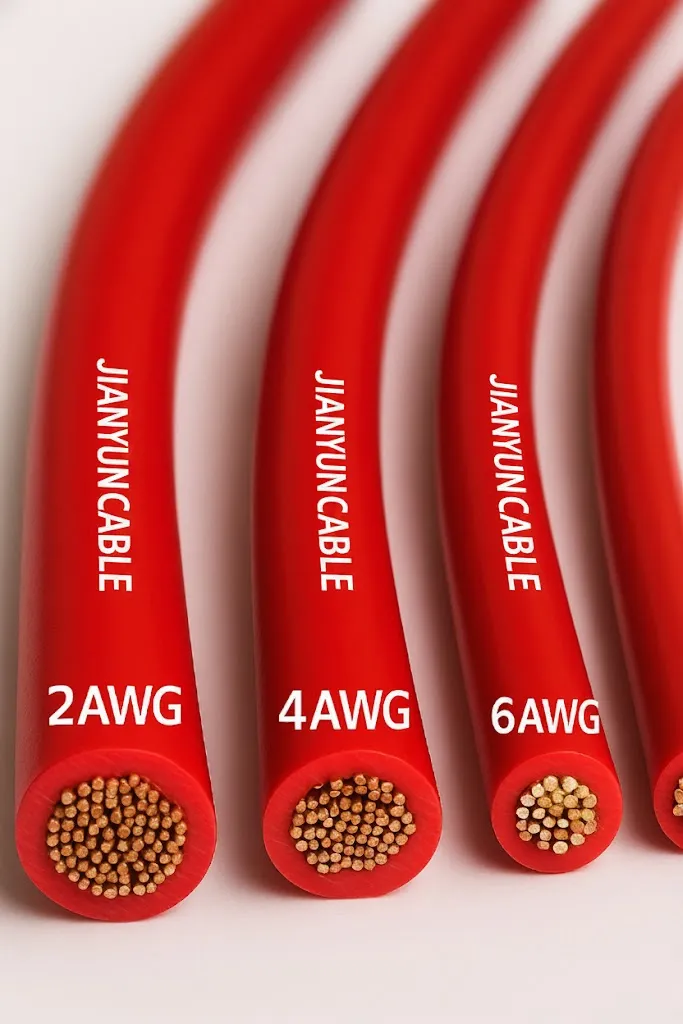
Many countries use mm² for cross-sectional area. Quick reference:
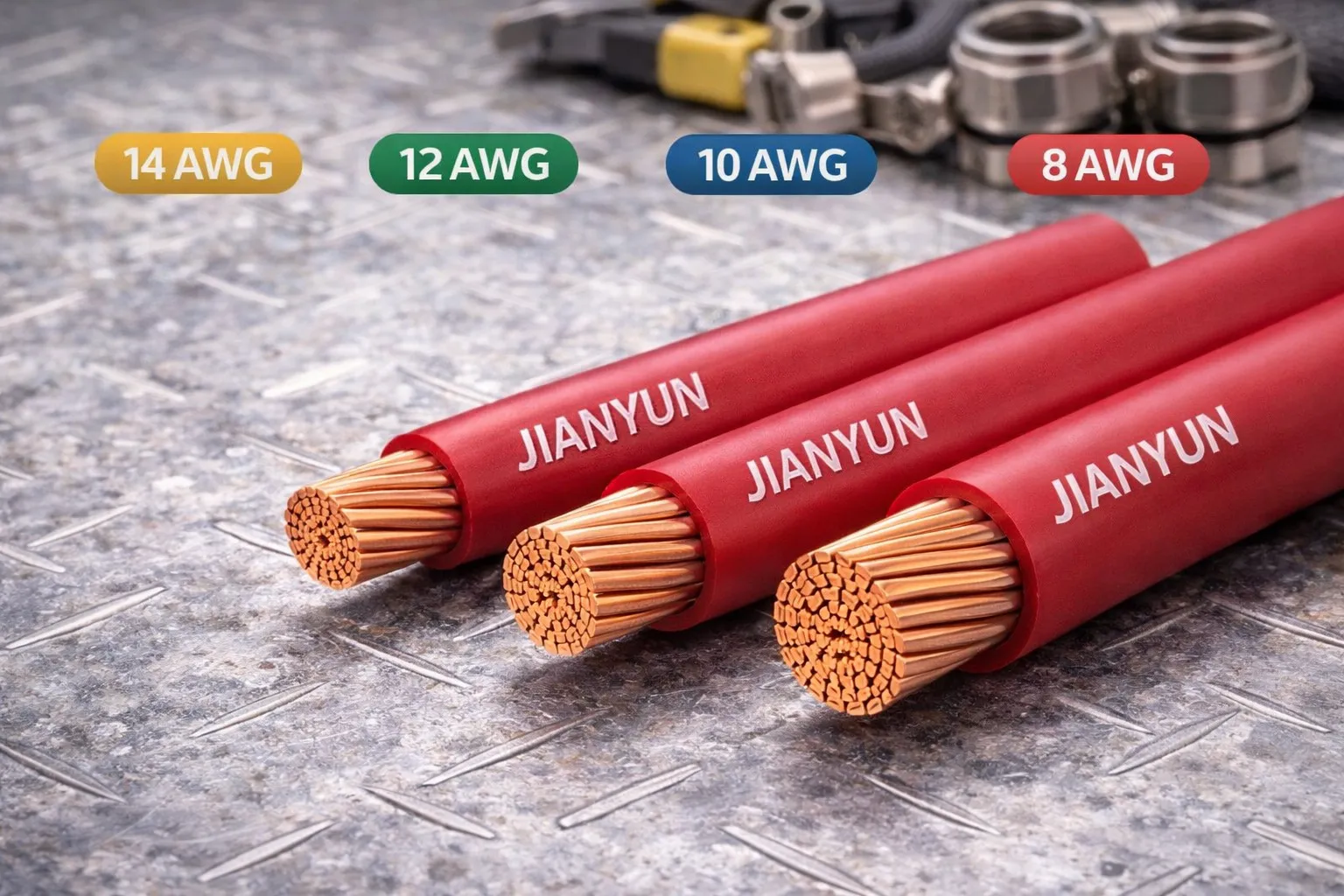
Ampacity (safe current-carrying capacity) depends on insulation temperature rating, ambient temperature, bundling, and local code (e.g., NEC Table 310.16). Always derate for continuous loads (80% rule) and high ambient temperatures. Copper carries more current than aluminum for the same AWG size.
AWG (American Wire Gauge) is the universal language of wire sizing in North America – lower numbers mean thicker, stronger, higher-capacity wire. Mastering the AWG system ensures safe, efficient, and code-compliant electrical work, whether you're wiring a home, installing solar panels, or running industrial feeders.
Need high-quality AWG wire that meets the latest standards? Contact Henan Province Jianyun Cable Co., Ltd. for expert guidance and reliable electrical solutions.
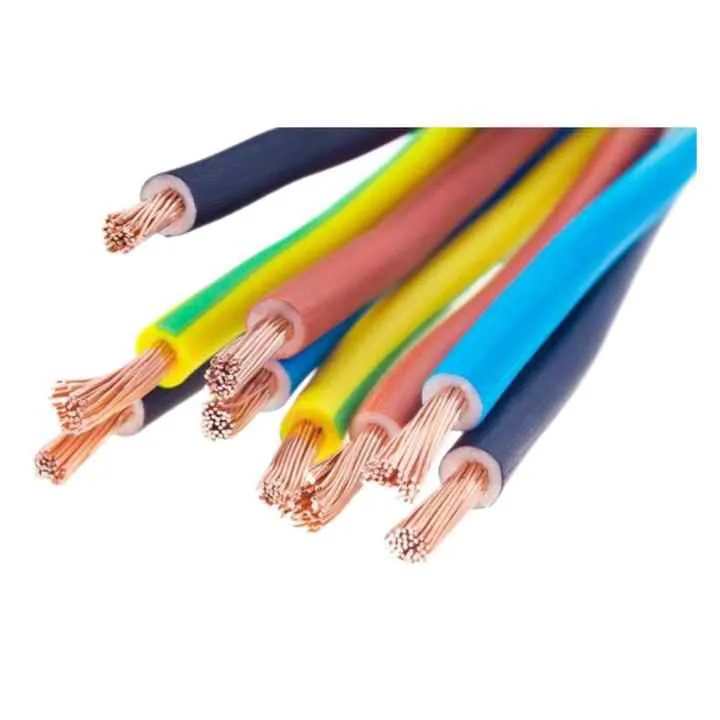
Flexible copper electrical wire with stranded copper conductor, PVC insulation a
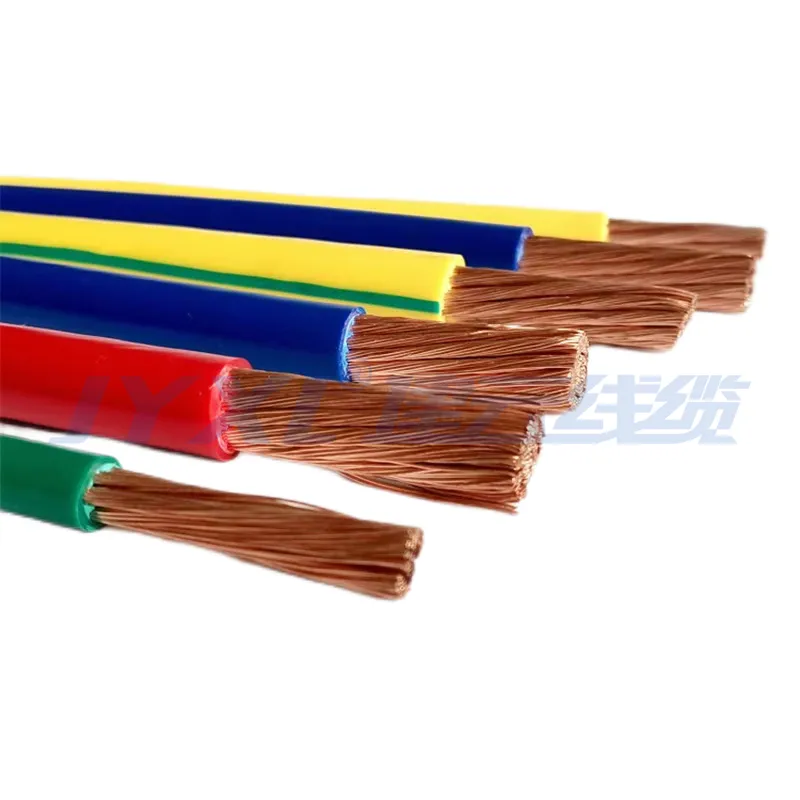
H07V-K flexible electrical wire with 1.5mm² and 2.5mm² stranded copper conductor
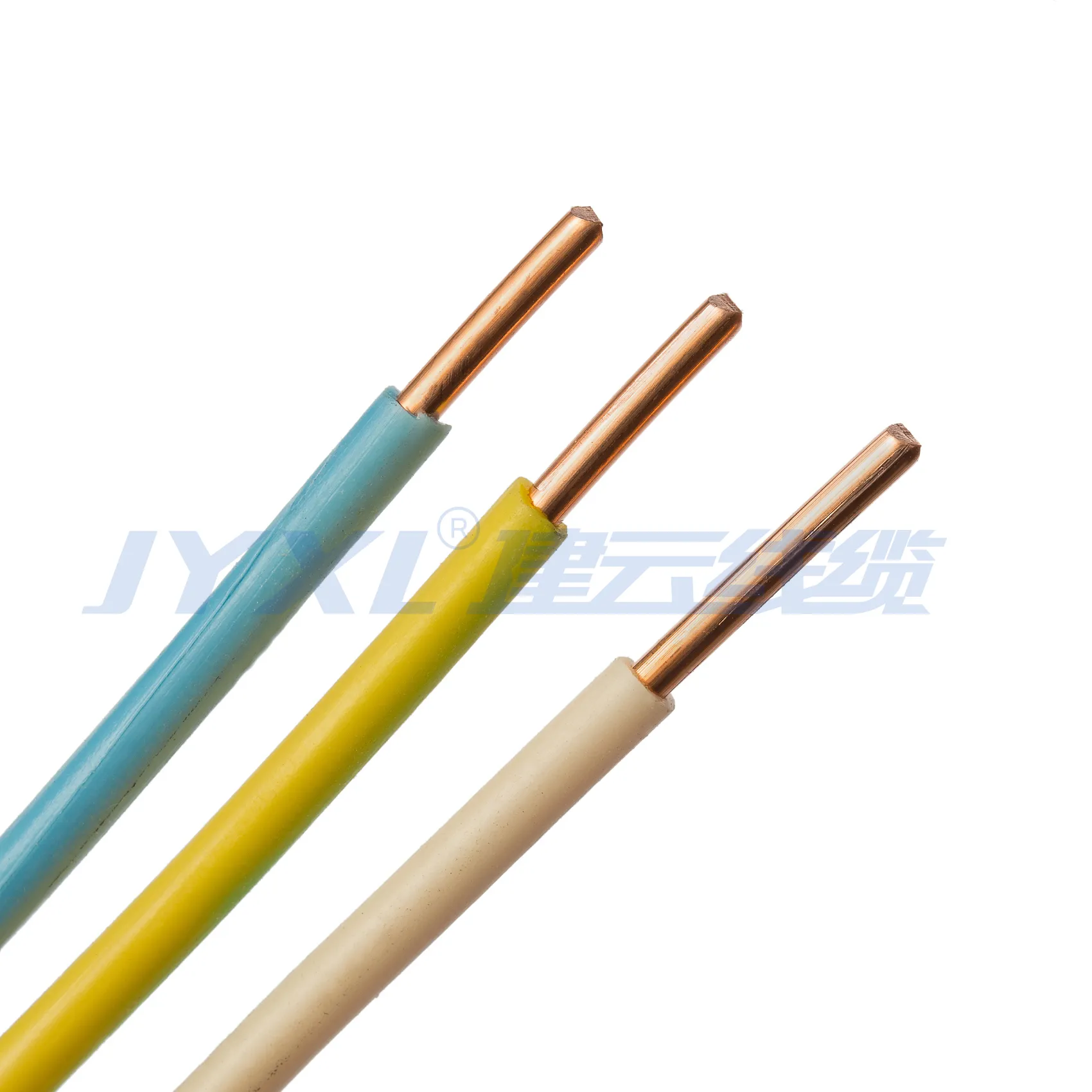
Jianyun H07V-U Solid Copper PVC Wire is a single core rigid electrical wire manu
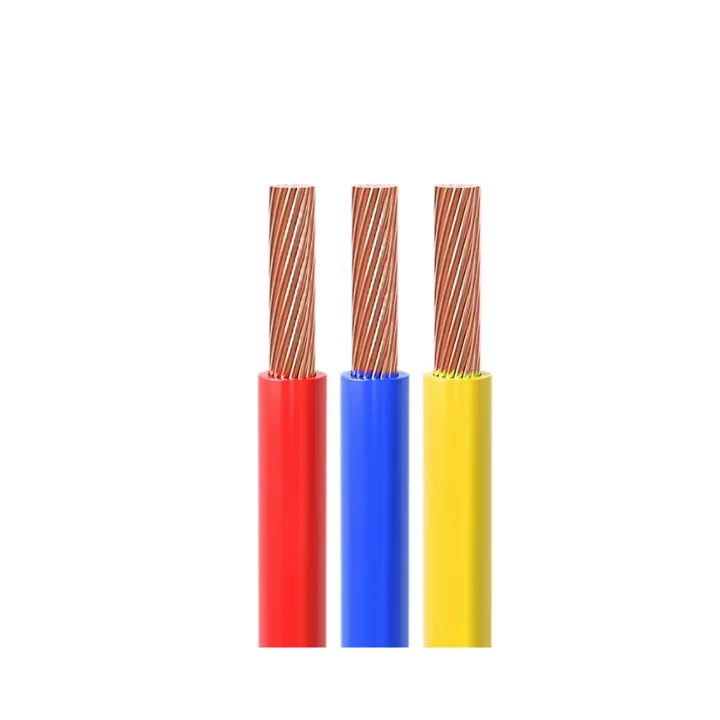
CE Certification 450/750v H07VVF Flexible Copper PVC Insulated Ac Cable 3*2.5 Mm