Keep up to date with our latest company news and relevant industry knowledge.
Time: 2026-10-11 13:25:24 Source: Henan Province Jianyun Cable Co., Ltd.
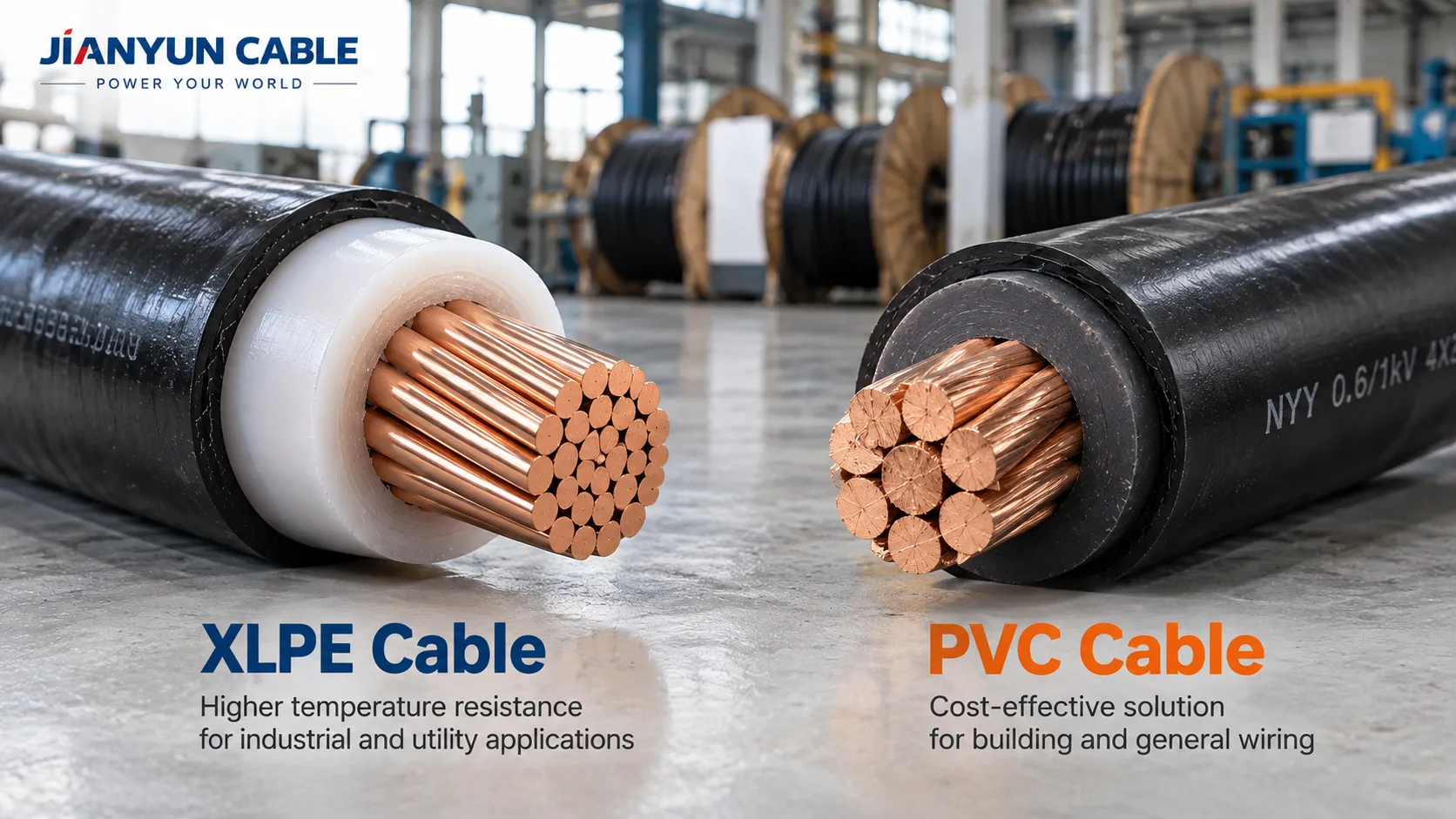
XLPE and PVC are two widely used insulation materials for electrical cables. While both provide reliable electrical insulation, they differ in temperature resistance, thermal performance, cost, and typical applications.
Understanding these differences can help engineers, contractors, and cable buyers select the right cable for their projects.
XLPE stands for cross-linked polyethylene, a thermosetting insulation material widely used in low- and medium-voltage power cables.
A key advantage of XLPE is its thermal performance. Many standard XLPE-insulated power cables are designed for continuous conductor operating temperatures up to 90°C, depending on the applicable cable standard and specification.
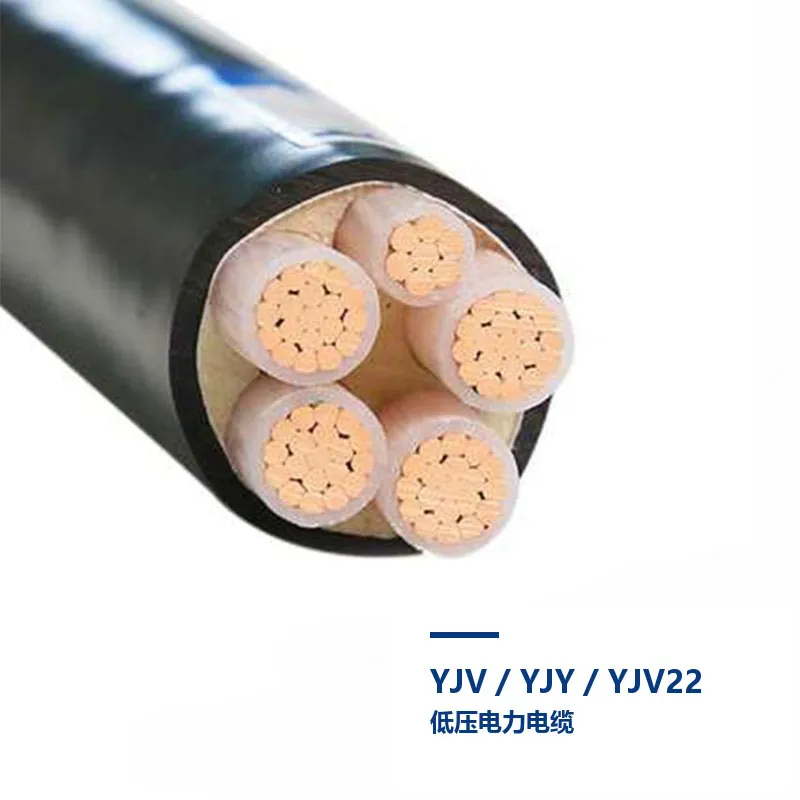
 XLPE-insulated copper power cable with PVC outer sheathing.
Typical applications include:
Related Product: 0.6/1kV Copper XLPE/PVC Power Cable
PVC stands for polyvinyl chloride, a thermoplastic material commonly used for cable insulation and outer sheathing.
Standard PVC-insulated power cables typically operate at continuous conductor temperatures up to 70°C, depending on the cable specification.
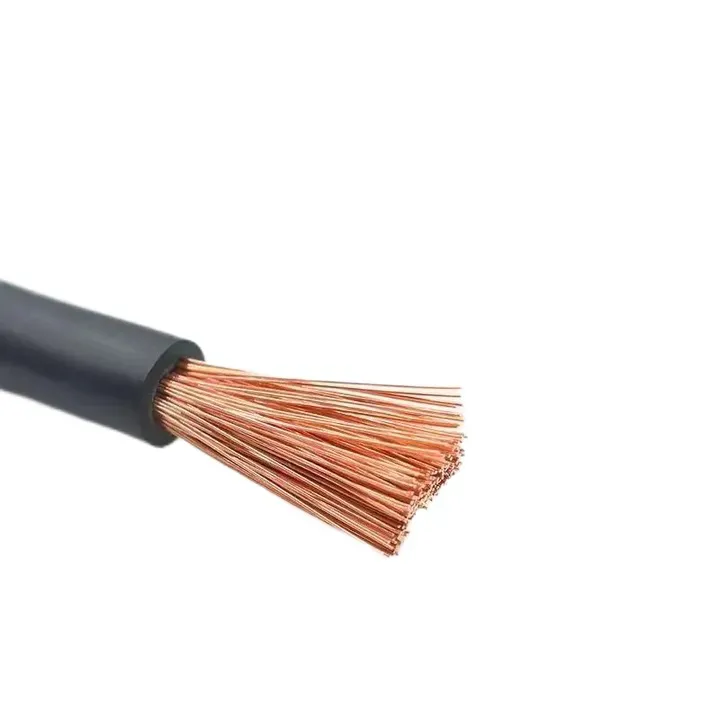
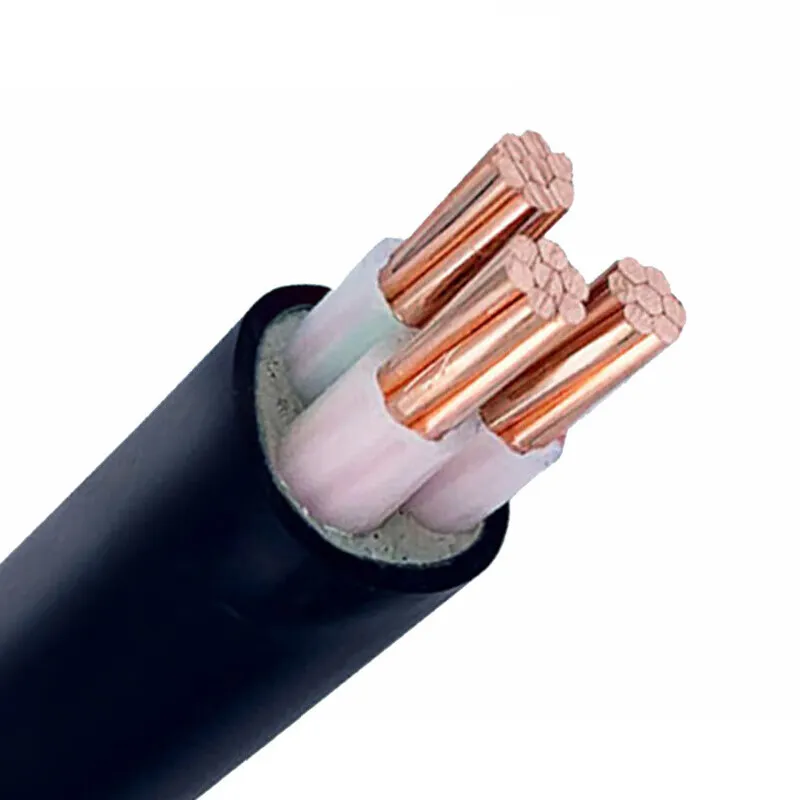 PVC-insulated NYY power cable for low-voltage electrical distribution.
PVC cables are widely used in:
Related Product: NYY PVC Insulated Power Cable
| Feature | XLPE Insulation | PVC Insulation |
|---|---|---|
| Material Type | Thermosetting | Thermoplastic |
| Typical Operating Temperature | 90°C | 70°C |
| Thermal Performance | Higher | Standard |
| Electrical Insulation | Excellent | Good |
| Relative Cost | Generally higher | Generally lower |
| Common Applications | Industrial & utility | Building & general wiring |
Actual performance depends on cable construction, insulation formulation, installation conditions, and applicable standards.
Yes. XLPE and PVC are frequently used together in the same power cable.
For example, Cu/XLPE/PVC generally means:
XLPE provides electrical insulation around the conductor, while the PVC sheath provides external protection.
Explore JIANYUN CABLE's Low Voltage Power Cable range for available cable constructions and specifications.
Choose XLPE-insulated cable when:
Choose PVC-insulated cable when:
The final cable selection should also consider voltage rating, conductor size, installation environment, load conditions, and applicable electrical standards.
XLPE generally offers higher thermal performance than standard PVC insulation. However, PVC remains a practical and cost-effective choice for many conventional electrical installations.
It typically refers to a cable using XLPE insulation and a PVC outer sheath.
Yes. Appropriately designed XLPE-insulated cables are widely used for underground power distribution. The complete cable construction must be suitable for the installation environment.
Both XLPE and PVC cables play important roles in electrical power systems.
XLPE is generally preferred when higher thermal performance is required, while PVC remains a reliable and cost-effective choice for conventional low-voltage applications.
Selecting the right cable depends on electrical requirements, installation conditions, applicable standards, and project specifications.
JIANYUN CABLE supplies electrical power cables for industrial, commercial, utility, and infrastructure applications.
Explore Low Voltage Power Cables →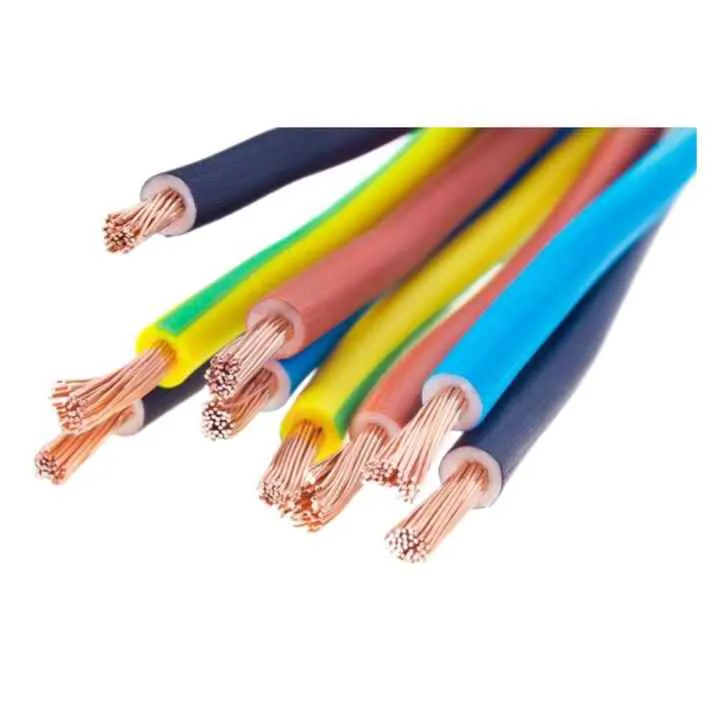
Flexible copper electrical wire with stranded copper conductor, PVC insulation a
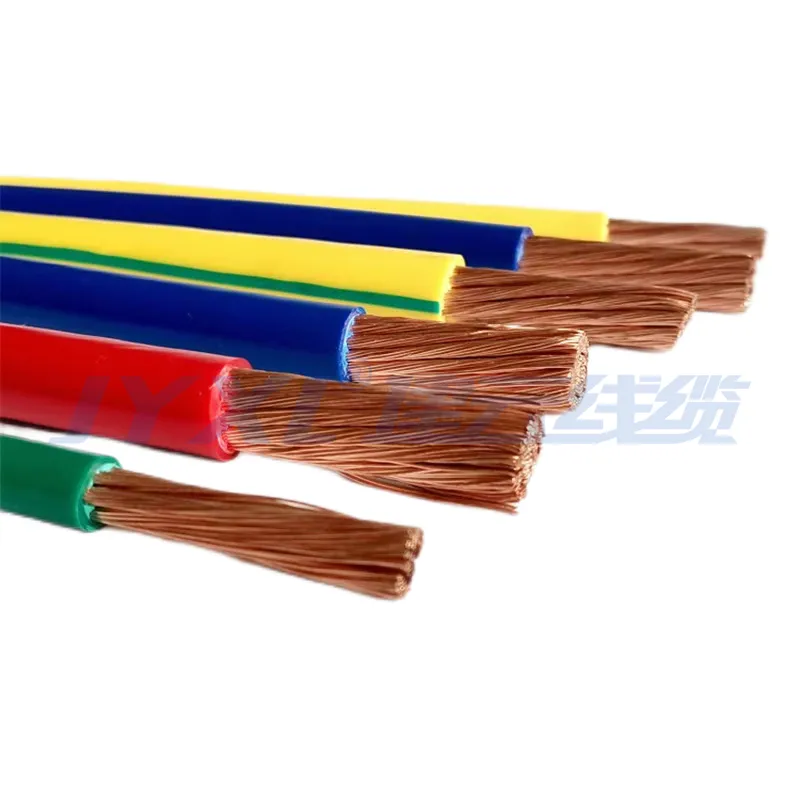
H07V-K flexible electrical wire with 1.5mm² and 2.5mm² stranded copper conductor
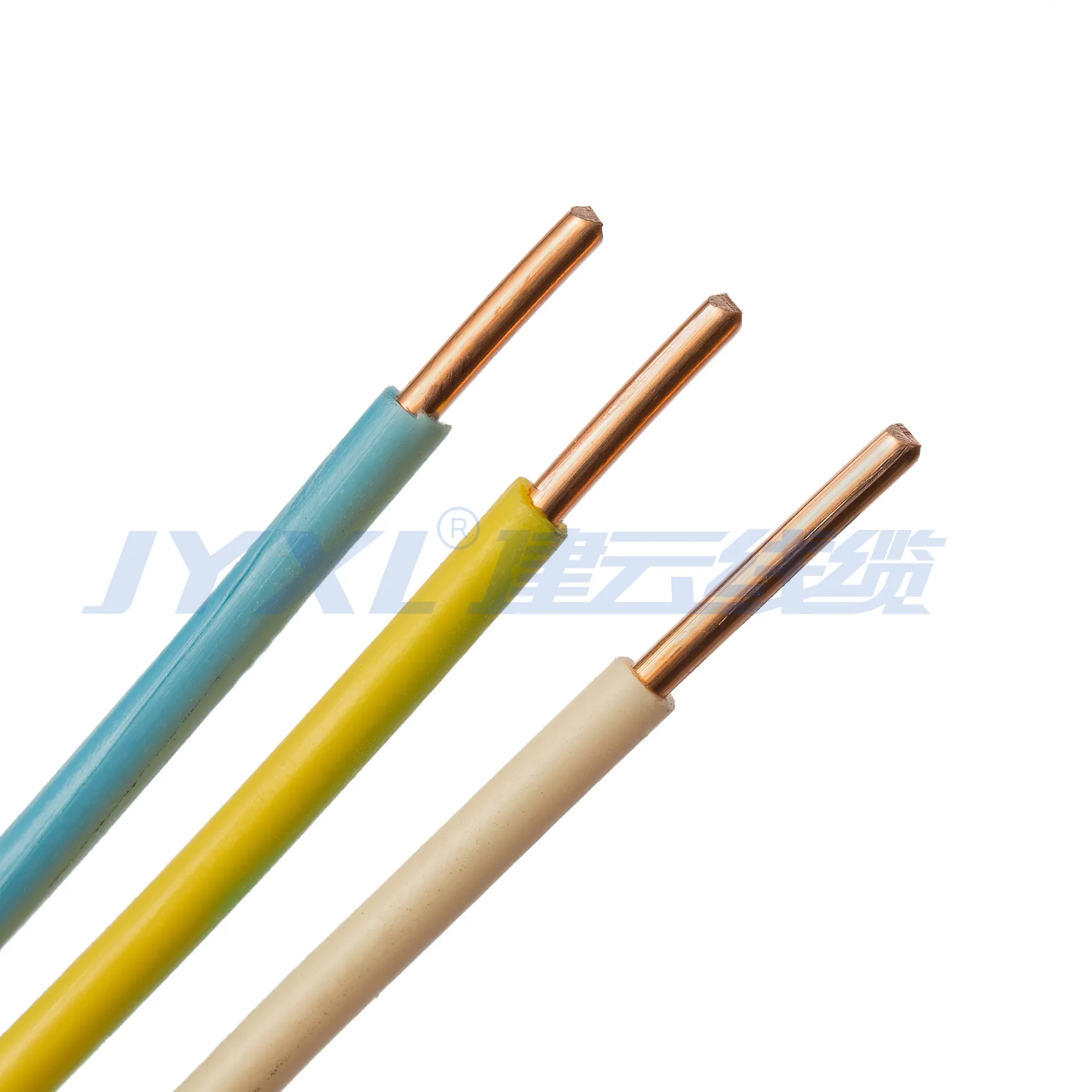
Jianyun H07V-U Solid Copper PVC Wire is a single core rigid electrical wire manu
CE Certification 450/750v H07VVF Flexible Copper PVC Insulated Ac Cable 3*2.5 Mm