Keep up to date with our latest company news and relevant industry knowledge.
Time: 2026-09-07 09:10:39 Source: Henan Province Jianyun Cable Co., Ltd.
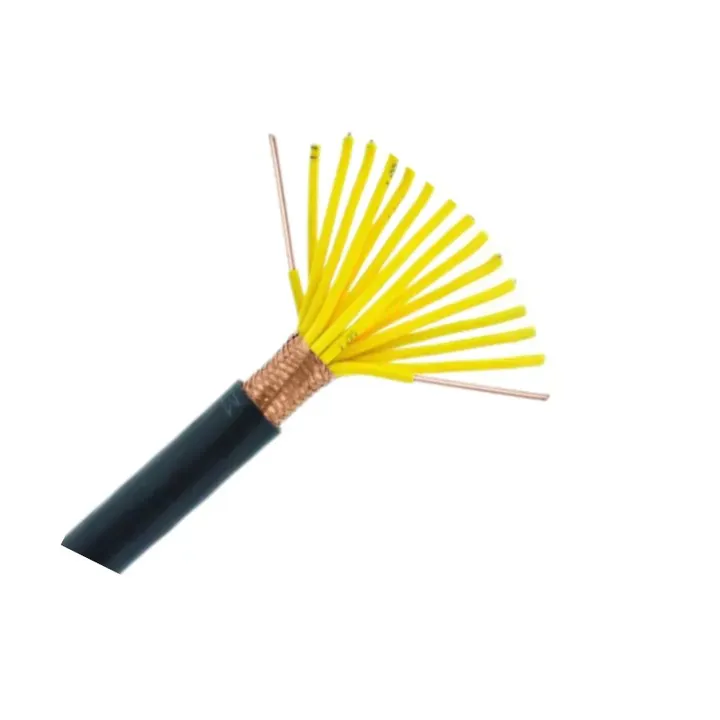
Walk into any factory control panel and you'll see two very different kinds of cable doing very different jobs. Thick ones carry the muscle — raw electrical energy headed to motors and heaters. Thinner, multi-core ones carry the instructions: start, stop, open, close, report back. That second category is the control cable, and while it rarely gets much attention, it's the nervous system of almost every automated process.
The simplest way to tell the two apart is to ask what the cable is actually carrying. A power cable exists to move electrical energy from a source to something that consumes it — a motor, a heater, a lighting circuit. A control cable exists to move information: a low-voltage signal telling a contactor to close, a sensor reporting a temperature, a PLC instructing a valve to open.
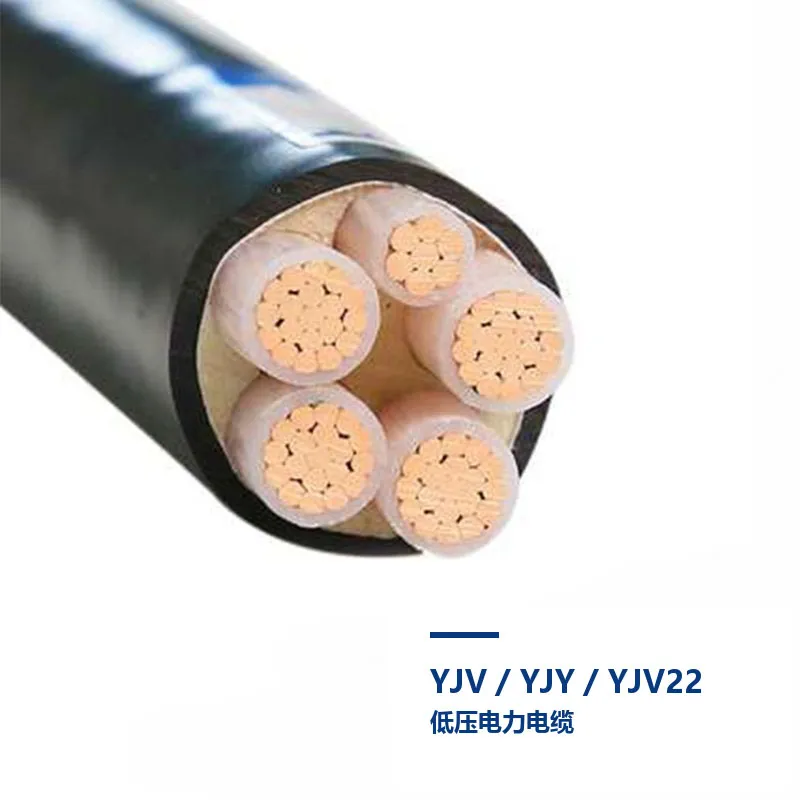
Because of this, control cable is built differently from the start. Instead of one or two heavy cores, it typically bundles anywhere from two to several dozen thin, individually numbered cores inside a single sheath, so a single cable run can carry an entire panel's worth of start/stop, feedback, and interlock signals at once.
Open one up and three design choices define how it performs.
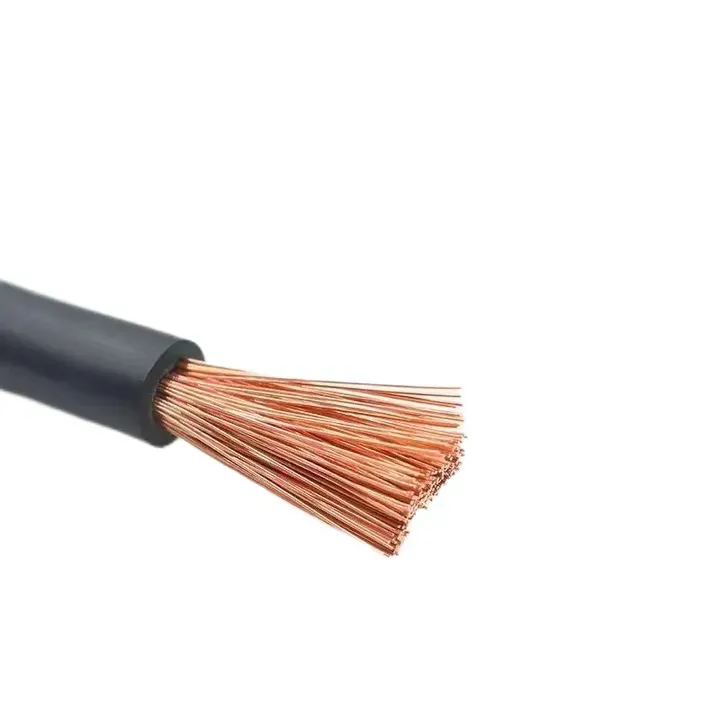
Fine stranded copper conductors, each individually insulated and numbered or color-coded, so an installer can match core 7 at one end of a panel to core 7 at the other without guesswork.
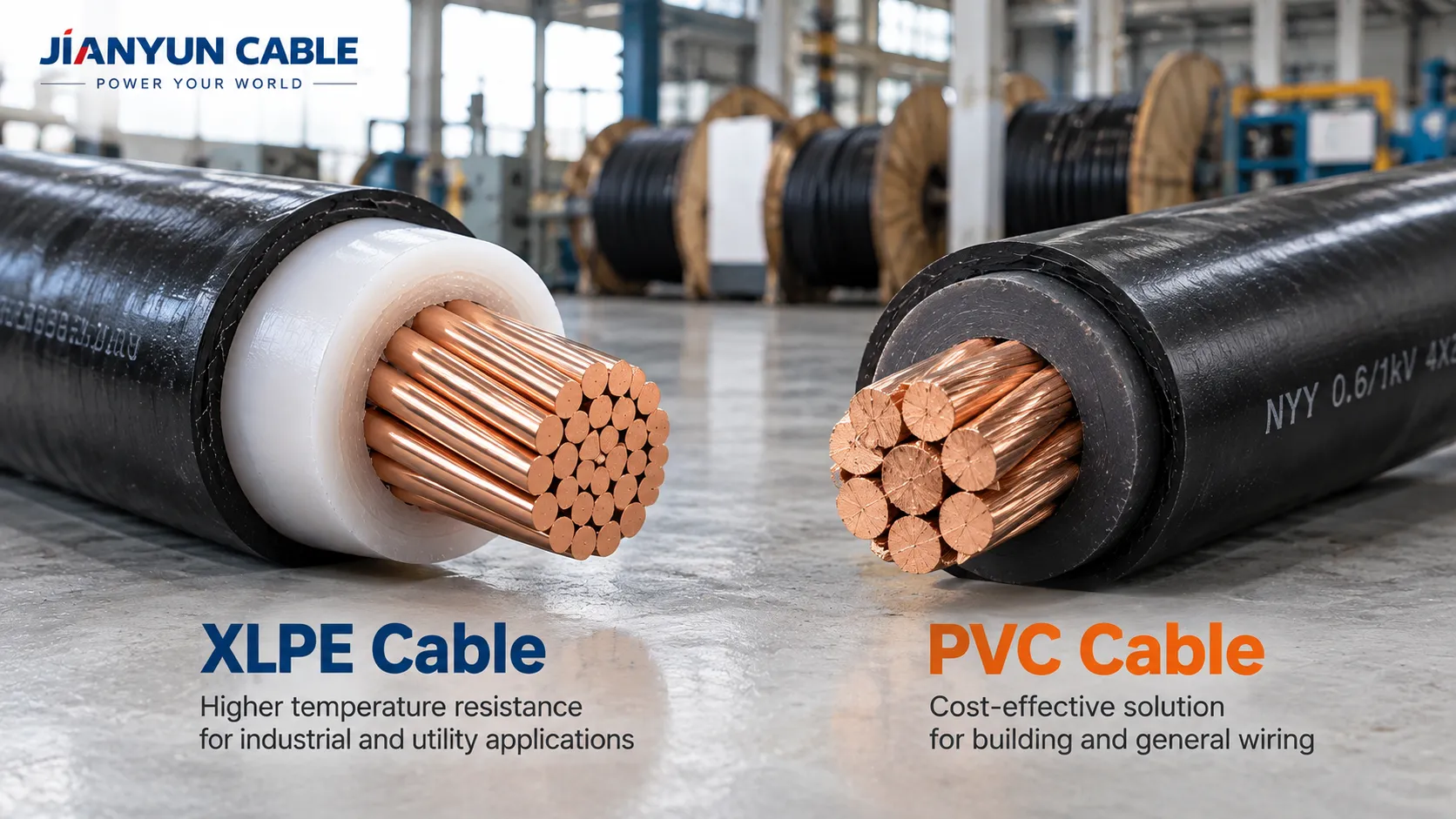
PVC keeps costs down and resists oils and general wear; XLPE variants step up thermal performance for hotter cabinet environments and continuous-duty automation lines.
A braided copper screen blocks electromagnetic interference from nearby motors and drives; a steel tape or steel wire layer adds mechanical protection for cables buried or dragged through ducts.
Like most cable naming systems, the letters in a control cable code aren't decoration — each one describes a real construction detail. Chinese national-standard control cable, built to GB/T9330, follows the KVV family, and once you can read one member of the family, the rest fall into place quickly.
| Code | What It Adds | Typical Use |
|---|---|---|
| KVV | Base copper conductor, PVC insulated and sheathed | Fixed indoor installation, trenches, ducts |
| KVVP | Adds an overall copper braid screen | Environments with electrical interference |
| KVVP2 | Steel tape shield instead of braid | Fixed installation needing extra screening |
| KVV22 | Steel tape armor for mechanical protection | Underground runs, ducts, higher physical stress |
| KVVR | Fine stranded "R" flexible conductor | Movable, flexing installations indoors |
| ZR-KVV | Flame-retardant compound added to base KVV | Panels and ducts where fire spread must be limited |
Once decoded, a name like ZR-KVVP2 stops looking cryptic: flame-retardant, PVC insulated and sheathed, steel-tape shielded control cable — a single string of letters describing four separate engineering decisions.
Picking the wrong control cable rarely causes an immediate failure — it tends to show up later as signal noise, nuisance tripping, or a cable that cracks after a year of constant flexing. Five questions narrow the choice down correctly.
Rated voltage on most general-purpose control cable sits at 450/750V, which is more than enough headroom for signal and low-power control duty — but it's not interchangeable with cable feeding a high-current motor circuit. Always match the cable's voltage class to the circuit it will actually see, not just the signal level it carries.
Control cable shows up anywhere a machine needs to be told what to do rather than simply given power. That includes industrial automation lines, control and switchgear panels, instrumentation loops linking sensors back to a controller, elevator and crane control systems, and the wiring between a PLC cabinet and the field devices it manages. In almost every case, the cable itself is invisible once installed — success looks like nothing happening, because every signal arrived exactly as intended.
In short: a control cable's job isn't to move power, it's to move certainty — a clean, reliable signal from decision point to actuator. Reading its code, from core count to shielding to flame rating, tells you whether it's built for that job before it ever goes into the panel.
Control cable earns its keep in the details most people never see — a screen that quietly cancels interference, a flexible core that survives ten thousand flex cycles, a flame-retardant jacket that buys precious extra minutes. Specify it with the same care given to the equipment it controls.
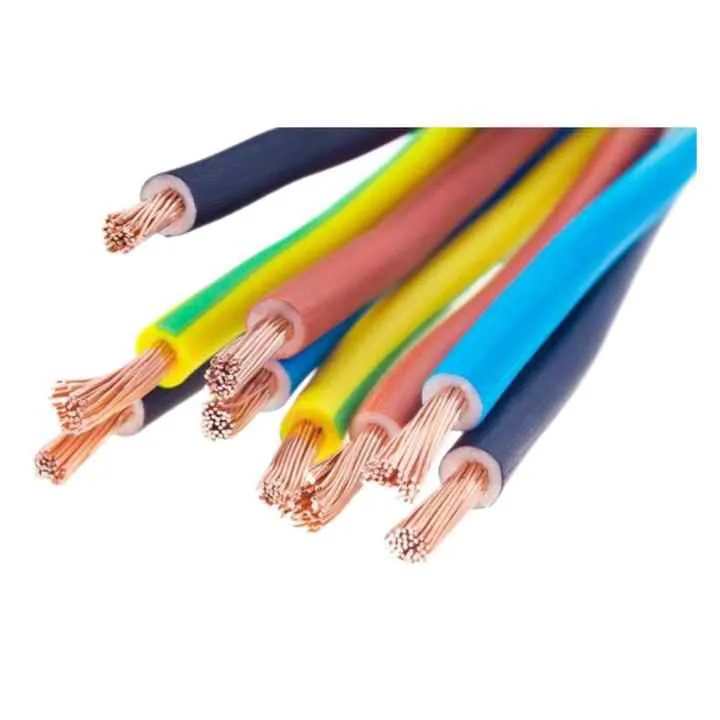
Flexible copper electrical wire with stranded copper conductor, PVC insulation a
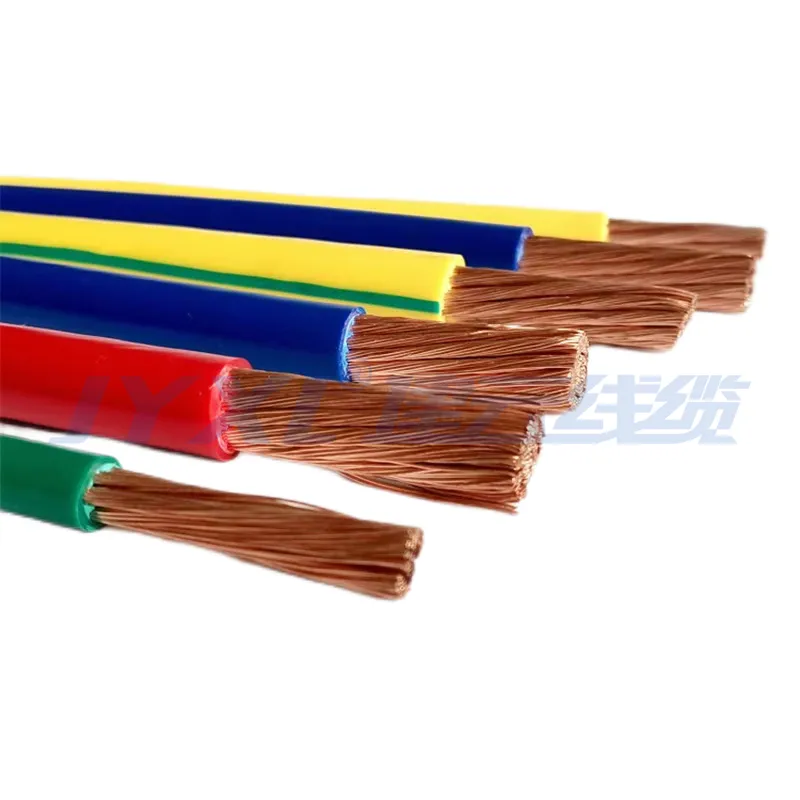
H07V-K flexible electrical wire with 1.5mm² and 2.5mm² stranded copper conductor
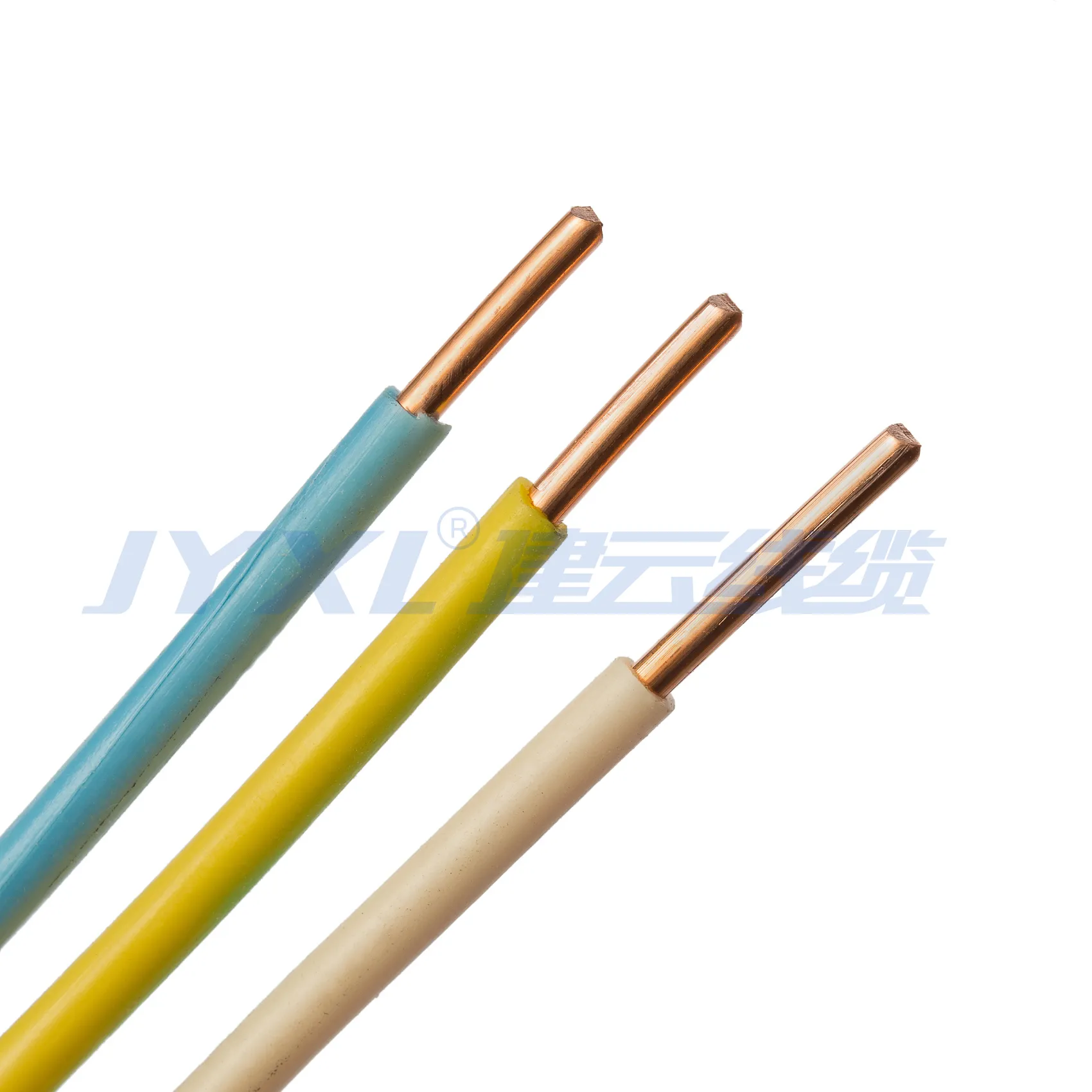
Jianyun H07V-U Solid Copper PVC Wire is a single core rigid electrical wire manu
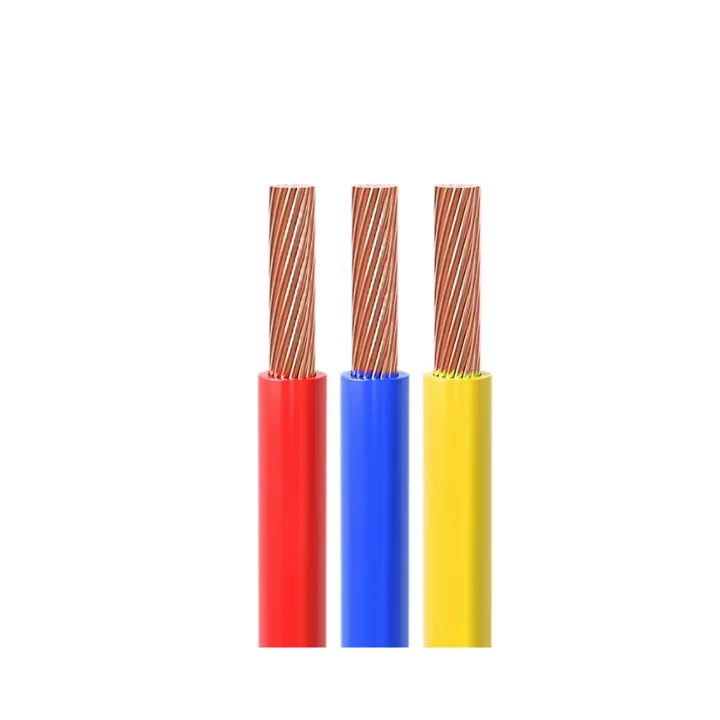
CE Certification 450/750v H07VVF Flexible Copper PVC Insulated Ac Cable 3*2.5 Mm