Keep up to date with our latest company news and relevant industry knowledge.
Time: 2026-08-06 05:21:25 Source: Henan Province Jianyun Cable Co., Ltd.
Author: Jianyun Cable
Rubber cable is widely used in welding, industrial maintenance, construction, and mobile equipment applications where flexibility and repeated movement are important. Unlike rigid fixed-installation cables, a flexible rubber cable can be bent, routed, coiled, and repositioned more easily during daily operation.
Welding equipment places demanding requirements on electrical cables. The cable must carry high current, remain flexible during frequent handling, and withstand bending, dragging, and general workshop conditions.
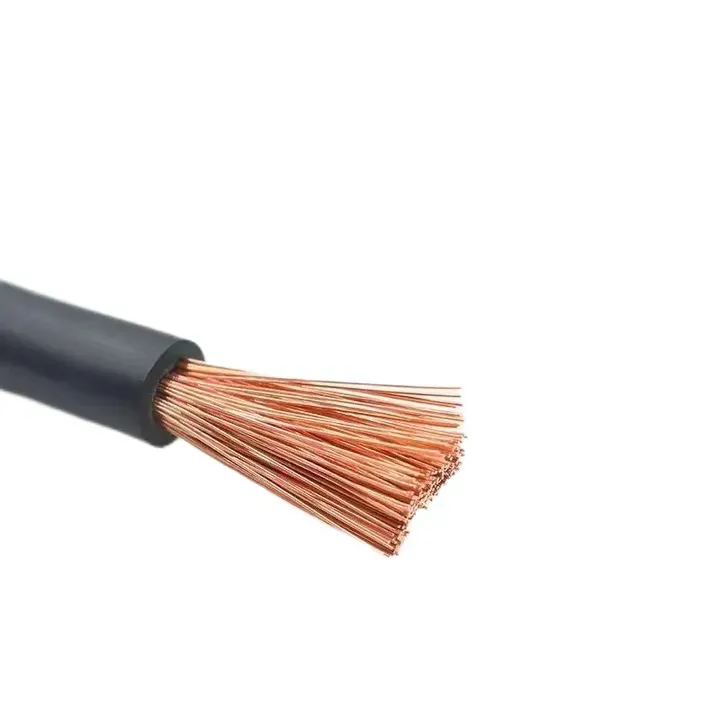
Jianyun Cable supplies H01N2-D rubber welding cable with a flexible copper conductor, PET separator, and durable rubber sheath. Multiple conductor sizes are available for different welding currents, cable lengths, and equipment requirements.
Recommended Rubber Cable:
H01N2-D Flexible Rubber Welding Cable from Jianyun CableRubber cable is an electrical cable that uses a rubber compound as insulation, outer protection, or both. Rubber materials provide flexibility and mechanical durability, making the cable suitable for portable tools, welding machines, temporary connections, and equipment that moves during operation.
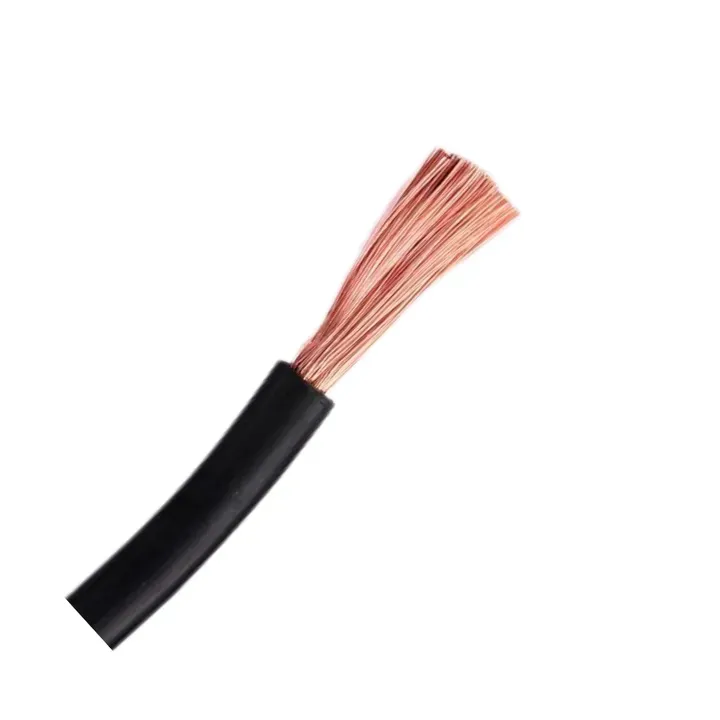
A rubber welding cable normally uses many fine copper strands instead of one rigid conductor. This construction allows the cable to remain flexible while carrying the current required by welding equipment.
The cable is generally supplied as a single-core design and connected between the welding machine, electrode holder, welding clamp, or workpiece.
| Component | Main Function |
|---|---|
| Class 6 flexible copper conductor | Carries welding current while supporting repeated bending |
| Fine copper strands | Improve flexibility and simplify handling |
| PET separator | Separates the conductor from the rubber compound |
| Rubber sheath | Provides electrical insulation and mechanical protection |
| Single-core design | Suitable for welding circuits and mobile electrical connections |
| Advantage | Practical Benefit |
|---|---|
| High flexibility | Allows easier routing, coiling, and repositioning |
| Copper conductor | Supports dependable current transmission |
| Bending resistance | Suitable for equipment that moves frequently |
| Rubber protection | Helps protect the conductor in workshop conditions |
| Wide size range | Supports different current and cable-length requirements |
Welding cables are moved much more frequently than ordinary fixed power cables. Operators may drag the cable across a workshop floor, route it around metal structures, or repeatedly coil it after use.
A fine-stranded copper conductor allows the cable to bend without the rigidity associated with a solid conductor. The rubber sheath also provides a flexible protective layer around the conductor.
This combination makes rubber cable a practical choice for welding machines and other industrial equipment that requires frequent handling.
H01N2-D is a flexible single-core cable commonly used for welding equipment connections. Its construction is designed to combine current-carrying capability with practical flexibility.
| Specification | Product Information |
|---|---|
| Model | H01N2-D |
| Cable type | Single-core flexible welding cable |
| Conductor | Class 6 flexible copper conductor |
| Separator | PET polyester tape |
| Sheath | Rubber compound |
| Rated voltage | 450/750V |
| Available colors | Black and orange |
| Reference standard | GB/T 5013-2008 |
| Nominal Section | Typical Selection Consideration |
|---|---|
| 10mm² | Smaller welding equipment and shorter connections |
| 16mm² | Light industrial welding applications |
| 25–35mm² | General workshop and fabrication equipment |
| 50–70mm² | Higher-current industrial welding |
| 95–120mm² | Heavy-duty equipment and longer cable runs |
| 150–185mm² | Large industrial welding systems |
Actual cable size must be selected according to welding current, cable length, allowable voltage drop, duty cycle, ambient temperature, connector capacity, and equipment specifications.
| Cable Type | Sheath | Typical Application |
|---|---|---|
| YH | Natural rubber sheath | General indoor welding applications |
| YHF | Neoprene or synthetic elastomer sheath | Outdoor and more demanding operating environments |
| Feature | Rubber Cable | Standard PVC Cable |
|---|---|---|
| Flexibility | High | Moderate, depending on construction |
| Repeated handling | Suitable for frequent movement | More commonly used for fixed wiring |
| Typical application | Welding machines and mobile equipment | Building wiring and fixed distribution |
| Handling | Easy to coil and reposition | Usually more rigid |
| Selection Factor | Recommendation |
|---|---|
| Welding current | Choose a conductor size that safely carries the required current |
| Cable length | Consider a larger conductor for longer runs and reduced voltage drop |
| Duty cycle | Evaluate how long and how frequently the machine operates |
| Installation environment | Choose a suitable sheath for indoor or outdoor conditions |
| Flexibility | Use a fine-stranded conductor for frequent movement |
| Connection system | Confirm compatibility with lugs, clamps, and welding connectors |
| Technical standard | Verify the required national or project specification |
Jianyun Cable supplies single-core rubber cable for welding machines, electrode holders, clamps, workshops, fabrication facilities, and mobile industrial equipment.
The cable is available in multiple conductor sizes to meet different current ratings, operating conditions, cable lengths, connector types, and project specifications.
View Product Details and Request a Quote:
H01N2-D 450/750V Flexible Rubber Welding CableRubber cable is a practical solution for welding machines and industrial equipment that requires frequent movement, easy routing, and dependable current transmission. Its fine-stranded copper conductor provides flexibility, while the rubber sheath protects the cable during normal workshop operation.
Jianyun Cable supplies H01N2-D rubber welding cable in multiple conductor sizes for light, general, and heavy-duty welding applications. Buyers should select the cable according to current, length, duty cycle, operating environment, and equipment specifications.
Request Your Rubber Cable Quotation:
Contact Jianyun Cable for Flexible Rubber Welding CableRubber cable is commonly used for welding machines, portable tools, mobile industrial equipment, temporary connections, workshops, and applications requiring repeated bending.
Rubber welding cable combines a fine-stranded copper conductor with a flexible rubber sheath, allowing it to carry welding current while remaining easy to move and route.
H01N2-D is a flexible single-core rubber welding cable used to connect welding machines with electrode holders, clamps, or workpieces.
Common sizes range from 10mm² to 185mm², including 16mm², 25mm², 35mm², 50mm², 70mm², 95mm², 120mm², and 150mm².
Cable size should be selected according to welding current, cable length, allowable voltage drop, operating duty cycle, ambient temperature, and equipment requirements.
Outdoor use depends on the sheath compound and project requirements. YHF or suitable synthetic-elastomer versions are generally selected for more demanding outdoor environments.
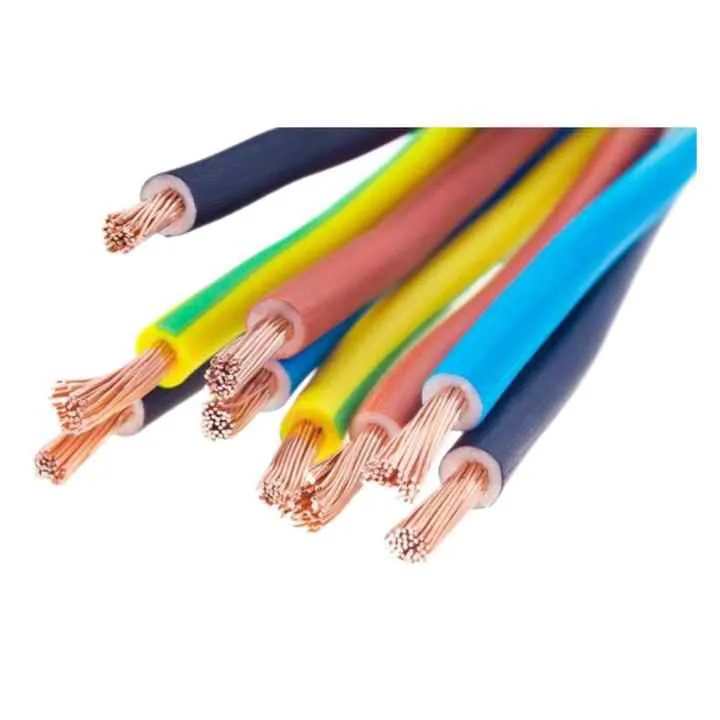
Flexible copper electrical wire with stranded copper conductor, PVC insulation a
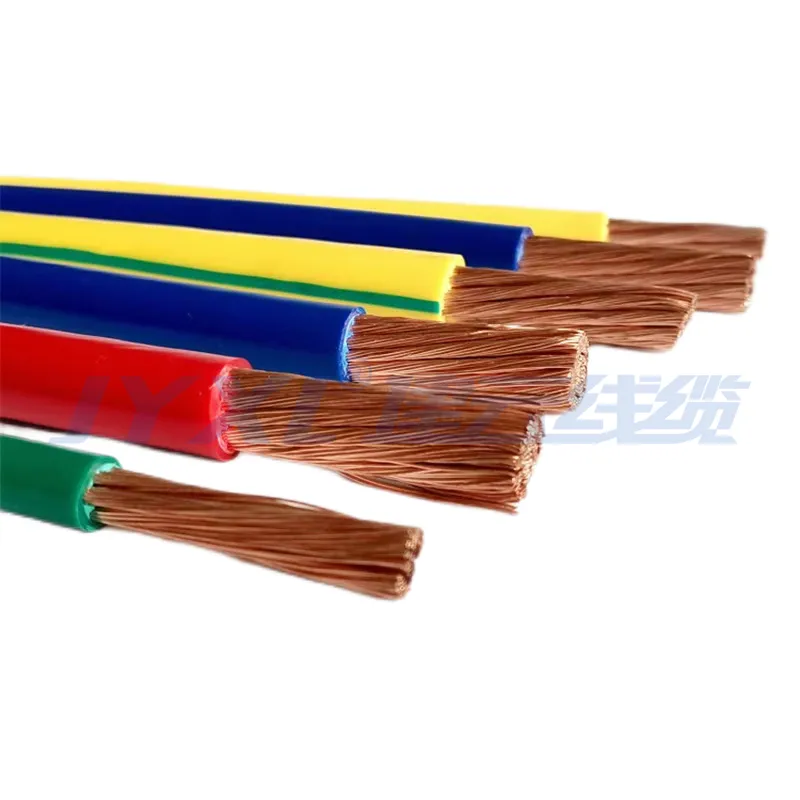
H07V-K flexible electrical wire with 1.5mm² and 2.5mm² stranded copper conductor
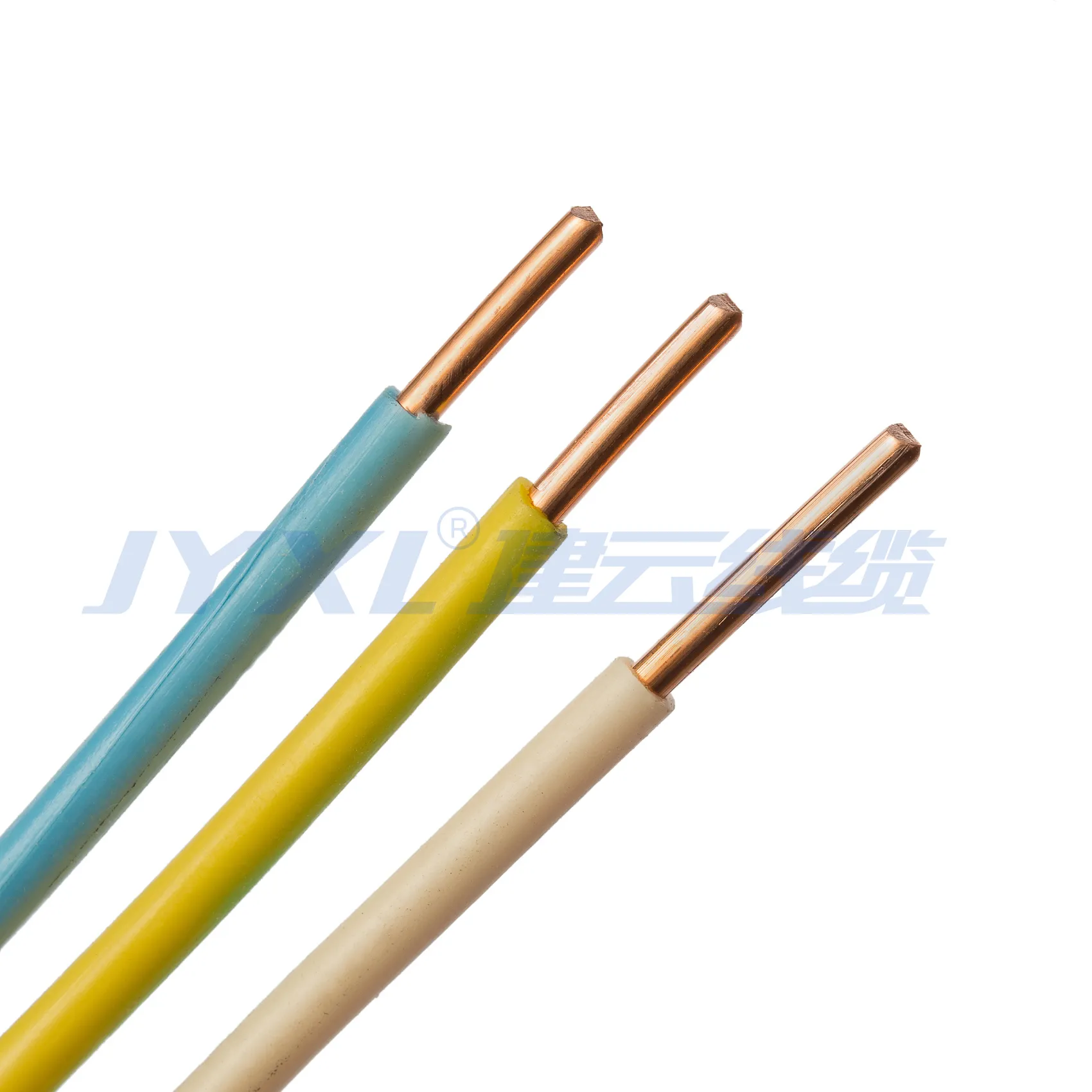
Jianyun H07V-U Solid Copper PVC Wire is a single core rigid electrical wire manu
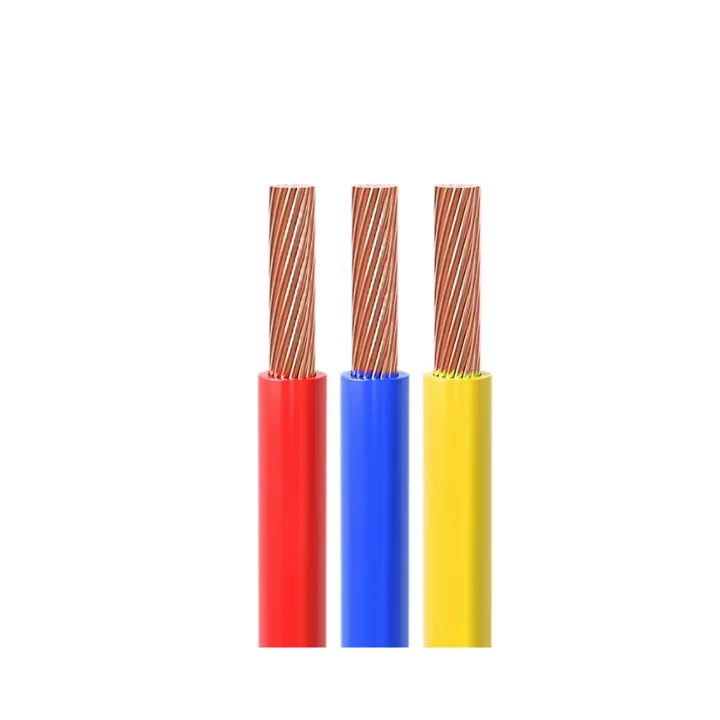
CE Certification 450/750v H07VVF Flexible Copper PVC Insulated Ac Cable 3*2.5 Mm