Keep up to date with our latest company news and relevant industry knowledge.
Time: 2026-08-08 05:56:53 Source: Henan Province Jianyun Cable Co., Ltd.
Author: Jianyun Cable
Solar cable is a critical component in photovoltaic power systems. It carries direct current between solar modules, combiner boxes, inverters, and other parts of the PV system while operating continuously in outdoor environments.
Unlike ordinary building wire, solar cable must withstand sunlight, temperature changes, moisture, mechanical stress, and long-term outdoor exposure. Conductor flexibility, insulation material, voltage rating, cable size, and compliance with photovoltaic standards are therefore important factors when selecting a cable.
Jianyun Cable supplies H1Z2Z2-K solar cable with flexible tinned copper conductors, XLPO insulation, and XLPO outer sheathing for residential, commercial, industrial, and utility-scale photovoltaic installations.
Recommended Solar Cable:
H1Z2Z2-K XLPO Solar Cable from Jianyun CableSolar cable is a specialized electrical cable designed for photovoltaic systems. It is commonly installed on the DC side of a PV system to connect solar panels with combiner boxes, inverters, and other electrical equipment.
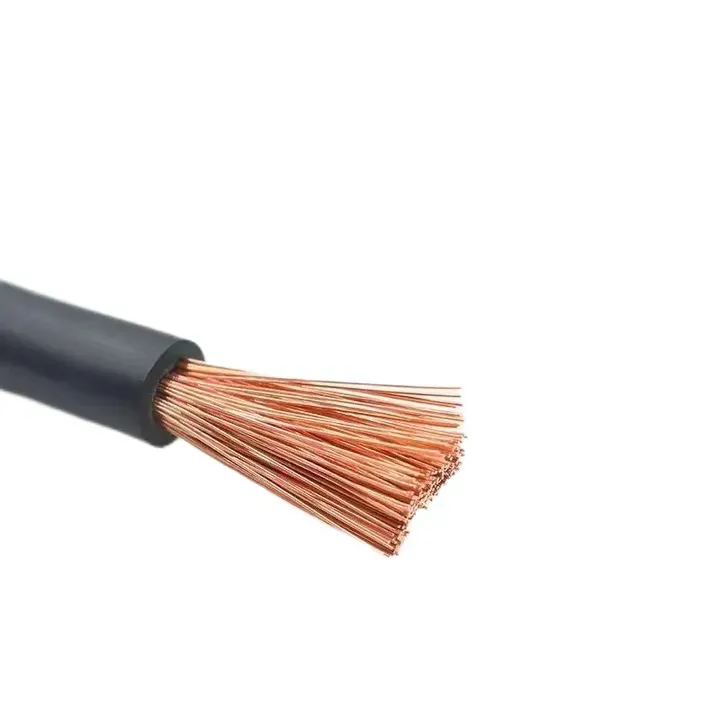
H1Z2Z2-K solar cable uses a flexible tinned copper conductor together with cross-linked polyolefin insulation and sheathing. This construction helps the cable provide reliable electrical performance while remaining suitable for demanding outdoor installations.
According to the Jianyun Cable product specification, the cable is manufactured to EN 50618 and is designed for photovoltaic DC systems with nominal voltages up to 1.5kV between conductors or between conductor and earth. :contentReference[oaicite:1]{index=1}
| Component | Main Function |
|---|---|
| Tinned copper conductor | Provides reliable conductivity and improved corrosion resistance |
| Flexible stranded construction | Supports easier routing around photovoltaic modules and equipment |
| XLPO insulation | Provides electrical insulation and thermal performance |
| XLPO outer sheath | Protects the cable against outdoor environmental exposure |
| Single-core design | Suitable for positive and negative DC photovoltaic circuits |
| Advantage | Practical Benefit |
|---|---|
| Tinned copper conductor | Supports stable conductivity in outdoor PV installations |
| XLPO insulation | Provides strong electrical and thermal performance |
| Flexible construction | Simplifies installation around panels, frames, and cable trays |
| Wide temperature range | Suitable for solar installations in different climates |
| Low-smoke zero-halogen design | Supports improved fire-safety performance |
| EN 50618 compliance | Provides a recognized specification for photovoltaic cable projects |
Solar installations remain outdoors for long periods and may be exposed to humidity, condensation, and temperature changes. For this reason, tinned copper is commonly used in photovoltaic cables.
The tin coating provides an additional protective layer around the copper strands and helps reduce oxidation during long-term service. It also preserves the flexibility of the fine-stranded conductor.
This makes tinned copper a practical conductor choice for rooftop arrays, ground-mounted PV systems, and other outdoor solar installations.
XLPO stands for cross-linked polyolefin. It is commonly used for photovoltaic cable insulation and sheathing because it provides strong electrical insulation and stable performance under elevated temperatures.
Cross-linking improves the material's thermal and mechanical stability compared with conventional thermoplastic compounds. This is particularly important for cables installed behind solar panels, where operating temperatures can become significantly higher than the surrounding air temperature.
The Jianyun Cable H1Z2Z2-K product uses XLPO for both insulation and the outer jacket. :contentReference[oaicite:2]{index=2}
| Feature | Solar Cable | Ordinary Electrical Wire |
|---|---|---|
| Primary application | Photovoltaic DC systems | General indoor electrical wiring |
| Conductor | Often flexible tinned copper | Copper or aluminum depending on application |
| Insulation | Cross-linked material such as XLPO | Commonly PVC or other general-purpose materials |
| Outdoor exposure | Designed for PV installation environments | Depends on the specific wire type |
| Typical standard | EN 50618 | Depends on building or equipment wiring requirements |
| Cable Size | Typical Consideration | Nominal Overall Diameter |
|---|---|---|
| 1.5mm² | Smaller photovoltaic circuits | Approx. 5.4mm |
| 2.5mm² | Light PV connections | Approx. 5.8mm |
| 4mm² | Common residential and commercial PV circuits | Approx. 6.4mm |
| 6mm² | Common solar array connections | Approx. 7.0mm |
| 10mm² | Higher-current or longer DC runs | Approx. 8.6mm |
| 16mm² | Commercial PV and larger DC circuits | Approx. 9.8mm |
| 25mm² | Large photovoltaic installations | Approx. 11.1mm |
| 35mm² | Higher-capacity PV systems | Approx. 12.3mm |
The product page lists sizes from 1.5mm² through 35mm² with corresponding conductor strand counts, insulation thicknesses, sheath thicknesses, overall diameters, and cable weights. :contentReference[oaicite:3]{index=3}
| Selection Factor | Recommendation |
|---|---|
| DC voltage | Confirm the cable rating matches the photovoltaic system voltage |
| Operating current | Select conductor size according to expected continuous DC current |
| Cable length | Calculate voltage drop for longer panel-to-inverter routes |
| Installation temperature | Consider module temperature and local climate conditions |
| Outdoor exposure | Use photovoltaic cable designed for long-term outdoor installation |
| Flexibility | Choose flexible conductors for routing through module frames and cable trays |
| Fire performance | Confirm low-smoke zero-halogen requirements where applicable |
| Applicable standard | Confirm EN 50618 or the required project specification |
| Specification | Product Information |
|---|---|
| Product model | H1Z2Z2-K |
| Cable type | Photovoltaic DC solar cable |
| Conductor | Flexible tinned copper |
| Insulation | XLPO |
| Outer sheath | XLPO |
| Product page voltage | 0.6/1kV |
| PV application voltage | Up to 1.5kV DC as specified for the PV application |
| Operating temperature | -40°C to +90°C |
| Standard | EN 50618 |
| Available sizes | 1.5mm² to 35mm² on the listed product table |
Jianyun Cable supplies H1Z2Z2-K solar cable for photovoltaic DC circuits in rooftop installations, commercial PV projects, industrial solar systems, and utility-scale solar farms.
The cable uses a flexible tinned copper conductor with XLPO insulation and XLPO sheathing. Multiple conductor sizes can be selected according to current, cable length, voltage drop, system layout, and project specifications.
View Product Details and Request a Quote:
H1Z2Z2-K XLPO Solar Cable for Photovoltaic SystemsSolar cable is an essential part of a reliable photovoltaic system. Its conductor, insulation, voltage rating, temperature capability, and outdoor durability directly affect the performance and safety of DC connections between solar modules and electrical equipment.
Jianyun Cable supplies H1Z2Z2-K solar cable with flexible tinned copper conductors and XLPO insulation for photovoltaic systems operating in demanding outdoor environments.
Request Your Solar Cable Quotation:
Contact Jianyun Cable for H1Z2Z2-K Solar CableSolar cable is used for DC electrical connections between photovoltaic modules, combiner boxes, inverters, and other equipment in residential, commercial, and utility-scale solar systems.
H1Z2Z2-K is a photovoltaic cable designed with a flexible tinned copper conductor, cross-linked insulation, and a cross-linked outer sheath for solar DC installations.
Tinned copper provides reliable electrical conductivity while offering additional protection against oxidation and corrosion in long-term outdoor installations.
XLPO is cross-linked polyolefin. It provides electrical insulation, thermal stability, and mechanical durability suitable for photovoltaic cable applications.
The Jianyun Cable product page specifies an operating temperature range from -40°C to +90°C.
Solar cable size should be selected according to system voltage, DC current, cable length, allowable voltage drop, installation temperature, routing conditions, and the applicable photovoltaic standard.
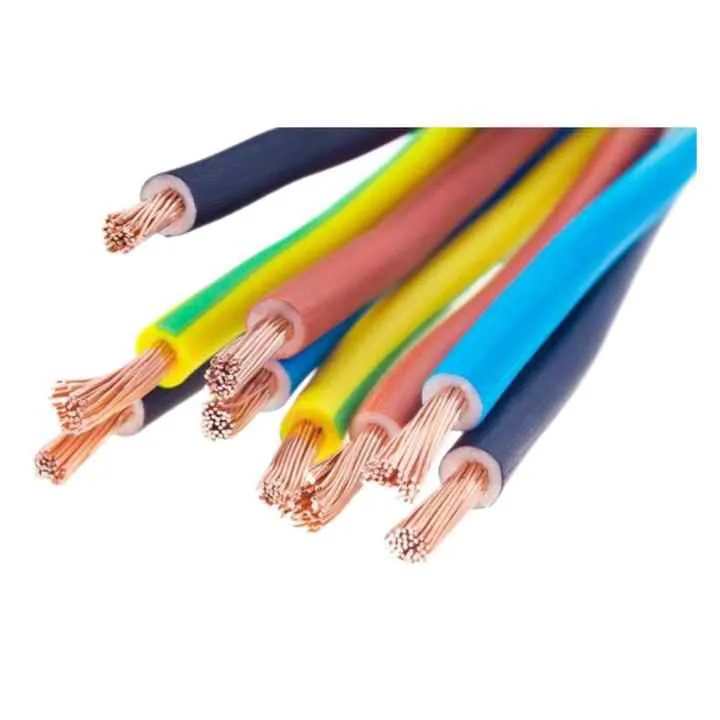
Flexible copper electrical wire with stranded copper conductor, PVC insulation a
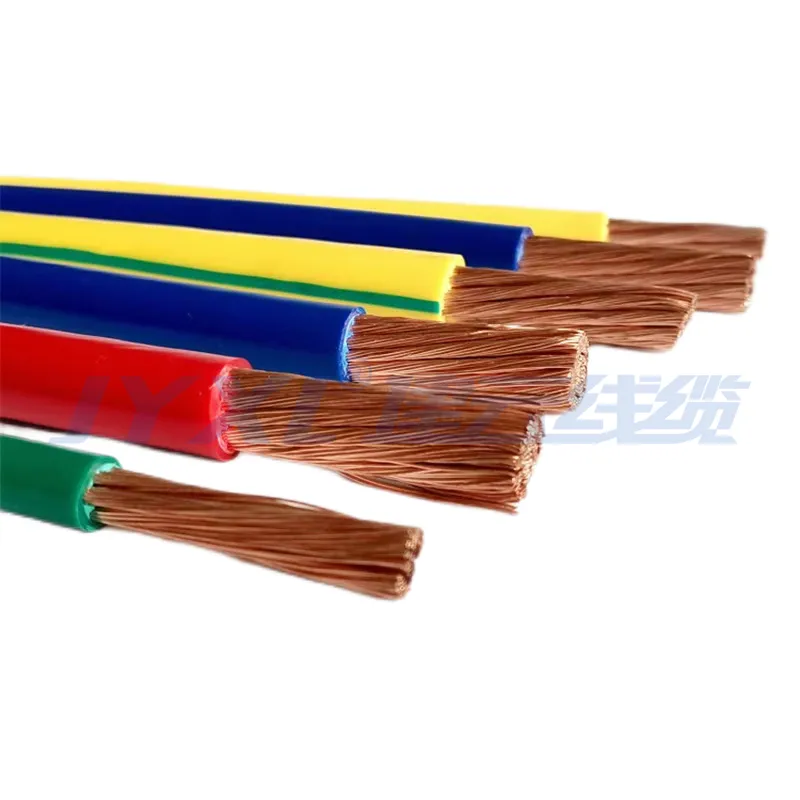
H07V-K flexible electrical wire with 1.5mm² and 2.5mm² stranded copper conductor
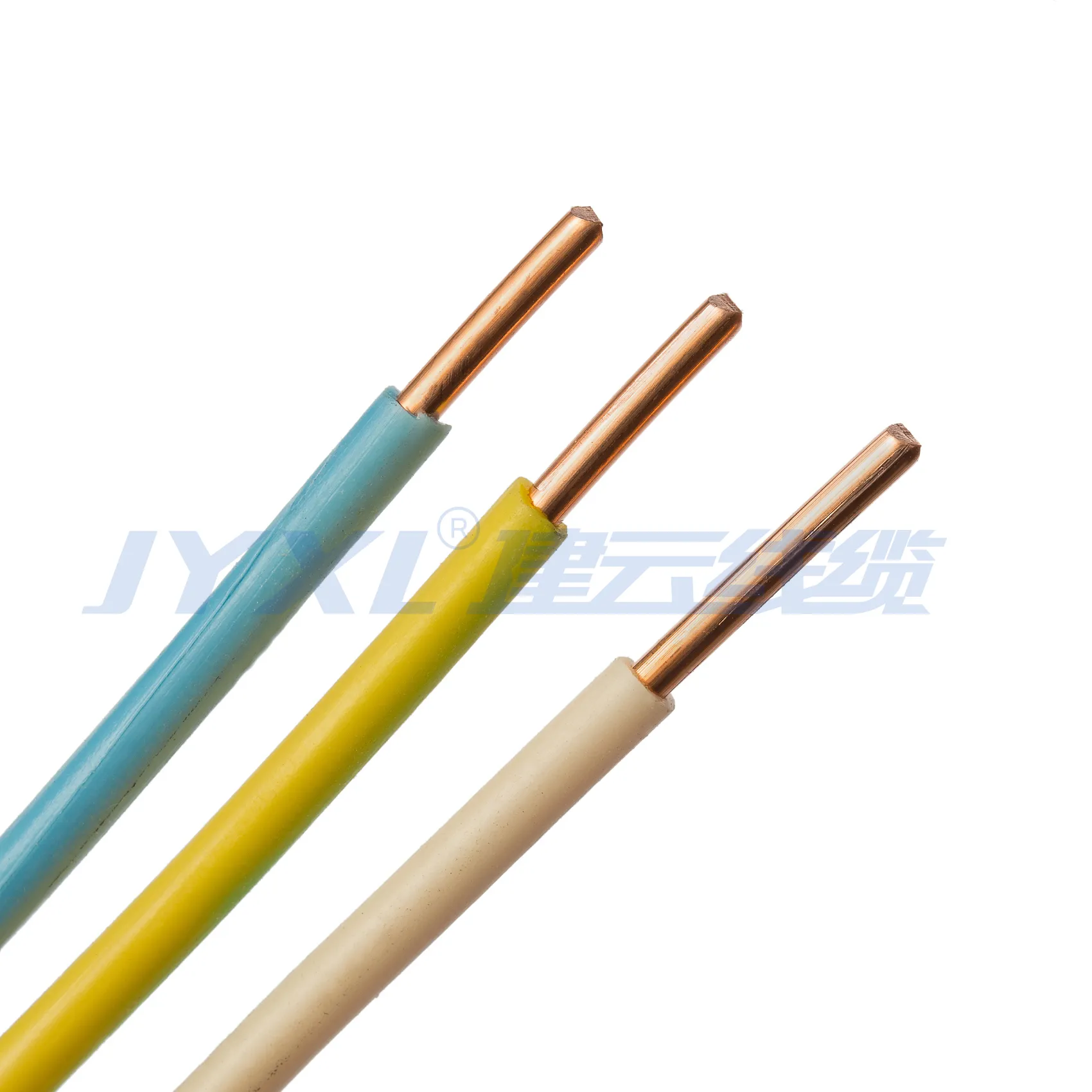
Jianyun H07V-U Solid Copper PVC Wire is a single core rigid electrical wire manu
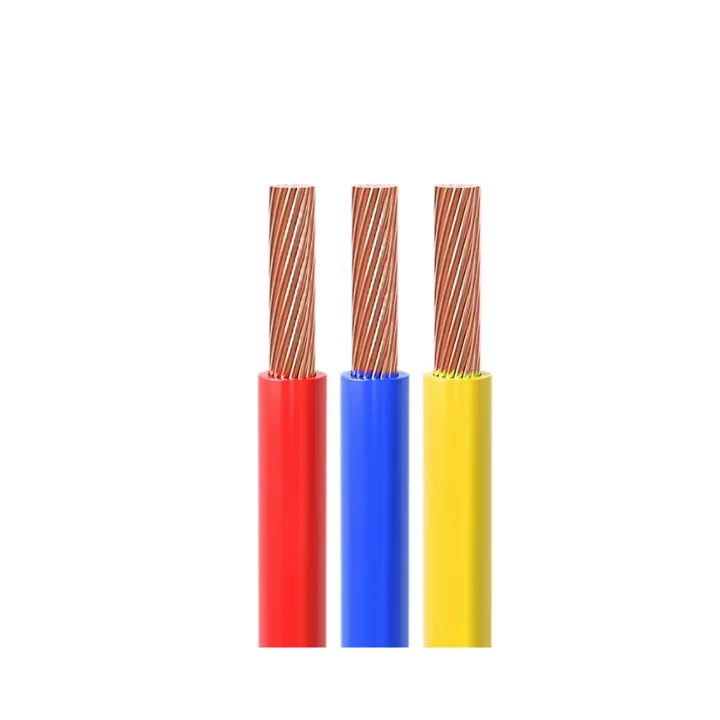
CE Certification 450/750v H07VVF Flexible Copper PVC Insulated Ac Cable 3*2.5 Mm