Keep up to date with our latest company news and relevant industry knowledge.
Time: 2026-09-02 08:48:37 Source: Henan Province Jianyun Cable Co., Ltd.
Cable Knowledge Series
A plain-language guide to medium voltage XLPE power cable type designations — what every letter and number means, how 11kV cable is built, and how to choose between armoured, unarmoured, copper and aluminum options.
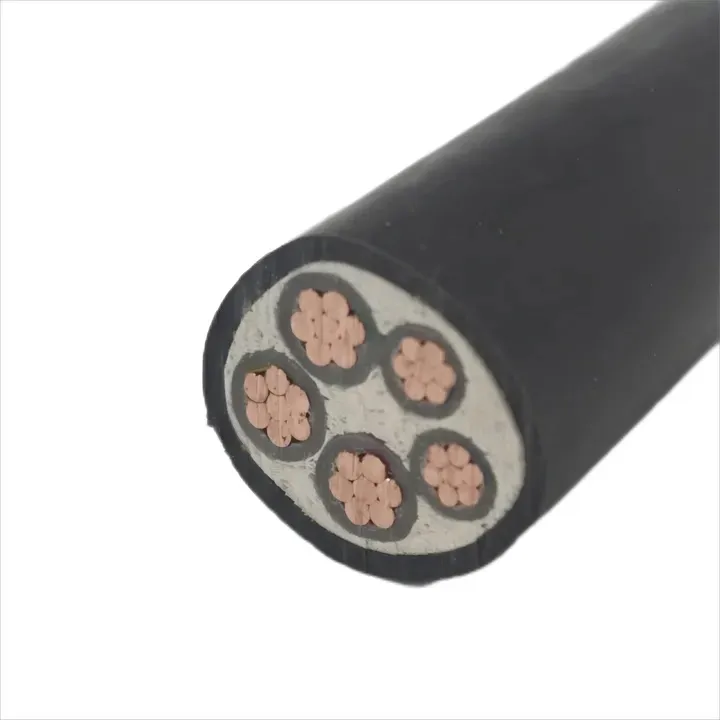
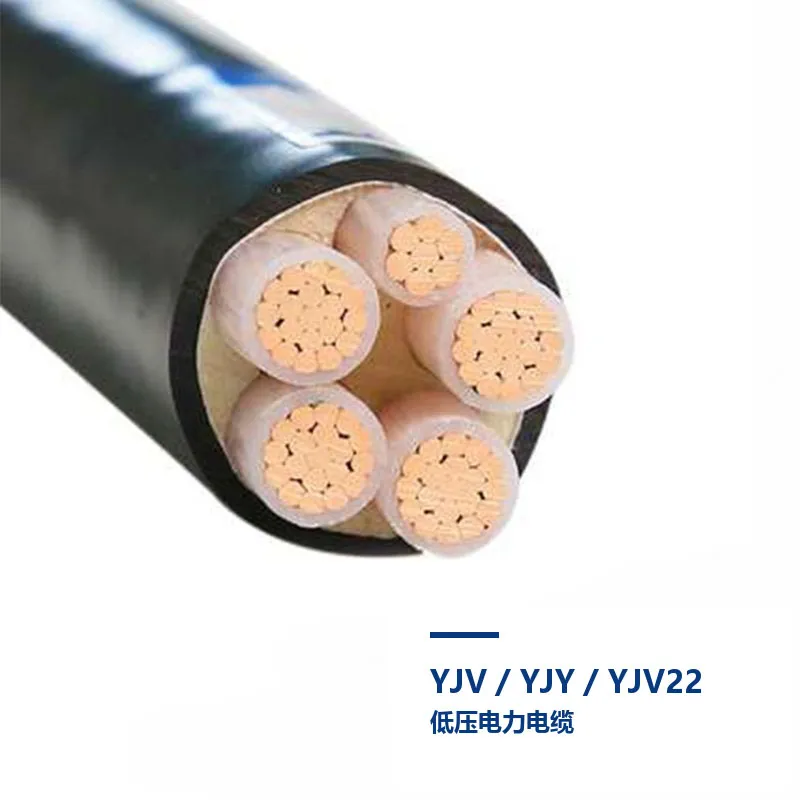
Open a cable supplier's catalog and you'll run into names like YJV, YJLV22, or YJV32 — a string of letters and numbers that looks like it needs a decoder ring. In reality, it's a compact code, and once you know how to read it, you can tell the conductor material, insulation type, sheath material and armour type of a cable just from its name, without opening a datasheet.
This guide breaks that code down piece by piece, using 11kV XLPE medium voltage cable as the working example, and covers the standards behind it and how to choose the right variant for a project.
Medium voltage power cables — generally rated from 1kV up to 35kV — are built from several distinct layers: a conductor, insulation, and an outer sheath, sometimes with an armour layer added for mechanical protection. Rather than writing out a full description every time, the industry (particularly under Chinese GB/T and closely related IEC-based naming conventions) condenses this construction into a short alphanumeric code.
Once you can read the code, a name like YJV32 tells you almost everything about a cable's construction before you even see a spec sheet.
Each part of the code corresponds to a specific layer or material in the cable's construction:
| Code Element | What It Means |
|---|---|
| (no letter) conductor | Copper conductor (the default — no letter needed) |
| L | Aluminum conductor |
| YJ | XLPE (cross-linked polyethylene) insulation |
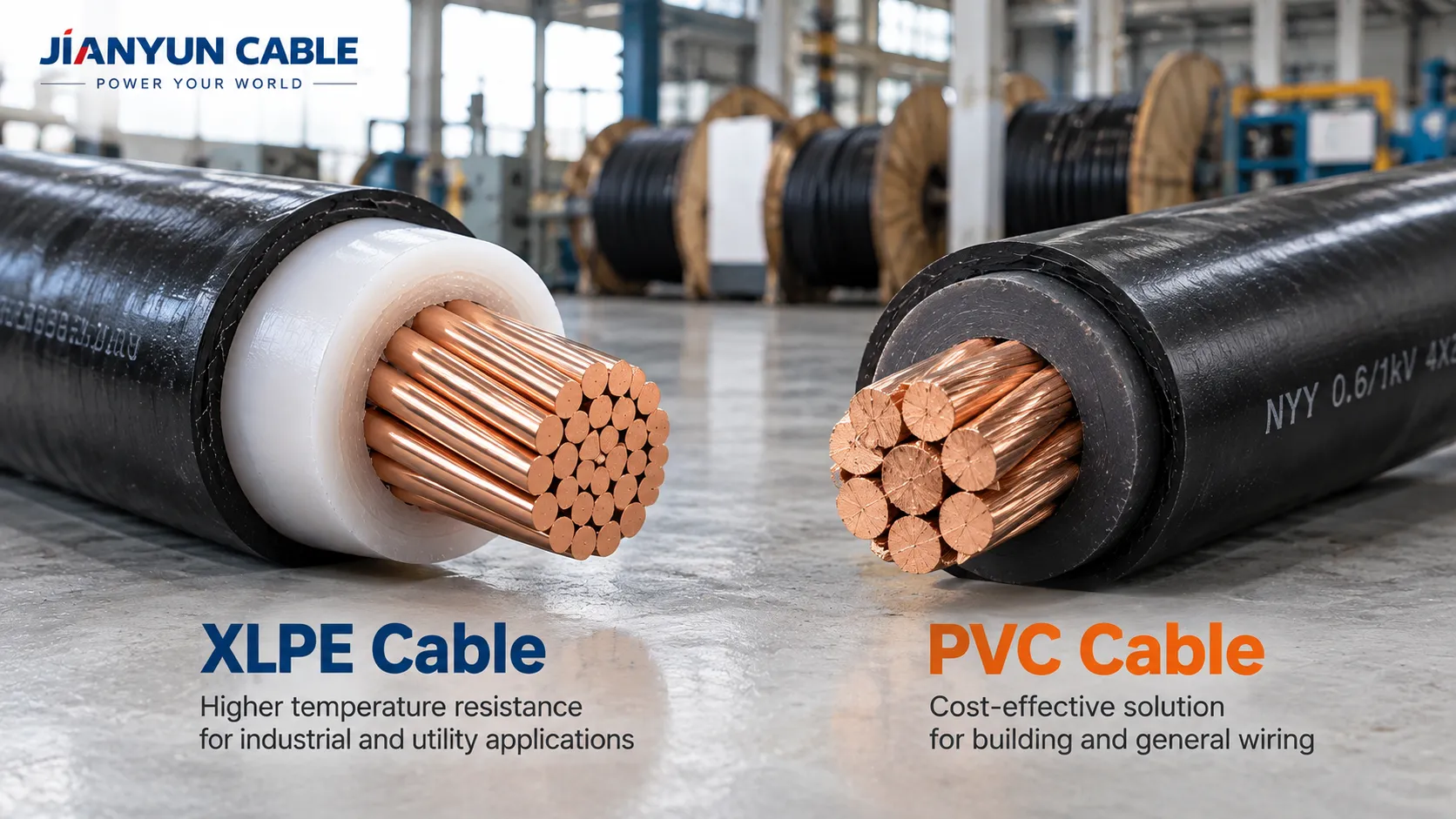
| V | PVC sheath |
| Y (as sheath code) | PE (polyethylene) sheath |
| 22 | Steel tape armoured, PVC sheathed |
| 23 | Steel tape armoured, PE sheathed |
| 32 | Steel wire armoured, PVC sheathed |
| 33 | Steel wire armoured, PE sheathed |
| Type Code | Full Construction |
|---|---|
| YJV | Copper conductor, XLPE insulated, PVC sheathed |
| YJLV | Aluminum conductor, XLPE insulated, PVC sheathed |
| YJY | Copper conductor, XLPE insulated, PE sheathed |
| YJLY | Aluminum conductor, XLPE insulated, PE sheathed |
| YJV22 | Copper conductor, XLPE insulated, steel tape armoured, PVC sheathed |
| YJLV22 | Aluminum conductor, XLPE insulated, steel tape armoured, PVC sheathed |
| YJV32 | Copper conductor, XLPE insulated, steel wire armoured, PVC sheathed |
| YJLV32 | Aluminum conductor, XLPE insulated, steel wire armoured, PVC sheathed |
Notice the pattern: swap "V" for "Y" at the end and the sheath changes from PVC to PE; add "22" or "32" and you've added armour; drop in an "L" right after "YJ" and the conductor changes from copper to aluminum.
11kV XLPE cable — along with other common medium voltage grades like 5kV, 15kV, 20kV, 25kV and 33kV — is typically manufactured under GB/T 12706.1, which is closely equivalent to IEC 60502-1, with BS, DIN or ICEA variants available depending on the destination market.
| Parameter | Typical Value |
|---|---|
| Voltage Grade | 1kV to 35kV (5kV, 11kV, 15kV, 20kV, 25kV, 33kV common) |
| Max. Continuous Conductor Temperature | 90°C |
| Max. Short-Circuit Temperature | 250°C (5 seconds maximum) |
| Minimum Bending Radius | Not less than 15 times the cable diameter |
| Cross-Sectional Range (this series) | 120mm² to 400mm² |
Indicative current-carrying capacity for a buried 3-core 11kV copper XLPE cable rises with cross-section — roughly in the range of 250-260A at 120mm² up to around 450-470A at 400mm², though the exact figure always depends on installation method, grouping and ambient/ground temperature, so a full ampacity table should be checked for the specific installation conditions.
Q: What does the "22" in YJV22 actually stand for?
A: The number "22" indicates the cable has steel tape armour beneath a PVC outer sheath — the first digit generally relates to the armour type and the second to the sheath, following the standard designation system.
Q: Is YJV32 stronger than YJV22?
A: Steel wire armour (used in the "32" and "33" series) generally provides greater tensile and mechanical strength than steel tape armour (used in "22" and "23"), making wire-armoured types more suitable for direct burial in rocky or high-stress ground conditions.
Q: Can I tell the voltage rating from the type code alone?
A: No — the type code (like YJV or YJV22) only describes construction (conductor, insulation, sheath, armour); the voltage grade (such as 11kV or 20kV) is specified separately alongside the code.
Q: Why does aluminum conductor cable use an "L" instead of no letter?
A: Copper is treated as the default conductor material in this naming system, so no letter is needed; aluminum is the variation, so it gets marked explicitly with an "L".
Q: Is this naming system used outside of China?
A: This specific letter-code system is most closely associated with Chinese GB/T standards, though the underlying cable constructions it describes align closely with IEC 60502, meaning equivalent cables are widely available and understood internationally even where the naming convention differs.
A code like YJLV22 might look cryptic at first glance, but it's really just shorthand — aluminum conductor, XLPE insulation, steel tape armour, PVC sheath, all packed into six characters. Once the pattern clicks, reading a cable catalog becomes a lot faster, and choosing between copper vs aluminum, armoured vs unarmoured, or PVC vs PE sheath becomes a matter of matching the letters to the project's actual requirements.
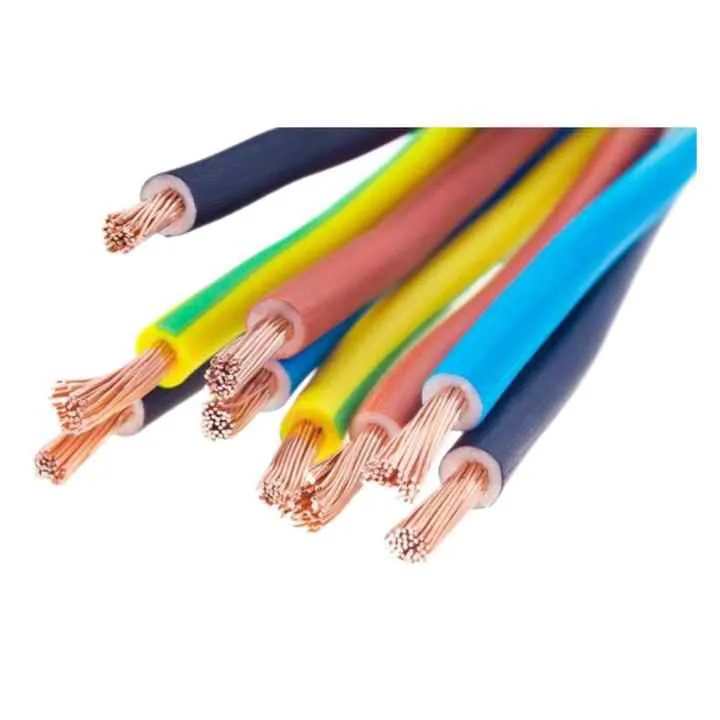
Flexible copper electrical wire with stranded copper conductor, PVC insulation a
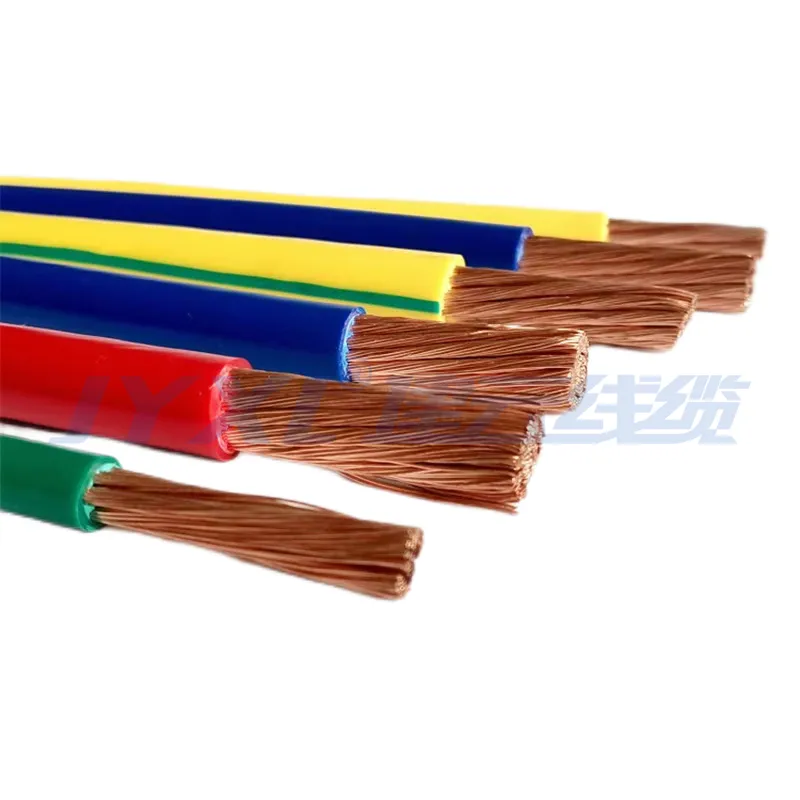
H07V-K flexible electrical wire with 1.5mm² and 2.5mm² stranded copper conductor
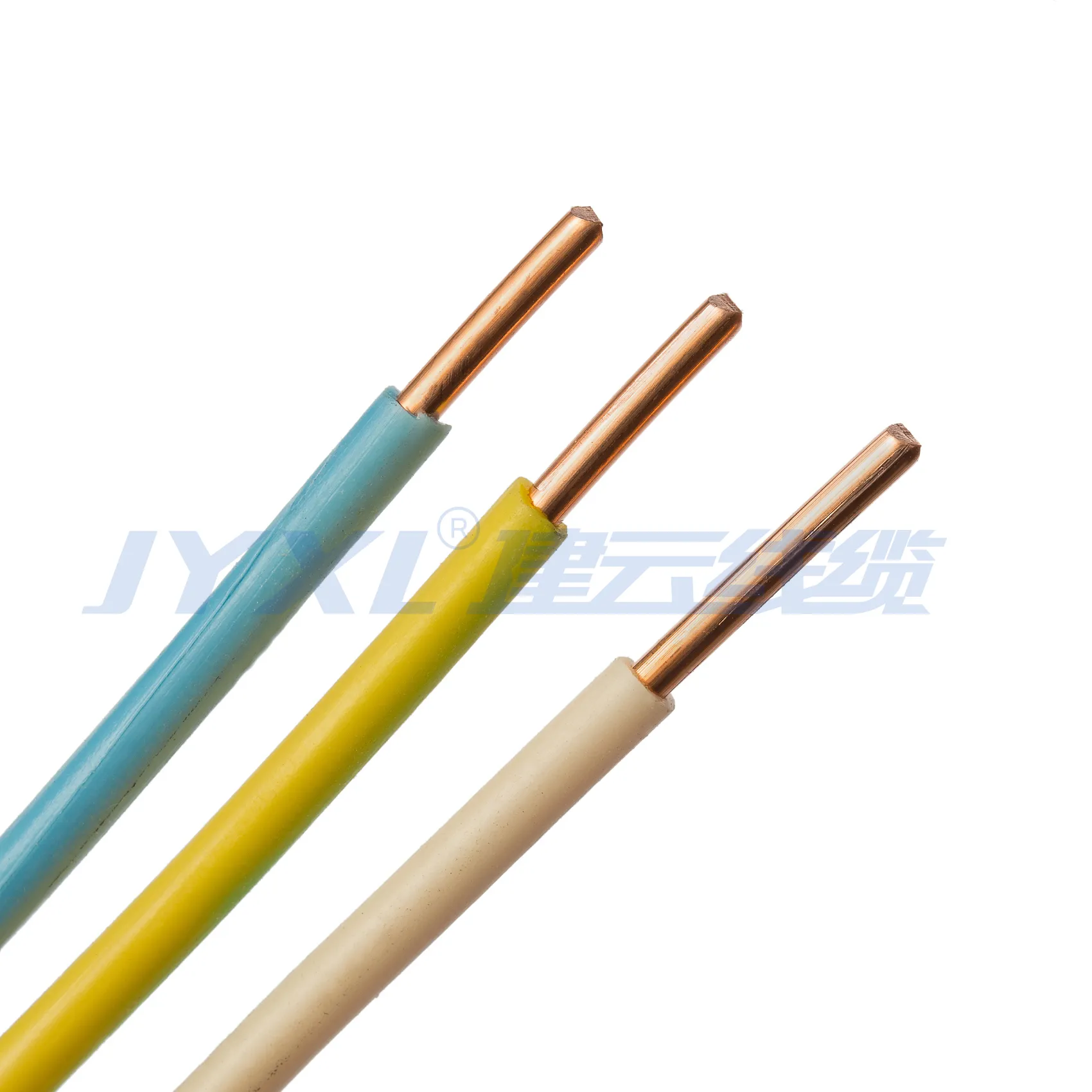
Jianyun H07V-U Solid Copper PVC Wire is a single core rigid electrical wire manu
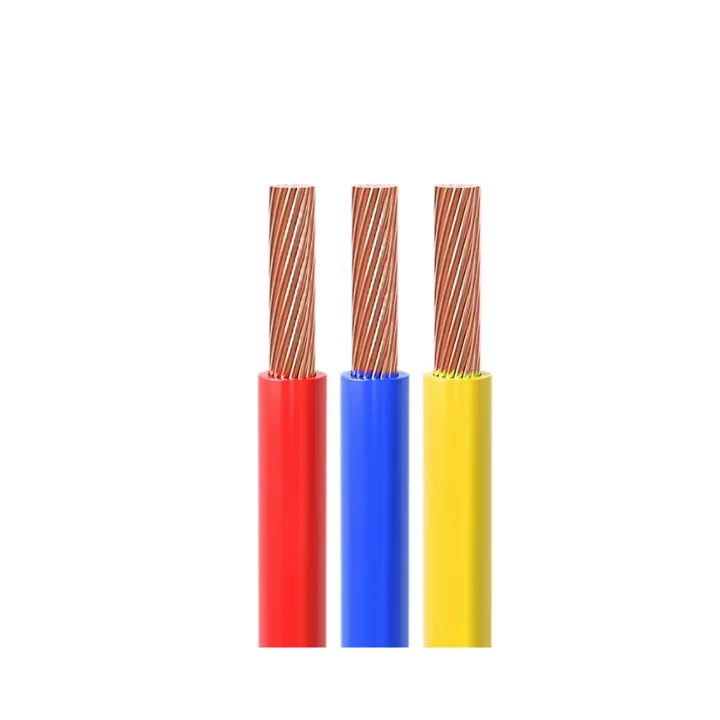
CE Certification 450/750v H07VVF Flexible Copper PVC Insulated Ac Cable 3*2.5 Mm