Keep up to date with our latest company news and relevant industry knowledge.
Time: 2026-08-31 14:22:45 Source: Henan Province Jianyun Cable Co., Ltd.
Cable Knowledge Series
Walk down almost any residential street and you'll see it overhead: a neat, twisted bundle of wires running from a utility pole to the side of a house. That bundle isn't just bare wire twisted together for convenience — it's a purpose-built product called aerial bundled cable (ABC), and the way its conductors are configured says a lot about the power it's designed to deliver.
This guide covers what ABC cable is, how duplex, triplex and quadruplex configurations differ, the standards behind them, typical technical parameters, and how to choose the right one for a project.
Aerial bundled cable is an overhead power cable made of multiple individually insulated conductors twisted together into a single compact bundle, typically supported by a bare or insulated neutral "messenger" wire that carries the mechanical load of the span. Unlike bare overhead conductor, where air provides the insulation between phases, each conductor in an ABC bundle carries its own insulation layer.
ABC cable is commonly used for:
| Component | Detail |
|---|---|
| Phase Conductor(s) | Hard-drawn 1350-H19 aluminum, concentric-lay-stranded and compressed |
| Insulation | Cross-linked polyethylene (XLPE) as standard, or linear low-density polyethylene (LLDPE) as an alternative |
| Neutral Messenger | Bare or insulated — commonly AAC, ACSR, or 6201-T81 aluminum alloy, sized for the tensile strength the span requires |
| Assembly | Insulated phase conductors twisted helically around (or alongside) the neutral messenger |
The neutral messenger does double duty — it carries the mechanical tension of the span so the insulated phase conductors themselves don't have to bear that load.
ABC service drop cable is named by how many conductors are bundled together, and each configuration serves a different power distribution need:
| Configuration | Conductors | Typical Use |
|---|---|---|
| Duplex | 1 insulated phase conductor + neutral messenger | 120V service — temporary construction power, street or outdoor lighting |
| Triplex | 2 insulated phase conductors + neutral messenger | Single-phase 120/240V service drops — the standard for most residential connections |
| Quadruplex | 3 insulated phase conductors + neutral messenger | Three-phase service — commercial and industrial connections, or pole-mounted transformers |
In short: single-phase residential service usually calls for triplex, while three-phase loads need quadruplex. Duplex is reserved for simpler, lower-voltage single-circuit applications.
ABC and service drop cable is commonly manufactured to ANSI/ICEA S-76-474 along with related aluminum conductor standards such as ASTM B230, B231, B232 and B399. Depending on the region, IEC 60502, NFC 33-209, BS 7870-5 and GB/T 12527 are also widely referenced for medium- and low-voltage ABC cable.
A typical AWG-based data sheet for quadruplex service drop cable looks like this:
| Code Name | Phase Size (AWG) | Neutral Type | Neutral Size (AWG) | XLPE Rating (A) |
|---|---|---|---|---|
| Pekingese | 6 solid | AAC | 6, 7-wire | 70 |
| Dachshund | 4 solid | AAC | 4, 7-wire | 90 |
| Doberman | 2, 7-wire | AAC | 2, 7-wire | 120 |
| Malamute | 1/0, 19-wire | AAC | 1/0, 7-wire | 160 |
| Chow | 2, 7-wire | ACSR | 2, 6/5 | 120 |
Note the code names — like Pekingese, Dachshund and Doberman — these follow the same naming tradition as bare conductor code words, just applied to the phase conductor size within the bundle. Maximum service temperature for XLPE-insulated ABC is typically rated around 90°C, with common minimum service temperatures around -20°C.
Q: What's the difference between triplex and quadruplex cable?
A: Triplex has two insulated phase conductors plus a neutral messenger, built for single-phase 120/240V service, while quadruplex has three insulated phase conductors plus a neutral, built for three-phase power distribution.
Q: Why does the neutral conductor stay bare on some ABC cables?
A: The bare neutral messenger often carries the mechanical tension of the span, and since it's grounded, leaving it uninsulated doesn't compromise safety while simplifying construction and reducing weight.
Q: Is XLPE insulation better than PE insulation for ABC cable?
A: XLPE typically allows for a higher continuous operating temperature (commonly up to 90°C versus around 75°C for PE), giving it higher current-carrying capacity for the same conductor size.
Q: Can ABC cable be used for medium-voltage lines, not just service drops?
A: Yes, medium-voltage aerial bundled cable exists under standards like IEC 60502 and NFC 33-209, though the construction and insulation thickness differ from low-voltage service drop cable.
Q: How long can an ABC cable span be?
A: Span length depends on the neutral messenger's tensile strength and the local ice and wind loading conditions, so it's typically calculated per project rather than fixed at a single figure.
Aerial bundled cable turns a handful of loose wires into a single, organized, insulated bundle — and the choice between duplex, triplex and quadruplex comes down to a simple question: how many phases does this connection need to carry? Matching the right configuration, conductor size and neutral messenger to the load and span keeps an overhead service drop both safe and reliable for decades of use.
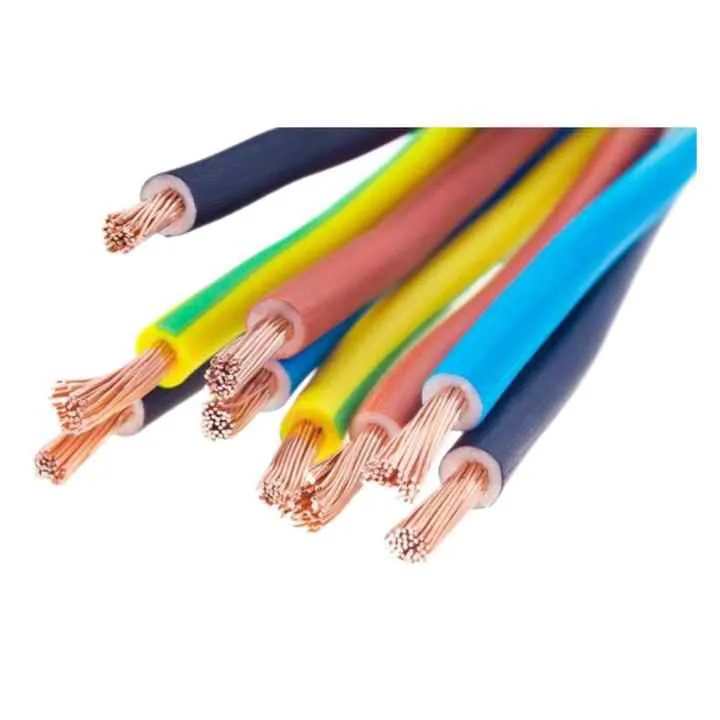
Flexible copper electrical wire with stranded copper conductor, PVC insulation a
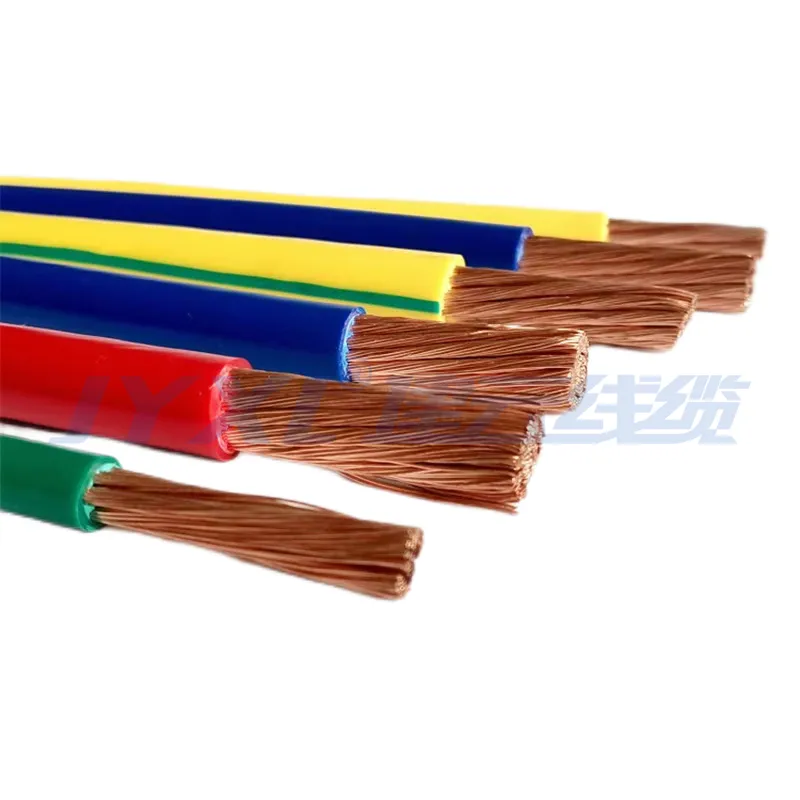
H07V-K flexible electrical wire with 1.5mm² and 2.5mm² stranded copper conductor
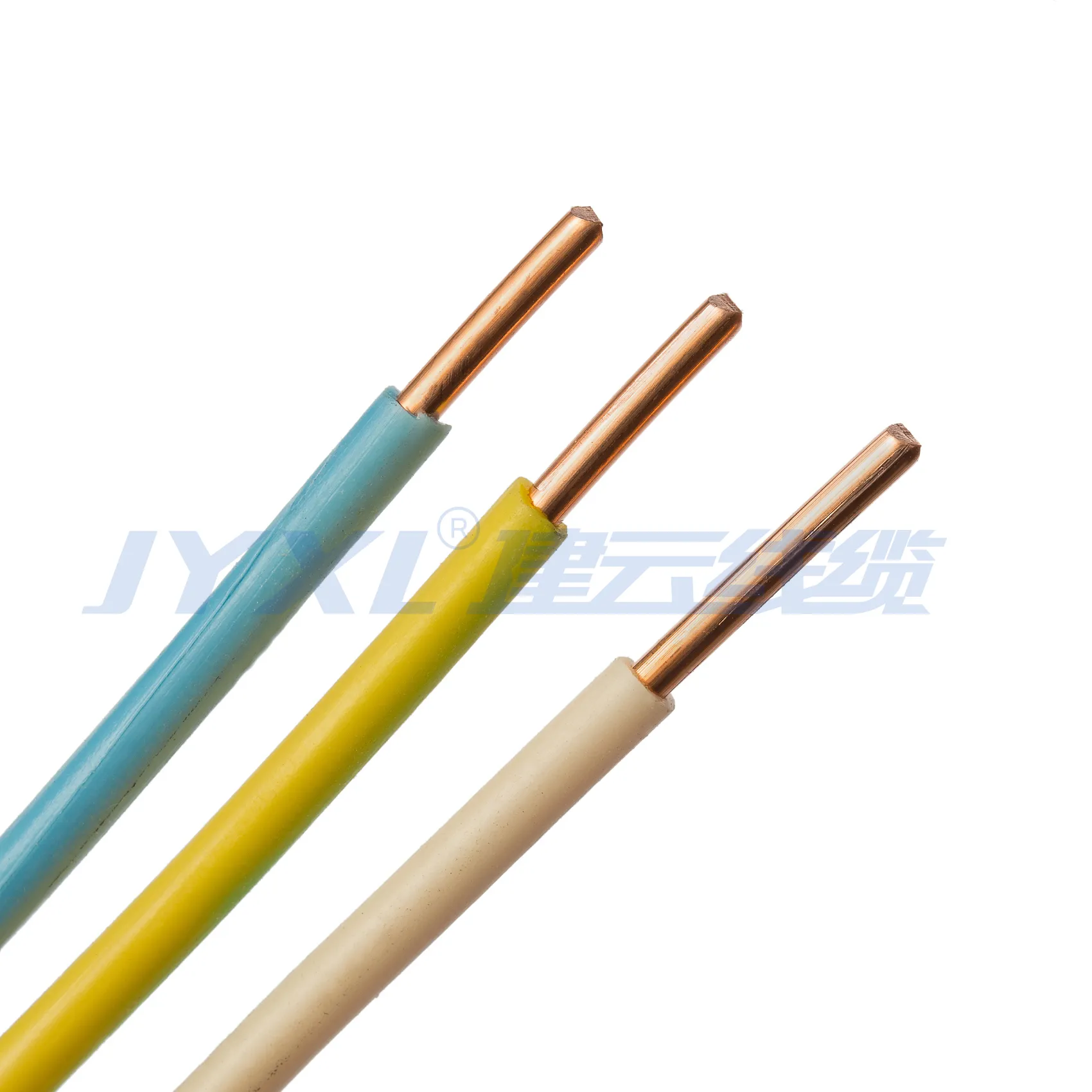
Jianyun H07V-U Solid Copper PVC Wire is a single core rigid electrical wire manu
CE Certification 450/750v H07VVF Flexible Copper PVC Insulated Ac Cable 3*2.5 Mm