Keep up to date with our latest company news and relevant industry knowledge.
Time: 2026-09-03 08:43:45 Source: Henan Province Jianyun Cable Co., Ltd.
Cable Knowledge Series
Why the same low-voltage power cable can be labeled NYY, YJV, or something else entirely depending on where you're buying — and how to match the codes to the actual construction underneath.
Ask a German electrician for a standard power cable and they'll likely say "NYY." Ask a supplier in China for the same construction and they'll offer "YJV" or "VV." Ask in the UK and you might hear it described simply as "PVC/PVC armoured cable." Different names, same job — and for international buyers, that can be a genuine source of confusion.
This guide decodes what NYY actually stands for, lines it up against YJV and other regional naming systems, and explains how to compare cables by construction rather than getting stuck on the name alone.
NYY comes from the German VDE naming convention, and each letter has a specific meaning:
| Letter | Meaning |
|---|---|
| N | Normalized (standardized) cable per VDE conventions, with copper conductor as the default |
| Y (1st) | PVC insulation |
| Y (2nd) | PVC outer sheath |
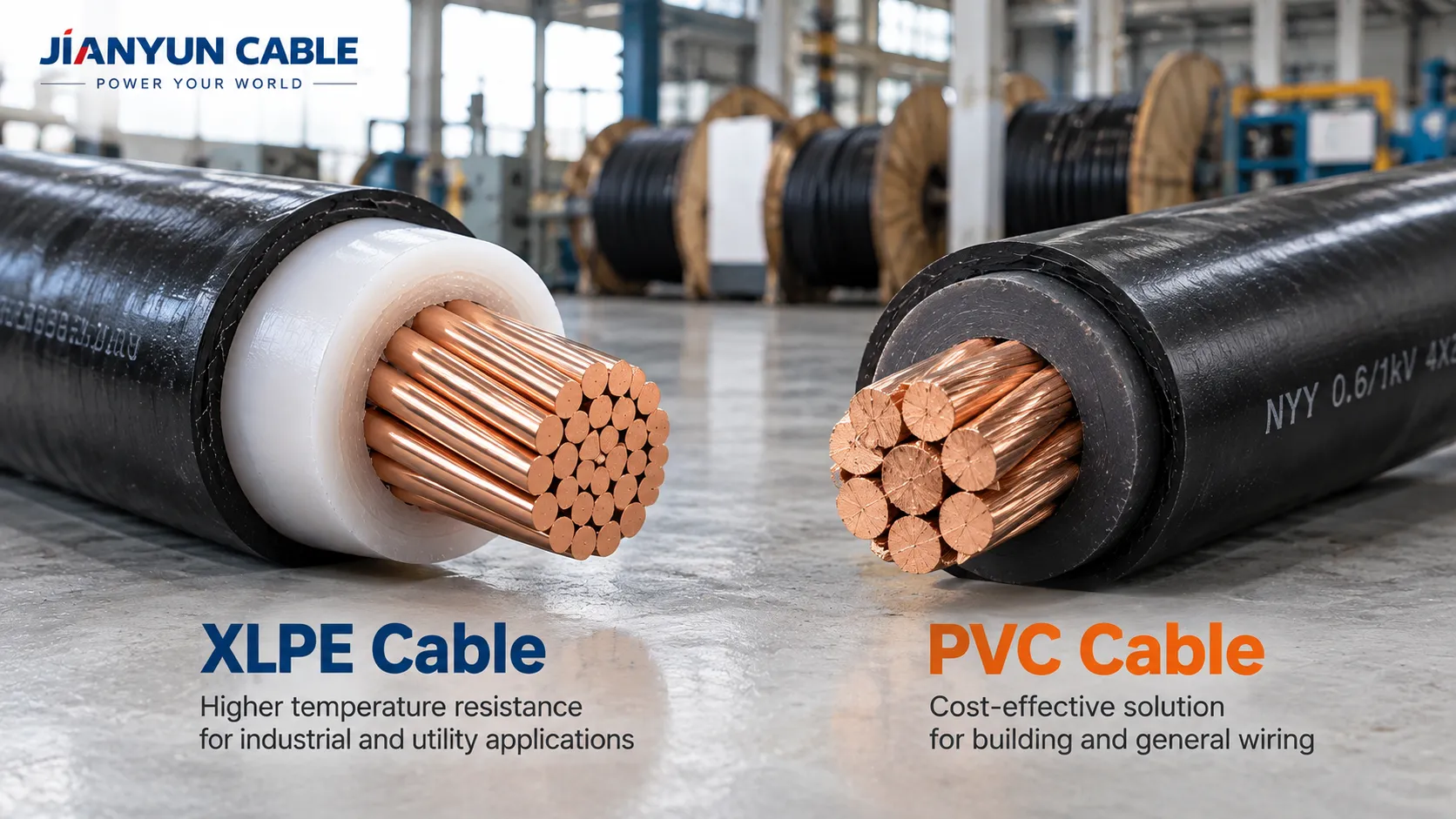
So NYY simply means: copper conductor, PVC insulated, PVC sheathed power cable. Variations follow the same logic — N2XY swaps in XLPE insulation (the "2X" represents cross-linked polyethylene), and NYCWY adds a concentric copper wire screen between insulation and sheath.
Different naming systems describe the same underlying constructions. Here's how the most common ones line up for a basic copper power cable:
| Construction | German (VDE) | Chinese (GB/T) | British (BS) Style |
|---|---|---|---|
| Copper, PVC insulated, PVC sheathed | NYY | VV | PVC/PVC |
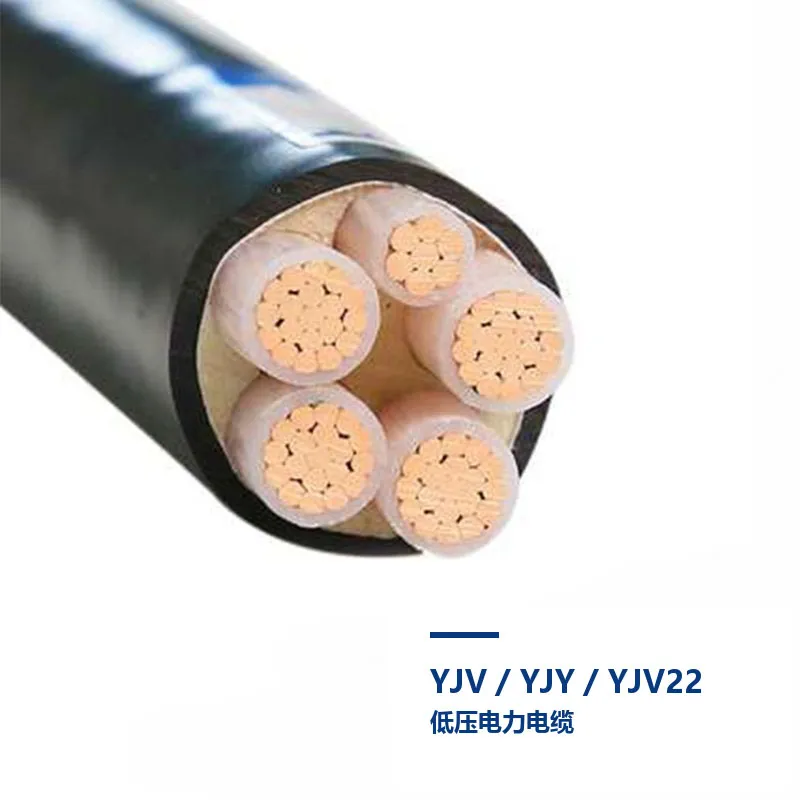
| Copper, XLPE insulated, PVC sheathed | N2XY | YJV | XLPE/PVC |
| Copper, XLPE insulated, steel wire armoured, PVC sheathed | N2XRY | YJV22 / YJV32 | SWA/PVC |
| Aluminum, XLPE insulated, PVC sheathed | NAYY (Al) / NA2XY | YJLV | Al XLPE/PVC |
This is why the exact same physical cable — say, a copper conductor with steel wire armour and XLPE insulation — can show up in a supplier's catalog as N2XRY, YJV32, or simply "SWA armoured XLPE cable," depending on which naming tradition the manufacturer follows.
Naming conventions differ, but the underlying performance standards are often closely aligned or directly cross-referenced:
| Standard | Region / Naming Tradition |
|---|---|
| VDE 0276 / DIN | Germany — source of the NYY/N2XY naming system |
| GB/T 12706 | China — source of the YJV/VV naming system, equivalent to IEC 60502 |
| BS 6346 / BS 5467 | UK — describes cables by construction (PVC/PVC, XLPE/SWA/PVC) rather than a compact code |
| IEC 60502-1 | International reference standard that most regional standards for 0.6/1kV cable are aligned or cross-referenced against |
| Attribute | Typical Value |
|---|---|
| Rated Voltage | 0.6/1kV, with related grades from 1.8/3kV up to 21/35kV depending on construction |
| Conductor | Solid or stranded copper, annealed per IEC 60228 |
| Cross Section Range | 1.5mm² up to 630mm², depending on core count and configuration |
| Core Configurations | 1, 2, 3, 4, 5 core, plus combinations like 3C+1E or 4C+1E (with earth core) |
| Max. Continuous Conductor Temperature | 70°C for PVC insulation, 90°C for XLPE insulation |
| Minimum Bending Radius | Roughly 12-20 times cable diameter, depending on core count and armour |
Q: Is YJV cable the same as NYY cable?
A: Not exactly — YJV uses XLPE insulation while NYY uses PVC insulation; the closer German equivalent to YJV is actually N2XY, since both use cross-linked polyethylene insulation with a PVC sheath.
Q: Why do different countries use different cable naming systems?
A: Each naming system grew out of its own national standards body — Germany's VDE, China's GB/T, and Britain's BS all developed independently, and while the underlying cable science is largely shared internationally, the shorthand codes used to describe it were not standardized globally.
Q: Can I just ask a supplier for "NYY" and get the same cable everywhere?
A: In most cases yes for a standard PVC/PVC copper power cable, but it's safer to confirm construction details and standard compliance directly, since regional variations in exact specification can still exist.
Q: Does the naming system affect cable quality?
A: No — the naming system only describes construction; quality depends on manufacturing process, material grade and compliance testing, which should be verified through certificates and test reports regardless of which naming convention is used.
Q: What's the safest way to specify a cable for an international project?
A: Specify by construction and standard (e.g., "copper conductor, XLPE insulated, PVC sheathed, to IEC 60502-1") rather than relying on a single regional code name, so any supplier can quote the correct equivalent product.
NYY, YJV, N2XY — different letters, same engineering underneath. Once you know that these codes are just regional shorthand for conductor, insulation, sheath and armour choices, comparing cables across borders becomes a lot less confusing. The safest approach for any international order is simple: specify the construction and standard, and let the code name follow from that.
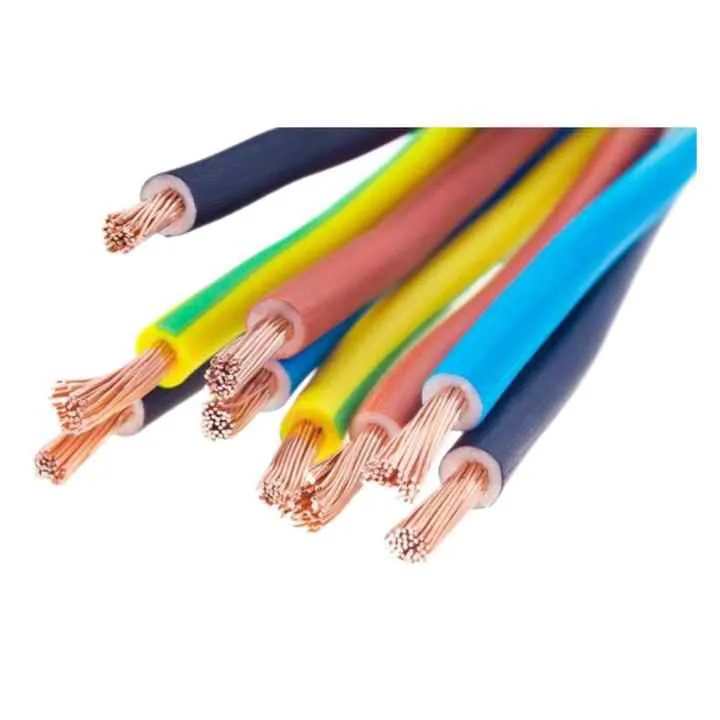
Flexible copper electrical wire with stranded copper conductor, PVC insulation a
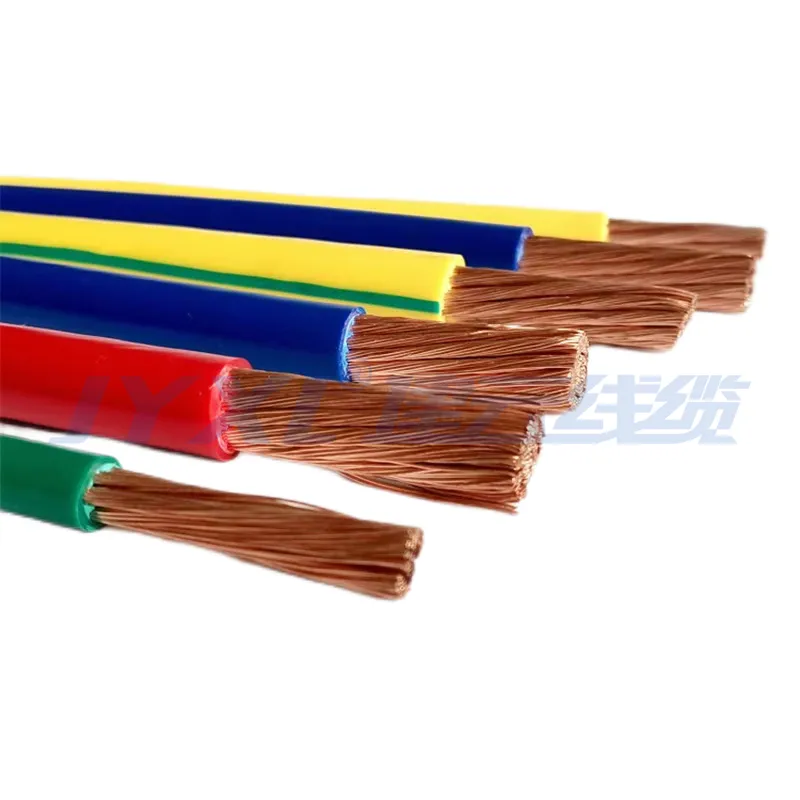
H07V-K flexible electrical wire with 1.5mm² and 2.5mm² stranded copper conductor
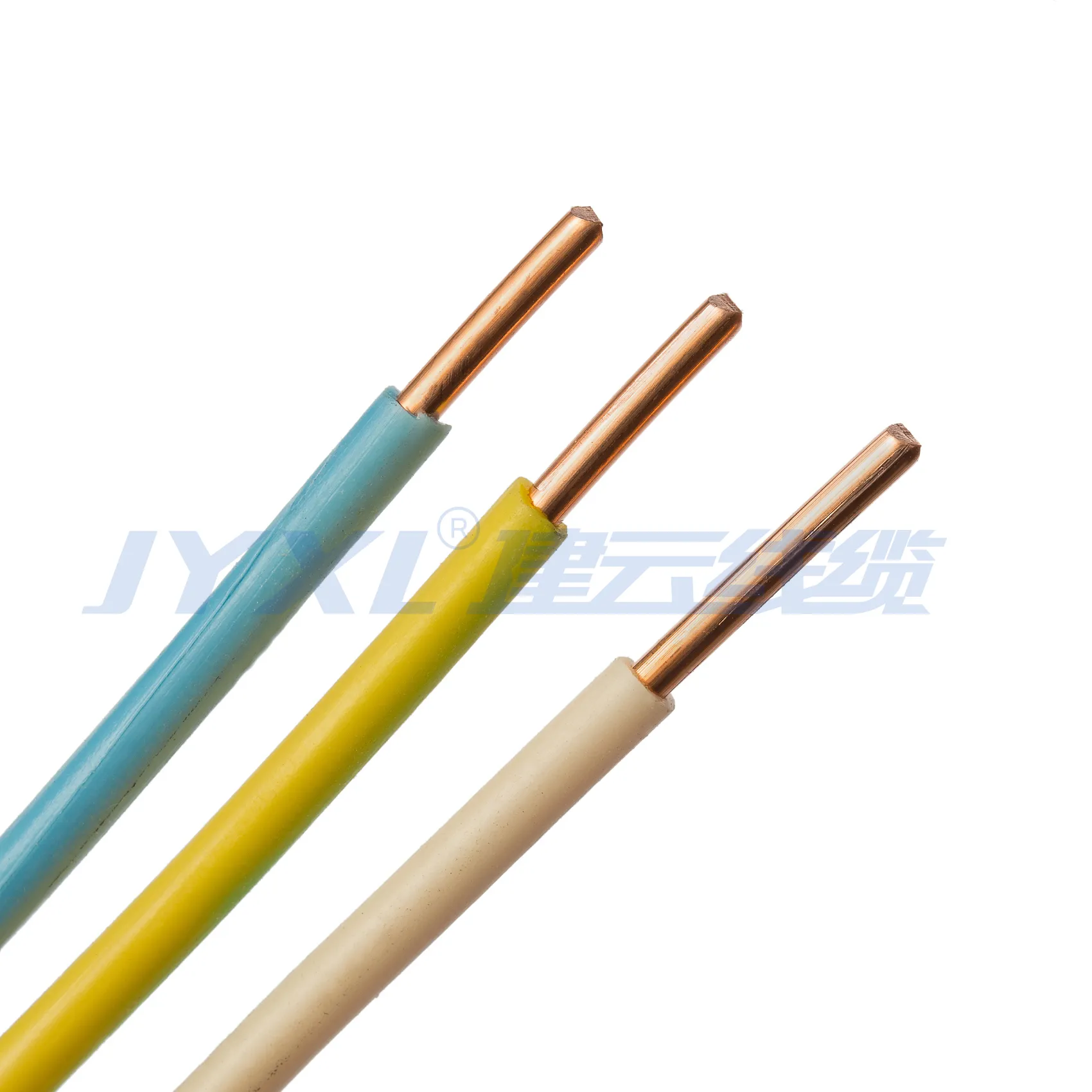
Jianyun H07V-U Solid Copper PVC Wire is a single core rigid electrical wire manu
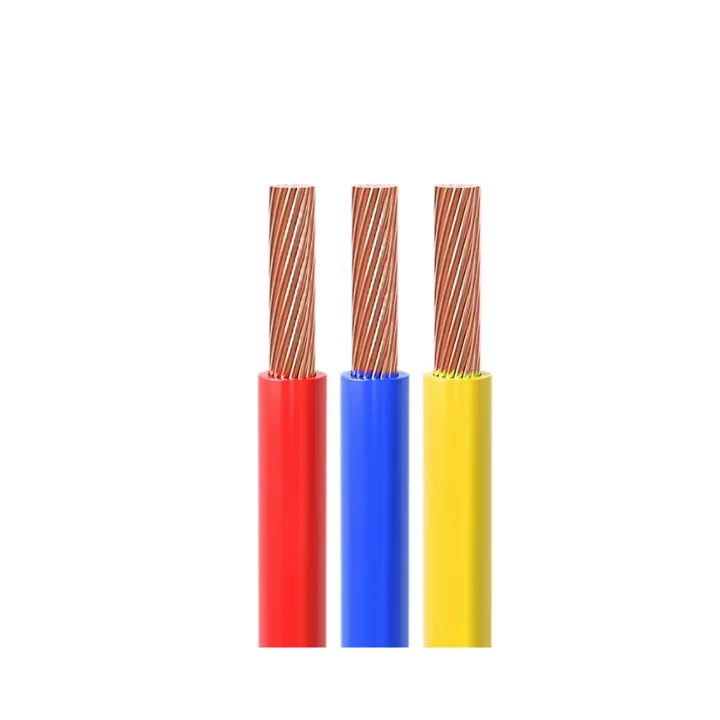
CE Certification 450/750v H07VVF Flexible Copper PVC Insulated Ac Cable 3*2.5 Mm