How to Import Power Cables from China
Time: 2026-01-23 06:45:58
Source: Henan Province Jianyun Cable Co., Ltd.
By Jianyun Cable – Professional Manufacturer of Quality Electrical Cables
China is the world’s largest producer and exporter of power cables – offering unmatched production capacity, competitive pricing, and a full range of low, medium, and high-voltage cables. Whether you’re importing for construction, distribution, solar projects, or industrial use, China provides excellent quality options when you choose the right supplier.
This 2025 step-by-step guide teaches you exactly how to import power cables from China safely, cost-effectively, and compliantly – from supplier selection to final customs clearance.
1. Why Import Power Cables from China?
Key advantages of importing from China in 2025:
-
Lowest production costs worldwide
-
Huge capacity (many factories >1000 tons/month)
-
Advanced equipment (Rosendahl, Maillefer, Troester lines)
-
Full range: LV (0.6/1 kV), MV (6–35 kV), HV (66–500 kV)
-
Strong export experience to 150+ countries
-
Compliance with IEC, UL, VDE, CPR, SASO, SONCAP, etc.
2. Step 1: Find Reliable Power Cable Suppliers in China
-
Use professional B2B platforms (Alibaba, Made-in-China, Global Sources)
-
Search for “power cable manufacturer China” + specific type (XLPE, SWA, solar PV)
-
Filter for Gold/Verified Suppliers with ≥5 years export experience
-
Look for factories in major cable hubs: Jiangsu, Anhui, Henan, Shandong
-
Shortlist 5–8 suppliers with own factory (avoid pure traders)
3. Step 2: Verify Supplier Credentials & Certifications
Essential checks:
-
Business license & production permit
-
ISO 9001:2015 & ISO 14001
-
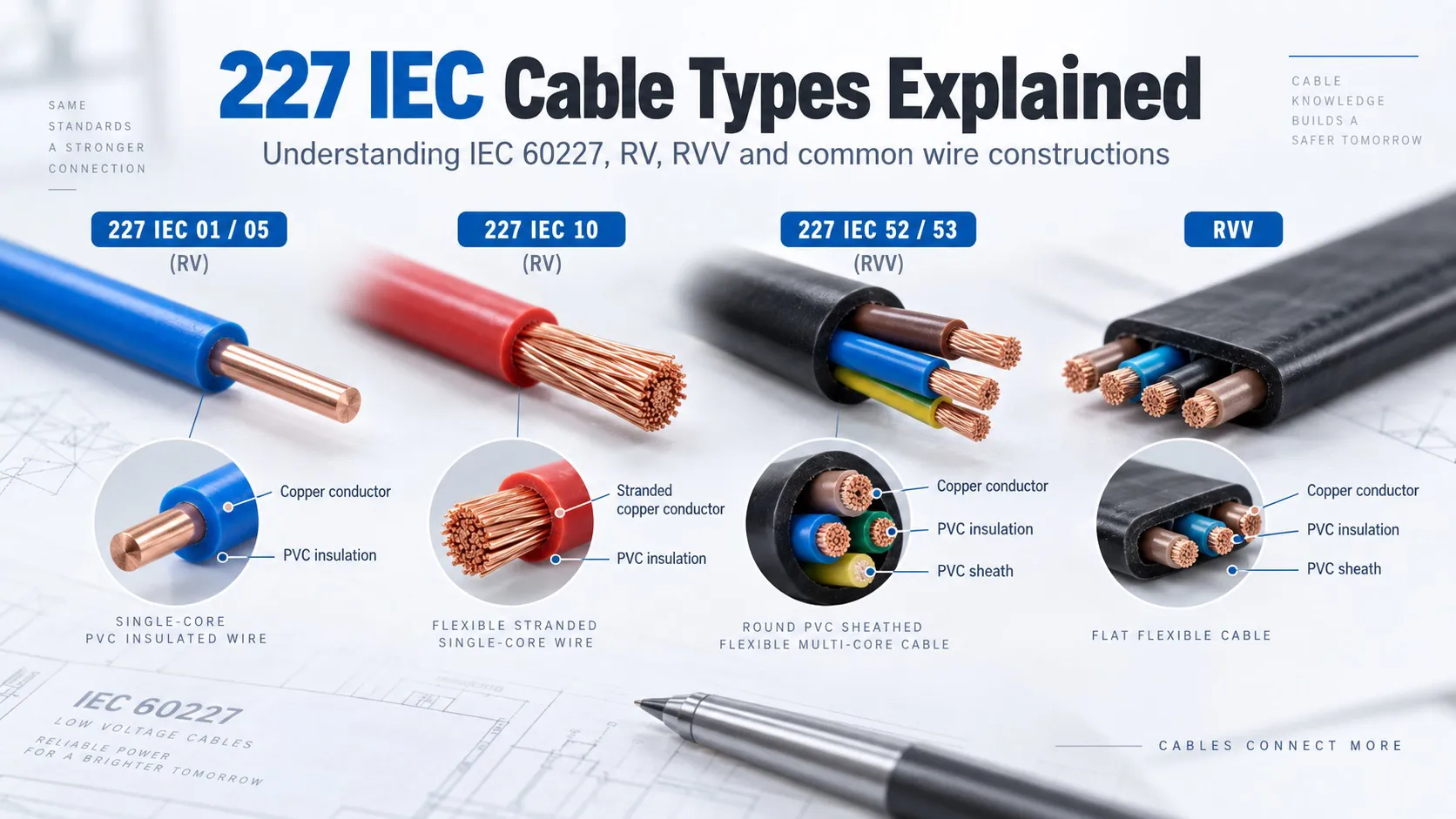
IEC 60502 / IEC 60227 / IEC 60840 product compliance
-
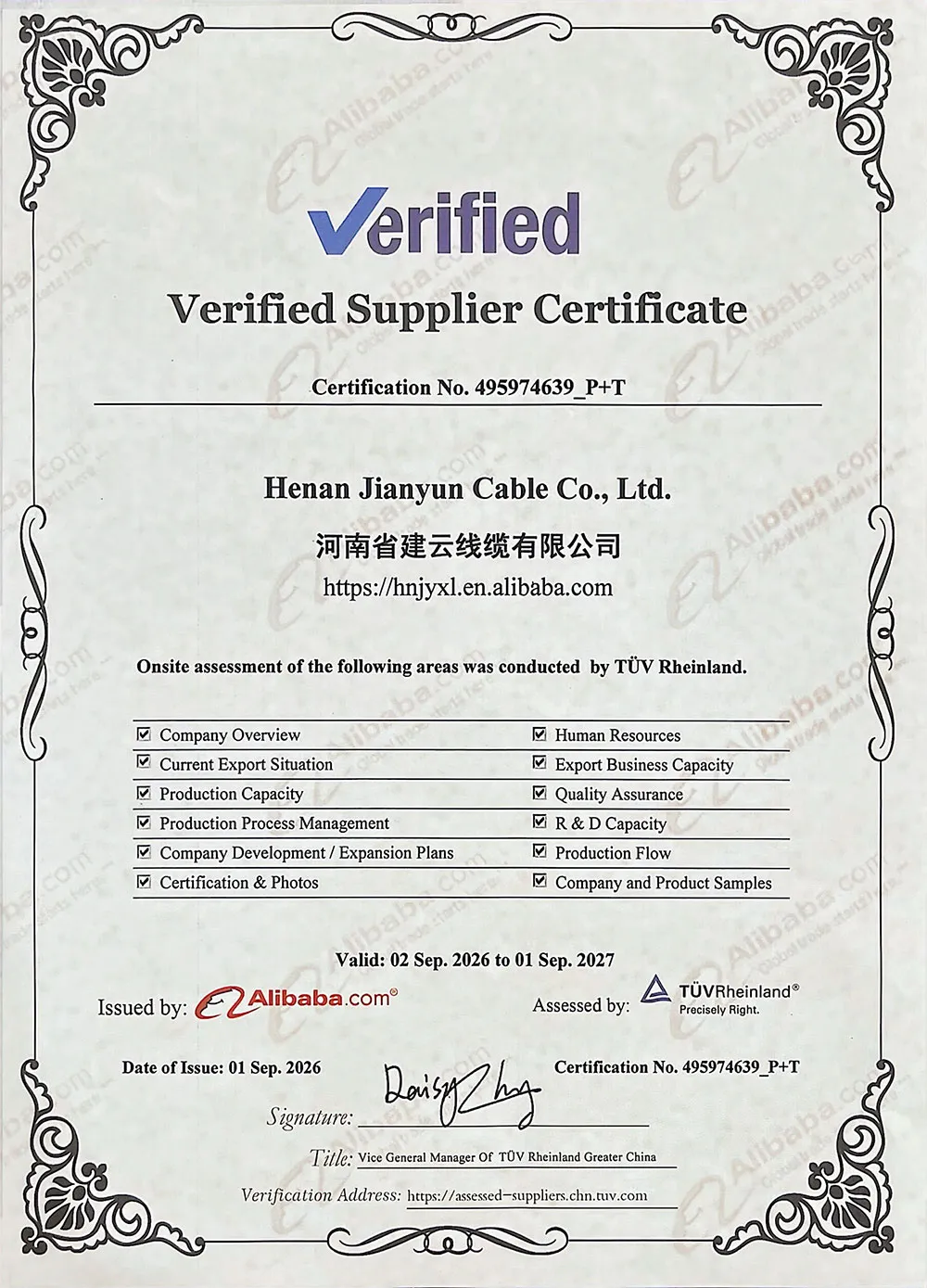
Third-party certifications: UL, VDE, TÜV, CPR (Cca/B2ca), SASO, SONCAP
-
Recent factory audit reports (TÜV, SGS, BV, Intertek)
-
Export records & customer references
4. Step 3: Request Samples & Test Reports
-
Ask for 5–10 meter samples (pay freight if needed)
-
Request latest type test reports (IEC 60502) from accredited labs
-
Send samples to independent lab for verification (resistance, insulation thickness, HV test)
-
Check conductor purity, insulation uniformity, sheath marking
5. Step 4: Negotiate Price, MOQ, Lead Time & Payment Terms
Typical terms:
-
MOQ: 1000–5000 meters (depending on size)
-
Lead time: 15–45 days (standard sizes), 60–90 days (custom)
-
Payment: 30% T/T deposit, 70% before shipment or L/C
-
Price basis: FOB Shanghai/Ningbo or CIF destination port
-
Negotiate better terms for repeat/large orders
6. Step 5: Understand Import Duties, Taxes & Compliance
Key considerations by country:
|
Country/Region
|
Duty Rate (approx.)
|
Key Requirements
|
|
USA
|
3.5–5.3% + 25% Section 301 (some)
|
UL certification, EPA compliance
|
|
EU
|
3.7–4.7%
|
CPR Euroclass, RoHS, REACH
|
|
Middle East (UAE/Saudi)
|
5%
|
SASO, GSO, SASO CoC
|
|
Africa (Nigeria, Kenya)
|
10–20%
|
SONCAP, PVoC
|
|
Australia
|
0–5%
|
AS/NZS 5000, SAA approval
|
7. Step 6: Arrange Shipping & Logistics from China
-
Sea freight (LCL/FCL) – most common for cables
-
FOB vs CIF: FOB gives more control over freight
-
Choose reputable forwarder with cable export experience
-
Ensure proper fumigation & packing (wooden drums on pallets)
-
Insure cargo (0.3–0.5% value recommended)
8. Step 7: Customs Clearance & Import Documentation
Essential documents:
-
Commercial Invoice
-
Packing List
-
Bill of Lading / Air Waybill
-
Certificate of Origin (Form A/E for preferential duty)
-
Quality/Inspection Certificate
-
Test Reports & Certifications (IEC, UL, etc.)
-
Import License (if required)
9. Step 8: Pre-Shipment Inspection & Quality Control
-
Arrange third-party inspection (SGS, BV, TÜV, Intertek)
-
Check: visual appearance, dimensions, labeling, resistance
-
Perform random sampling & lab testing
-
Release payment only after satisfactory report
10. Final Checklist & Tips for Successful Import
-
Shortlist 3–5 verified factories with IEC/UL certifications
-
Verify recent test reports & factory audit
-
Order samples & test independently
-
Negotiate clear contract with specifications & penalties
-
Use reputable forwarder & insure shipment
-
Arrange pre-shipment inspection
-
Prepare all customs documents early
-
Start small & build long-term relationship
Importing power cables from China can save 30–50% compared to local sources while maintaining high quality – if you follow the right process and partner with reliable manufacturers.
For high-quality power cables (LV, MV, HV, XLPE, armored, solar PV) with full international compliance, strict quality control, and excellent export support, contact Henan Province Jianyun Cable Co., Ltd. – your trusted partner for successful cable imports from China.