Keep up to date with our latest company news and relevant industry knowledge.
Time: 2026-08-11 06:26:11 Source: Henan Province Jianyun Cable Co., Ltd.
Author: Jianyun Cable
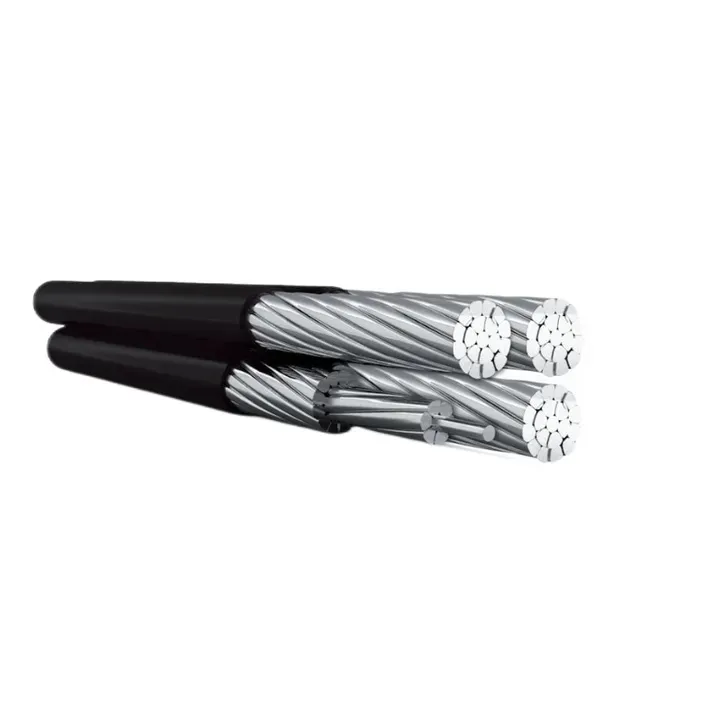
Aerial bundle cable is widely used in modern low-voltage overhead distribution systems where electrical safety, compact installation, and reliable outdoor performance are important. Instead of using multiple bare conductors installed separately, aerial bundle cable combines insulated aluminum conductors into one organized overhead assembly.
This configuration is particularly useful in urban areas, narrow streets, residential districts, and locations where conventional overhead lines may require more space. A self-supporting aerial bundle cable can also simplify line routing when distribution networks need to be modified as cities and infrastructure develop.
Jianyun Cable supplies SIP-2 self-supporting aerial bundle cable with aluminum conductors and UV-resistant XLPE insulation for construction, industrial facilities, power stations, and utility distribution projects.
Recommended Aerial Bundle Cable:
GOST R 52373-2005 SIP-2 Self-Supporting Aerial Bundle CableAerial bundle cable, often shortened to ABC cable, is an overhead power cable made from multiple insulated conductors bundled together. Each conductor is individually insulated, helping reduce accidental phase contact and providing additional protection compared with traditional bare overhead lines.
The conductors are generally manufactured from aluminum because aluminum offers a practical balance of conductivity, weight, availability, and installation cost.
Self-supporting ABC designs are engineered so that the cable assembly can support the mechanical loads associated with overhead installation without requiring a separate traditional support conductor in the same way as some other aerial cable systems.
| Component | Main Function |
|---|---|
| Aluminum conductor | Provides lightweight and efficient electrical transmission |
| Round stranded compressed conductor | Improves conductor compactness and mechanical stability |
| XLPE insulation | Provides electrical insulation and thermal stability |
| UV-resistant compound | Supports long-term outdoor exposure |
| Bundled configuration | Keeps the complete overhead cable compact and organized |
| Advantage | Project Benefit |
|---|---|
| Insulated conductors | Helps reduce faults caused by conductor contact |
| Compact cable arrangement | Requires less overhead space than separately spaced bare conductors |
| Aluminum construction | Reduces cable weight and supports easier installation |
| XLPE insulation | Provides reliable thermal and electrical performance |
| UV resistance | Supports continuous outdoor overhead operation |
| Flexible network routing | Useful for congested urban and redevelopment areas |
Traditional bare overhead distribution requires sufficient spacing between conductors to maintain safe electrical clearances. In dense urban areas, this can make routing more difficult.
Aerial bundle cable groups insulated conductors into a compact assembly. This makes it easier to install in narrow lanes, streets, residential areas, and locations where buildings or vegetation limit available space.
The product page specifically notes that ABC cable can replace bare conductor systems in congested urban distribution networks and can be easier to reroute when urban development plans change.
| Feature | Aerial Bundle Cable | Bare Conductor |
|---|---|---|
| Insulation | Individual conductors are insulated | No external insulation |
| Installation layout | Compact bundled configuration | Conductors installed separately |
| Space requirement | Lower | Higher conductor spacing required |
| Urban routing | Well suited to congested areas | Can be more difficult in narrow spaces |
| Typical use | Low-voltage overhead distribution | Transmission and distribution |
| Cable Size | Overall Diameter | Approx. Weight | Current Rating |
|---|---|---|---|
| 1x16 + 1x25 RM | 15.3 mm | 160 kg/km | 72 A |
| 3x25 + 1x25 RM | 23.2 mm | 400 kg/km | 132 A |
| 3x50 + 1x35 RM | 30.0 mm | 680 kg/km | 205 A |
| 3x95 + 1x70 RM | 40.6 mm | 1270 kg/km | 290 A |
| 3x150 + 1x95 RM | 49.2 mm | 1870 kg/km | 389 A |
| 3x185 + 1x120 RM | 54.9 mm | 2340 kg/km | 467 A |
These specifications illustrate how conductor size affects cable diameter, weight, breaking load, resistance, and current capacity. Final cable selection should always follow project calculations and the applicable electrical standard.
| Standard | Typical Reference |
|---|---|
| GOST R 52373-2005 | SIP self-supporting insulated conductor requirements |
| IEC 60502 | International power cable requirements |
| BS 7870 | British low-voltage and distribution cable specifications |
| HD 626 S1 | European overhead distribution cable reference |
| NFC 33-209 | French aerial bundled conductor specification |
| AS/NZS 3560-1 | Australian and New Zealand ABC cable reference |
| Selection Factor | Recommendation |
|---|---|
| System voltage | Match the cable voltage rating to the distribution system |
| Current demand | Select conductor size according to calculated load current |
| Voltage drop | Check route length and conductor resistance |
| Number of phases | Choose the required single-phase or multi-core configuration |
| Mechanical load | Evaluate span length, wind, ice, tension, and breaking load |
| Outdoor exposure | Specify UV-resistant insulation for overhead installation |
| Applicable standard | Confirm GOST, IEC, BS, NFC, HD, AS/NZS, or project requirements |
Jianyun Cable supplies low-voltage self-supporting aerial bundle cable for urban distribution, residential networks, construction, industrial facilities, and power stations.
The product uses round stranded compressed aluminum conductors with UV-resistant XLPE insulation. Multiple conductor sizes, core combinations, current ratings, and project-specific constructions are available.
View Product Details and Request a Quote:
SIP-2 Self-Supporting Aerial Bundle Cable 0.6/1kVAerial bundle cable provides a practical alternative to traditional bare overhead conductors in low-voltage distribution systems. Its insulated conductors, compact configuration, aluminum construction, and UV-resistant XLPE insulation make it particularly suitable for urban areas, narrow routes, residential projects, and utility network upgrades.
Jianyun Cable supplies SIP-2 self-supporting aerial bundle cable in multiple conductor sizes and configurations for construction, industrial facilities, power stations, and utility distribution systems.
Request Your Aerial Bundle Cable Quotation:
Contact Jianyun Cable for SIP-2 Self-Supporting ABC CableAerial bundle cable is used for low-voltage overhead power distribution in residential areas, urban streets, commercial developments, industrial facilities, construction projects, and utility networks.
A self-supporting aerial bundle cable is an insulated overhead cable assembly designed to support the mechanical loads associated with suspended installation while carrying electrical power.
XLPE provides strong electrical insulation, thermal stability, and outdoor durability. UV-resistant XLPE is particularly suitable for overhead cables exposed to sunlight.
The product uses round stranded compressed aluminum conductors with XLPE insulation.
The Jianyun Cable product is designed as a low-voltage 0.6/1kV aerial distribution cable.
Cable size should be selected according to current demand, route length, allowable voltage drop, span length, mechanical loading, operating environment, and the applicable technical standard.
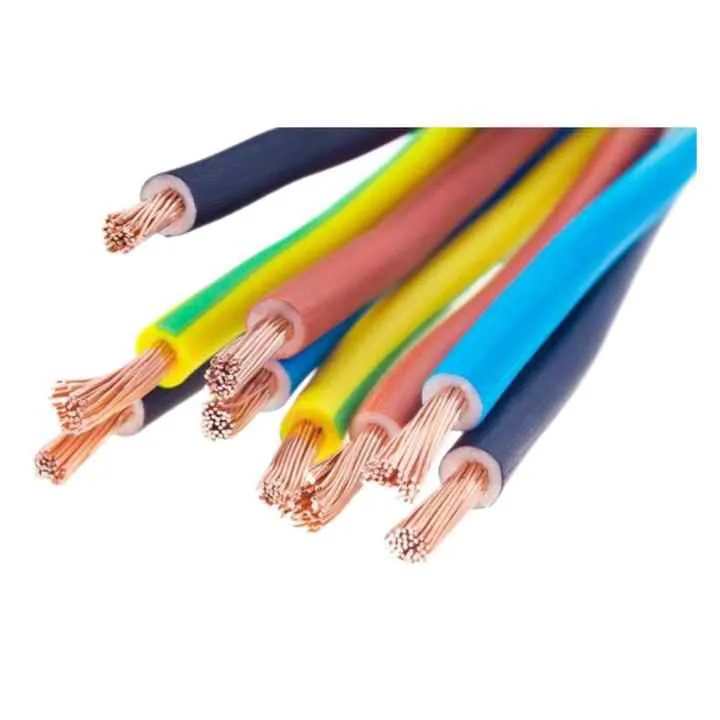
Flexible copper electrical wire with stranded copper conductor, PVC insulation a
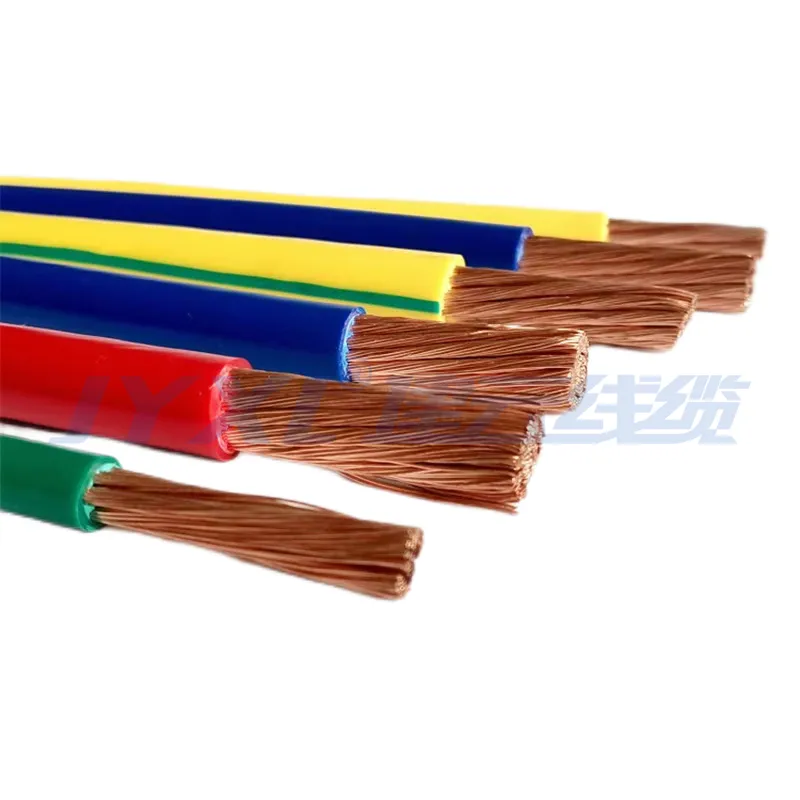
H07V-K flexible electrical wire with 1.5mm² and 2.5mm² stranded copper conductor
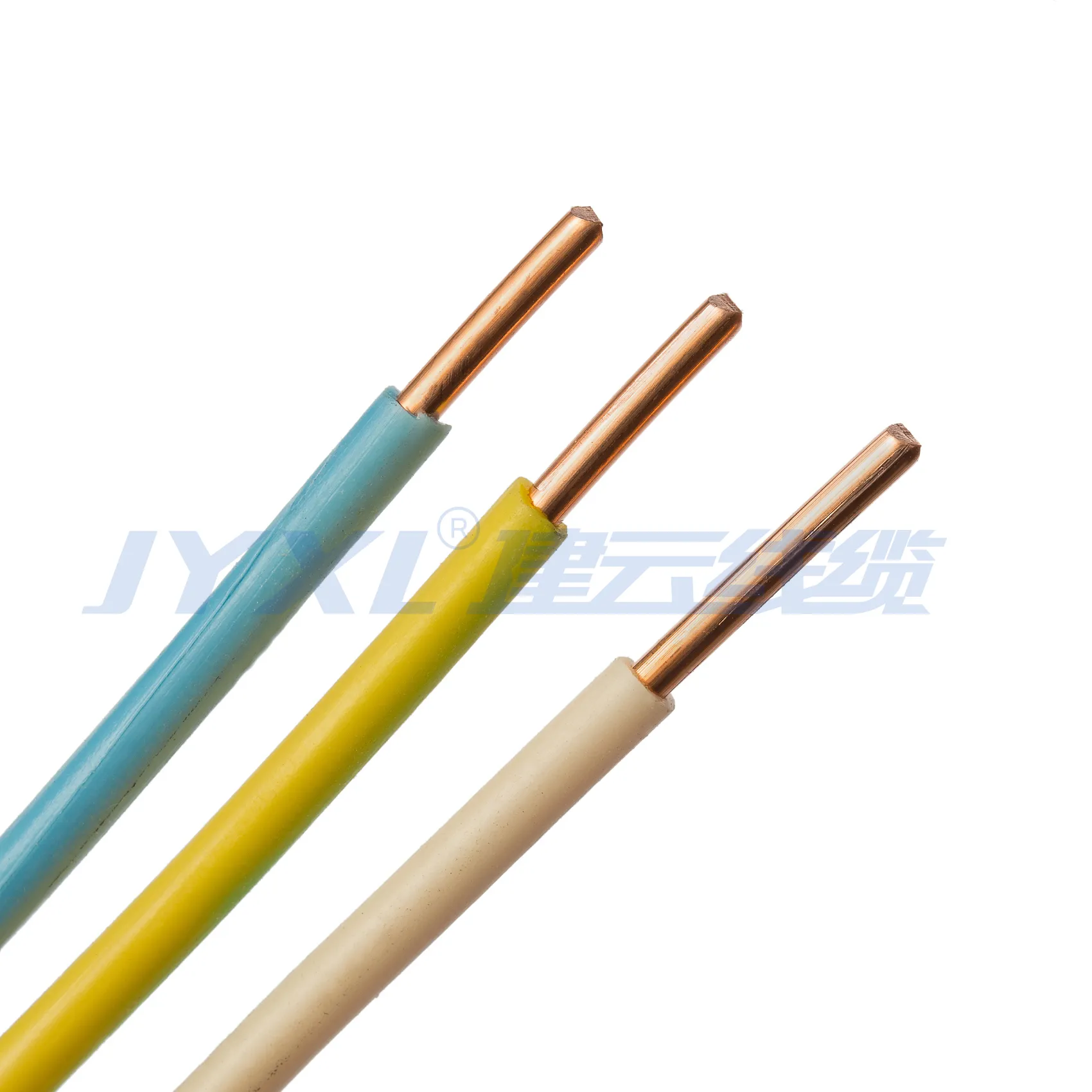
Jianyun H07V-U Solid Copper PVC Wire is a single core rigid electrical wire manu
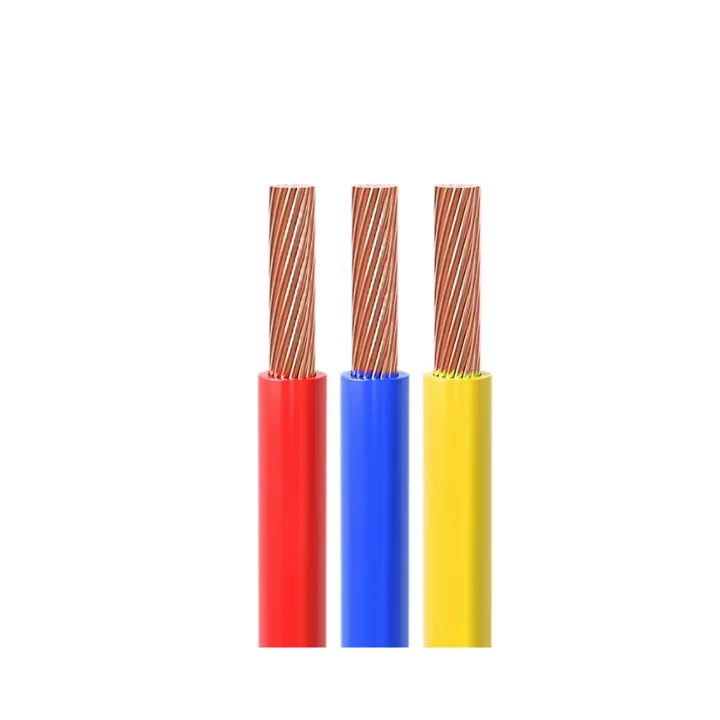
CE Certification 450/750v H07VVF Flexible Copper PVC Insulated Ac Cable 3*2.5 Mm