Keep up to date with our latest company news and relevant industry knowledge.
Time: 2026-08-04 09:12:22 Source: Henan Province Jianyun Cable Co., Ltd.
Author: Jianyun Cable
Electric wire is a fundamental part of residential, commercial, and light industrial electrical systems. It carries current between power sources, distribution panels, lighting equipment, appliances, instruments, motors, and other electrical devices.
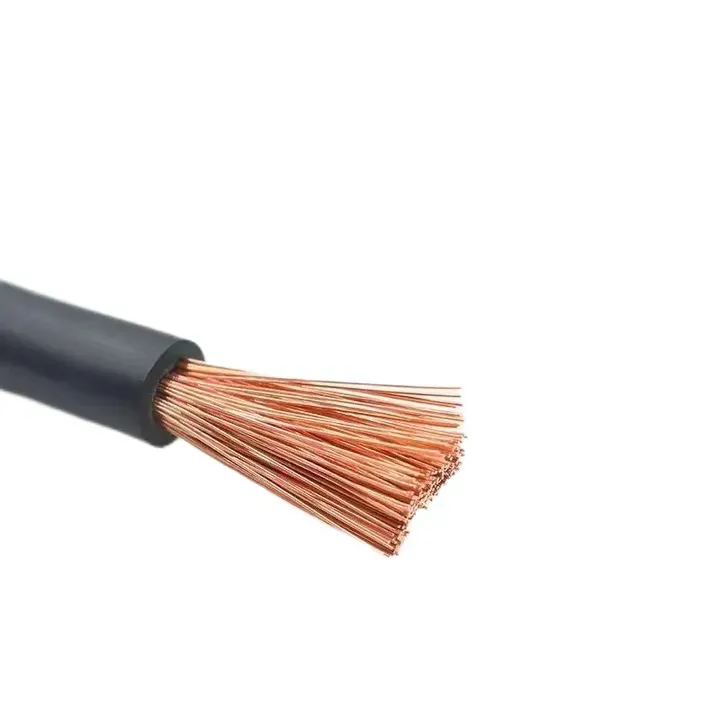
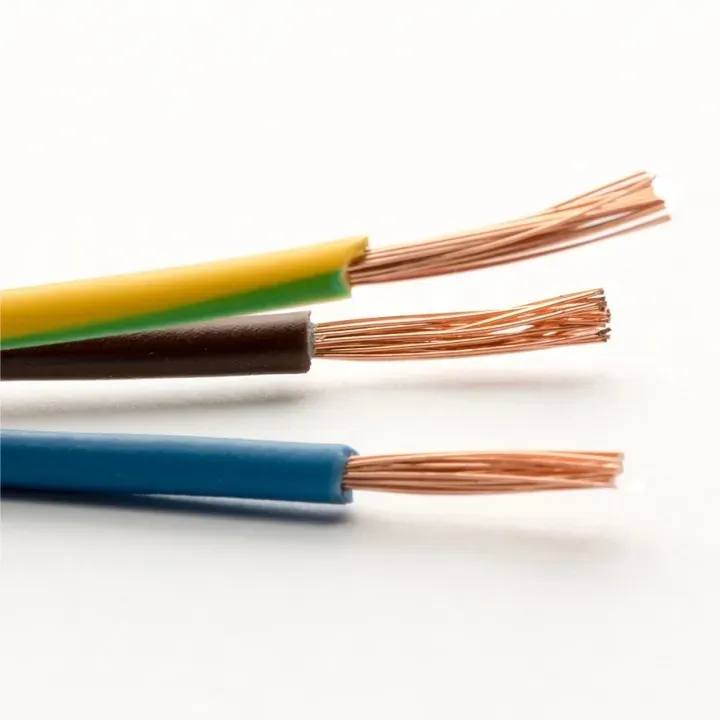
For installations involving bends, compact routing, moving appliances, or equipment connections, a flexible electric wire can provide easier handling than a rigid solid conductor. Its stranded copper construction allows the wire to bend more easily while maintaining dependable electrical performance.
Jianyun Cable supplies NYAF and NYYHY-F flexible electric wire with stranded copper conductors and PVC insulation. The product is suitable for indoor building wiring, domestic electrical appliances, instruments, lighting installations, and applications where flexible routing is required.
Recommended Electric Wire:
NYAF/NYYHY-F Flexible Electric Wire from Jianyun CableFlexible electric wire is an insulated conductor manufactured with multiple fine copper strands instead of one solid conductor. The strands work together to carry electrical current while allowing the wire to bend and follow more complex installation routes.
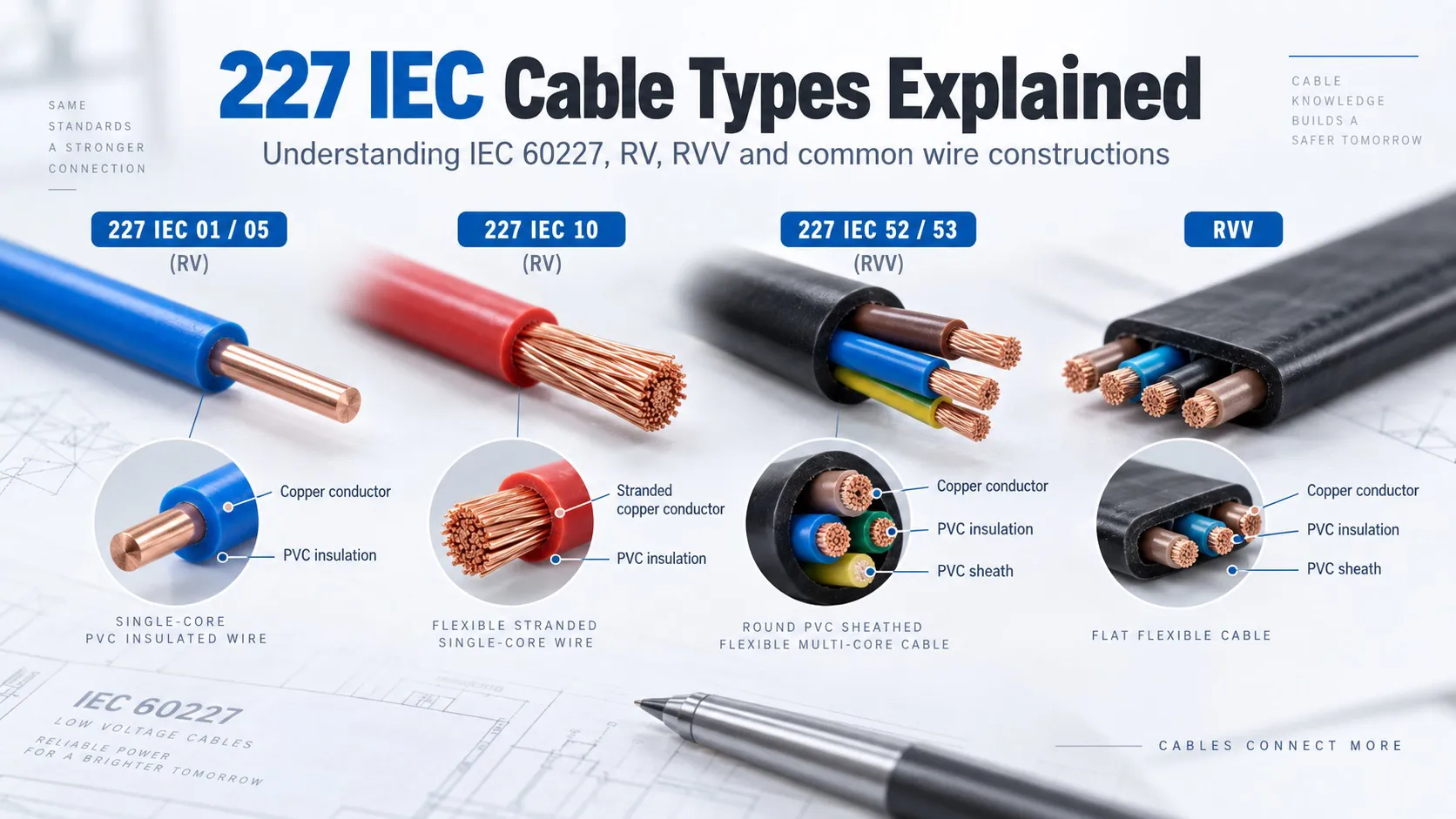
PVC-insulated flexible wire is commonly used in electrical cabinets, domestic appliances, lighting equipment, small motors, measuring instruments, and indoor building connections. Depending on the model, the wire may be supplied as a single conductor, flat twin cable, twisted cable, or multi-core sheathed cable.
The correct wire structure should be selected according to voltage rating, current load, installation method, conductor size, bending requirement, operating temperature, and applicable electrical standards.
| Component | Main Function |
|---|---|
| Stranded copper conductor | Carries electrical current while providing flexibility |
| Fine copper strands | Allow easier bending and routing around equipment |
| PVC insulation | Provides electrical separation and general environmental protection |
| Optional PVC outer sheath | Protects multi-core or parallel conductors against wear and moisture |
| Color identification | Helps installers identify circuits, phases, neutral, and protective conductors |
| Advantage | Practical Benefit |
|---|---|
| Flexible conductor structure | Simplifies installation in cabinets, appliances, and compact spaces |
| Copper conductivity | Supports stable and efficient current transmission |
| PVC insulation | Provides reliable insulation for general indoor applications |
| Multiple cable structures | Supports single-core, twin, twisted, flat, and sheathed installations |
| Chemical stability | Provides resistance to common acids, alkalis, grease, and solvents |
| Custom colors | Supports circuit identification and project-specific requirements |
Flexible electric wire is frequently selected for indoor installations where easy routing, repeated handling, or compact electrical connections are required.
| Model | Construction | Typical Application |
|---|---|---|
| RV | Copper conductor with PVC insulation | Flexible single-core electrical connections |
| RVB | Flat PVC-insulated flexible wire | Light-duty appliances and indoor connections |
| RVS | Twisted PVC-insulated flexible wire | Lighting, control, and low-voltage connection circuits |
| RVV | PVC-insulated and PVC-sheathed flexible cable | Appliances, tools, and equipment connections |
| RVVB | Flat PVC-insulated and sheathed flexible cable | Indoor parallel wiring and light-duty equipment |
| RV-90 | Heat-resistant PVC flexible wire | Installations requiring increased temperature resistance |
| Feature | Flexible Electric Wire | Solid Electric Wire |
|---|---|---|
| Conductor construction | Multiple fine copper strands | One solid copper conductor |
| Flexibility | High | Lower |
| Routing | Easy to install around bends and equipment | Best for straight and permanent routes |
| Typical use | Appliances, cabinets, motors, and flexible connections | Fixed building wiring and conduit runs |
| Terminal preparation | May require ferrules or suitable terminals | Simple termination for many fixed installations |
| Feature | Single-Core Wire | Multi-Core Cable |
|---|---|---|
| Construction | One insulated conductor | Two or more insulated conductors under one sheath |
| Installation | Suitable for panels, conduits, and internal wiring | Suitable for appliances and complete equipment connections |
| Protection | Individual PVC insulation | Individual insulation plus an outer sheath |
| Typical selection | Control cabinets and internal equipment wiring | Portable devices, appliances, and power cords |
Electric wire selection should be based on the electrical load and installation conditions rather than conductor size alone. An incorrect wire may increase voltage drop, heat generation, or connection problems.
| Selection Factor | Recommendation |
|---|---|
| Rated voltage | Choose 300/500V or 450/750V according to the electrical system |
| Load current | Select conductor size according to the continuous operating current |
| Cable length | Check allowable voltage drop for longer circuits |
| Flexibility | Use fine-stranded conductors for equipment, bends, and movable connections |
| Operating temperature | Confirm standard or heat-resistant insulation according to the environment |
| Installation method | Consider appliance wiring, conduit, panel, indoor building, or equipment connection |
| Bending radius | Follow the minimum bending requirement for the selected cable diameter |
| Applicable standard | Confirm IEC, BS, DIN, or project-specific requirements |
| Specification | Available Option |
|---|---|
| Product type | NYAF/NYYHY-F flexible electric wire |
| Rated voltage | 300/500V or 450/750V |
| Conductor material | Copper |
| Conductor type | Stranded flexible conductor |
| Insulation material | PVC |
| Standard operating temperature | Generally up to 70°C |
| Heat-resistant option | Up to 90°C or 105°C depending on the cable model |
| Installation temperature | Not lower than 0°C under normal laying conditions |
| Color options | Black, red, blue, or customized colors |
| Reference standards | IEC, BS, DIN, or customized requirements |
Jianyun Cable supplies copper conductor PVC-insulated electric wire for buildings, appliances, instruments, lighting equipment, electrical tools, and indoor flexible connections.
Single-core, twin, twisted, flat, and multi-core sheathed structures are available. Conductor size, insulation color, cable model, packaging, and other specifications can be customized according to project or purchasing requirements.
View Product Details and Request a Quote:
NYAF/NYYHY-F 450/750V Flexible Electric WireElectric wire provides the electrical connection between distribution systems, appliances, lighting equipment, instruments, motors, and indoor electrical devices. Flexible construction is especially useful where the cable must pass around bends, fit into compact spaces, or connect movable equipment.
Jianyun Cable supplies NYAF/NYYHY-F flexible electric wire with stranded copper conductors, PVC insulation, multiple cable models, and customizable colors and specifications.
Request Your Electric Wire Quotation:
Contact Jianyun Cable for Flexible Electric WireFlexible electric wire is used for appliances, lighting equipment, electrical cabinets, instruments, small motors, movable electronics, and indoor connections that require easier bending and routing.
RV is generally a single-core PVC-insulated flexible wire. RVV contains two or more insulated conductors protected by an additional PVC outer sheath.
Multiple fine copper strands allow the conductor to bend more easily than a solid conductor while maintaining dependable electrical conductivity.
Common voltage ratings include 300/500V and 450/750V, depending on the cable model and application requirements.
Yes. Suitable flexible electric wire can be used in permanent indoor installations where easier bending, cabinet wiring, or complex routing is required.
Wire size should be selected according to load current, circuit length, allowable voltage drop, operating temperature, installation method, and applicable electrical standards.
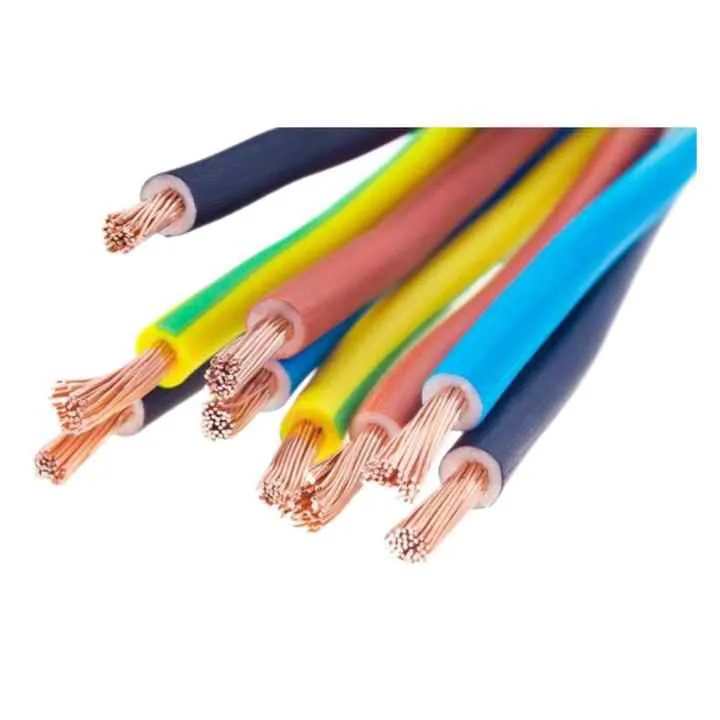
Flexible copper electrical wire with stranded copper conductor, PVC insulation a
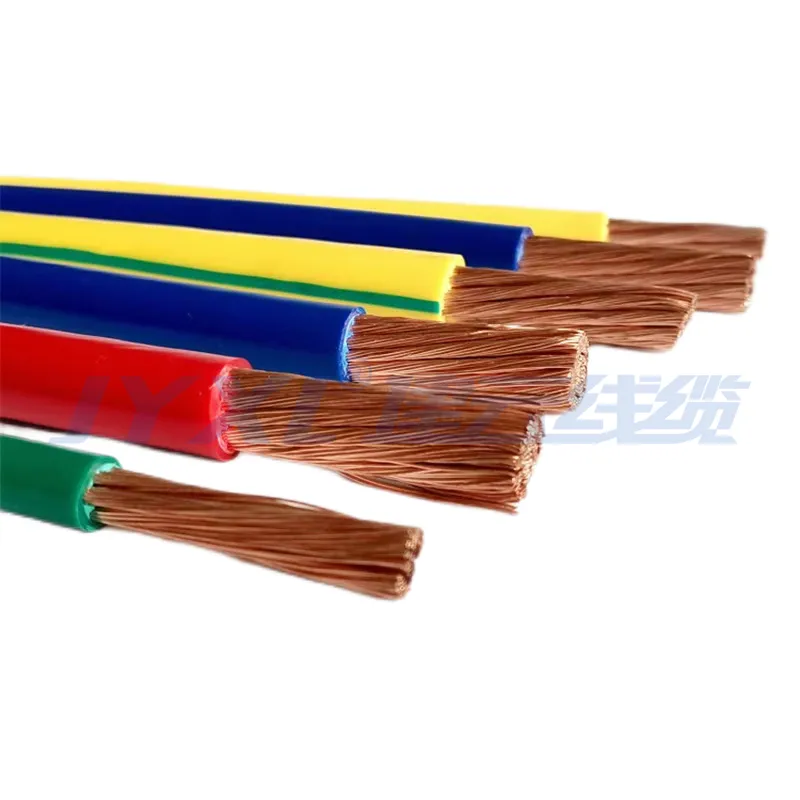
H07V-K flexible electrical wire with 1.5mm² and 2.5mm² stranded copper conductor
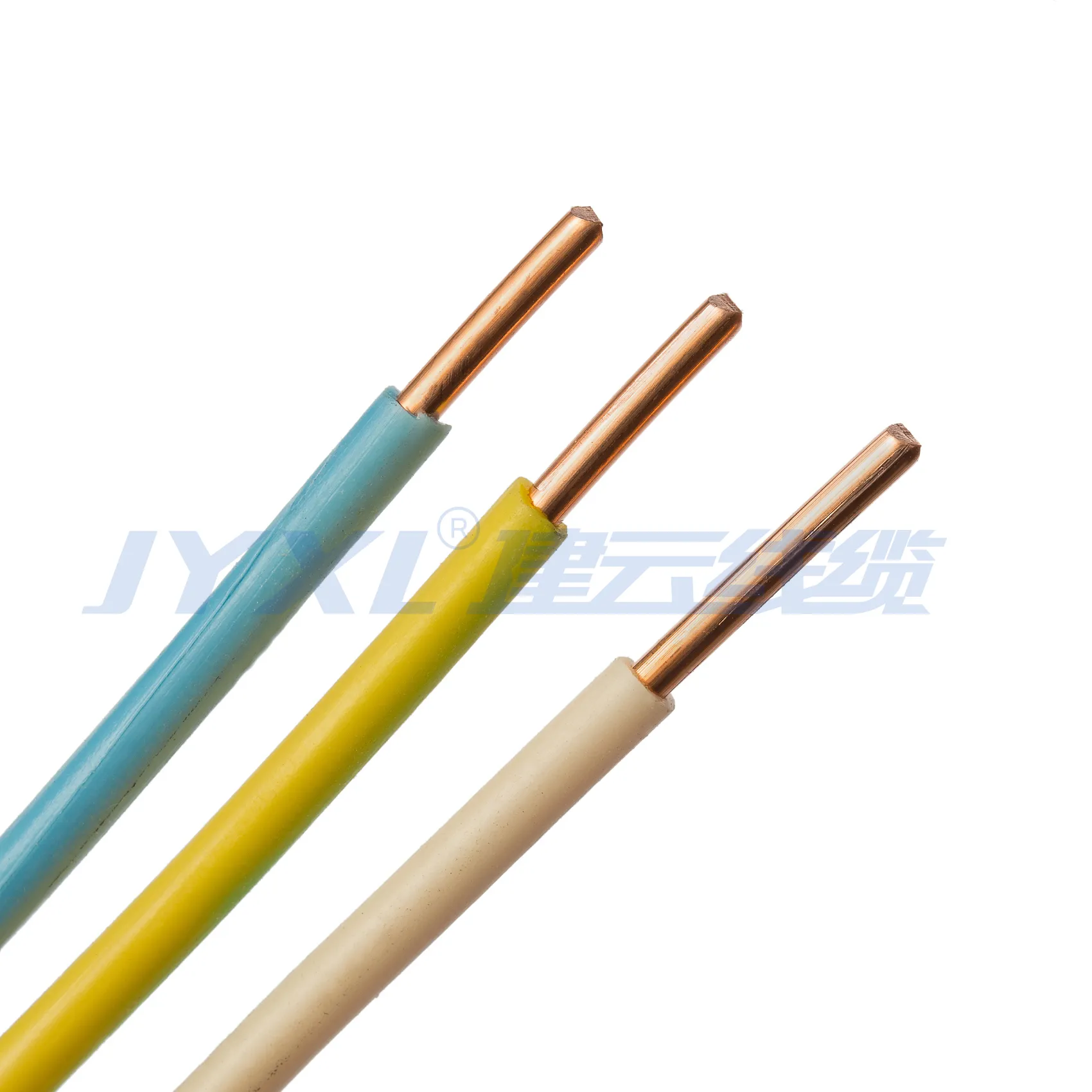
Jianyun H07V-U Solid Copper PVC Wire is a single core rigid electrical wire manu
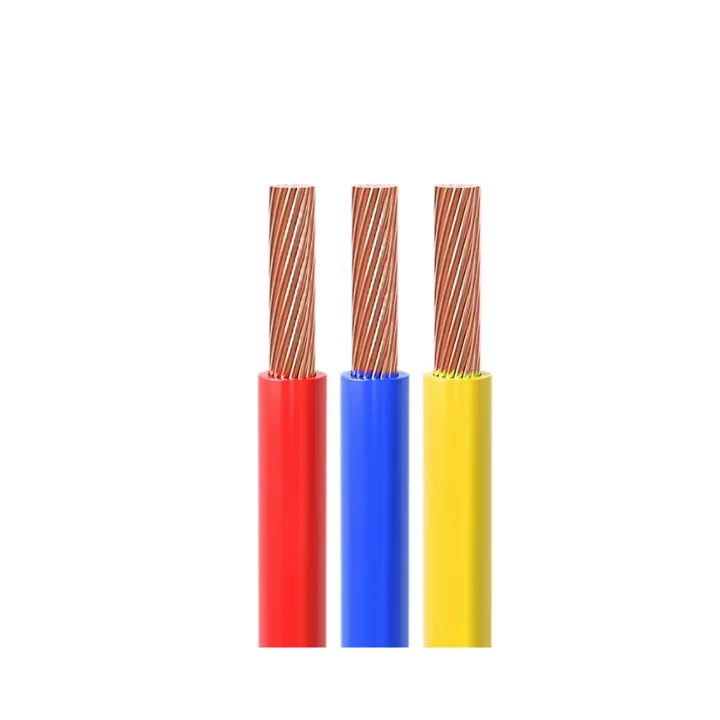
CE Certification 450/750v H07VVF Flexible Copper PVC Insulated Ac Cable 3*2.5 Mm