
Keep up to date with our latest company news and relevant industry knowledge.
Time: 2026-11-15 13:12:09 Source: Henan Province Jianyun Cable Co., Ltd.
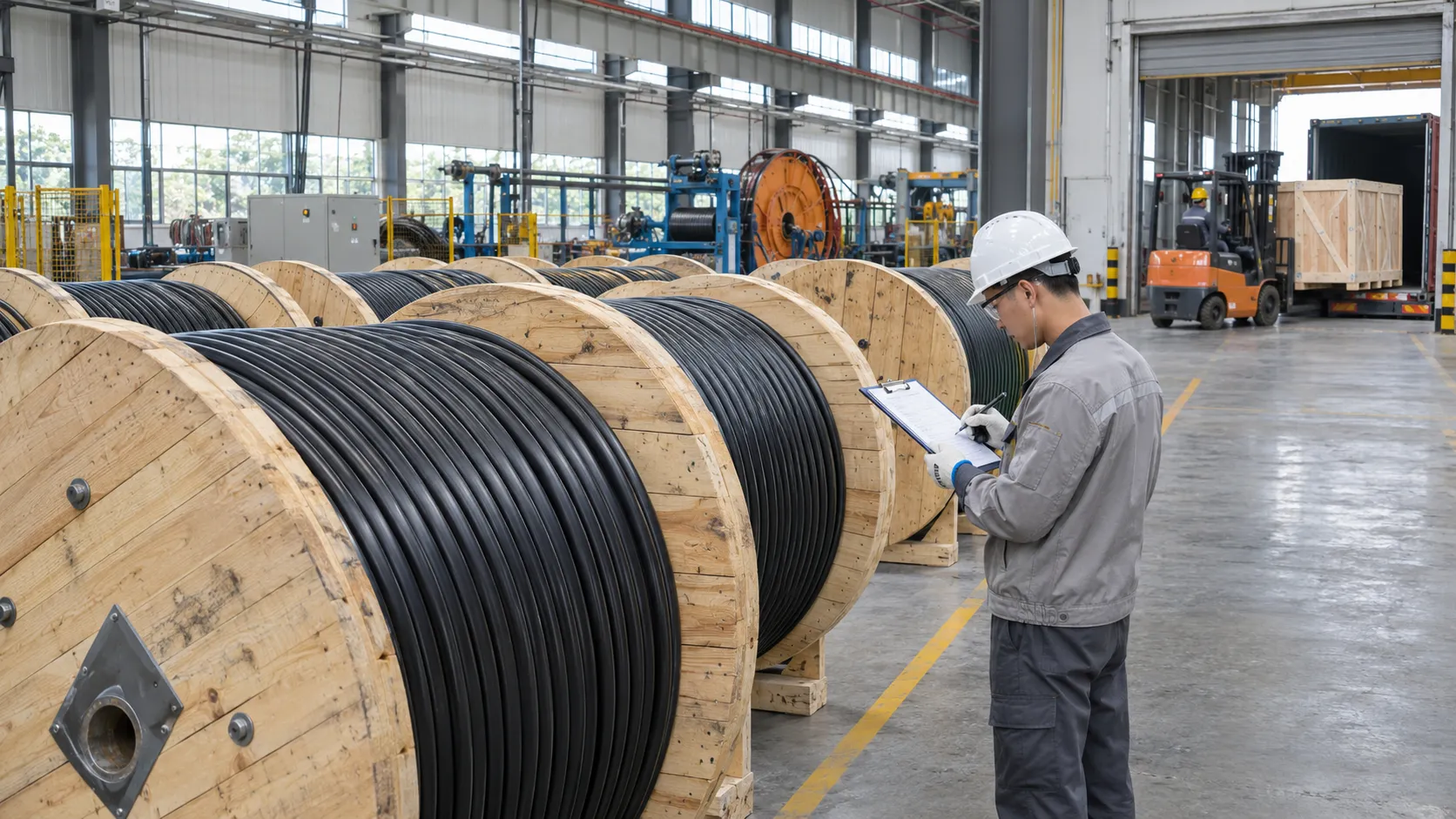
Medium-voltage cable buyers often expect similar products to have similar delivery schedules. In practice, two quotations for the same voltage class can have very different lead times.
The reason is simple: “medium-voltage cable” is not one standard product. A 15 kV, 25 kV, or 35 kV cable may vary significantly in conductor material, conductor size, insulation thickness, metallic screen, armor, sheath, test requirements, drum length, and export packing.
For utilities, EPC contractors, industrial facilities, and renewable-energy projects, a complete RFQ is one of the most effective ways to receive an accurate quotation and a realistic delivery commitment.
Lead time is affected by more than the production schedule. The final cable construction and project requirements determine the materials, manufacturing process, testing sequence, packing method, and logistics arrangement.
Common factors include:
Voltage class: 15 kV, 25 kV, 35 kV, or another required rating
Conductor material: copper or aluminum
Conductor cross-section and cable construction
Single-core or three-core configuration
Insulation, screen, sheath, and water-blocking requirements
Armor type for direct burial or mechanically demanding routes
Required standard, testing, and certification documents
Total quantity and required drum length
Delivery location, packing requirements, and requested delivery date
A standard cable construction with a common conductor size may be scheduled more quickly than a project-specific cable requiring special materials, testing, or packing.
Some projects should begin cable procurement planning as early as possible.
This is especially important for:
Utility distribution upgrades
Substation and feeder projects
Wind and solar collection systems
Mining and heavy-industrial facilities
Long underground cable routes
Direct-burial installations
Projects requiring armored or water-blocked cable
Export orders with inspection and documentation requirements
For these projects, cable selection should not be left until civil work or equipment installation is already underway. Early technical confirmation gives the supplier more time to verify the cable design, prepare materials, schedule production, and arrange shipment.
A budget quote can help with early planning, but it is not the same as a project-ready quotation.
For preliminary budgeting, a buyer may only have a voltage class, approximate conductor size, and estimated quantity. That information can support an initial price range.
For a project quotation, the supplier needs complete technical and commercial details. Missing information can result in assumptions that later affect price, delivery time, cable construction, or accessory compatibility.
A well-prepared RFQ reduces revisions and helps both parties move more quickly from quotation to production.
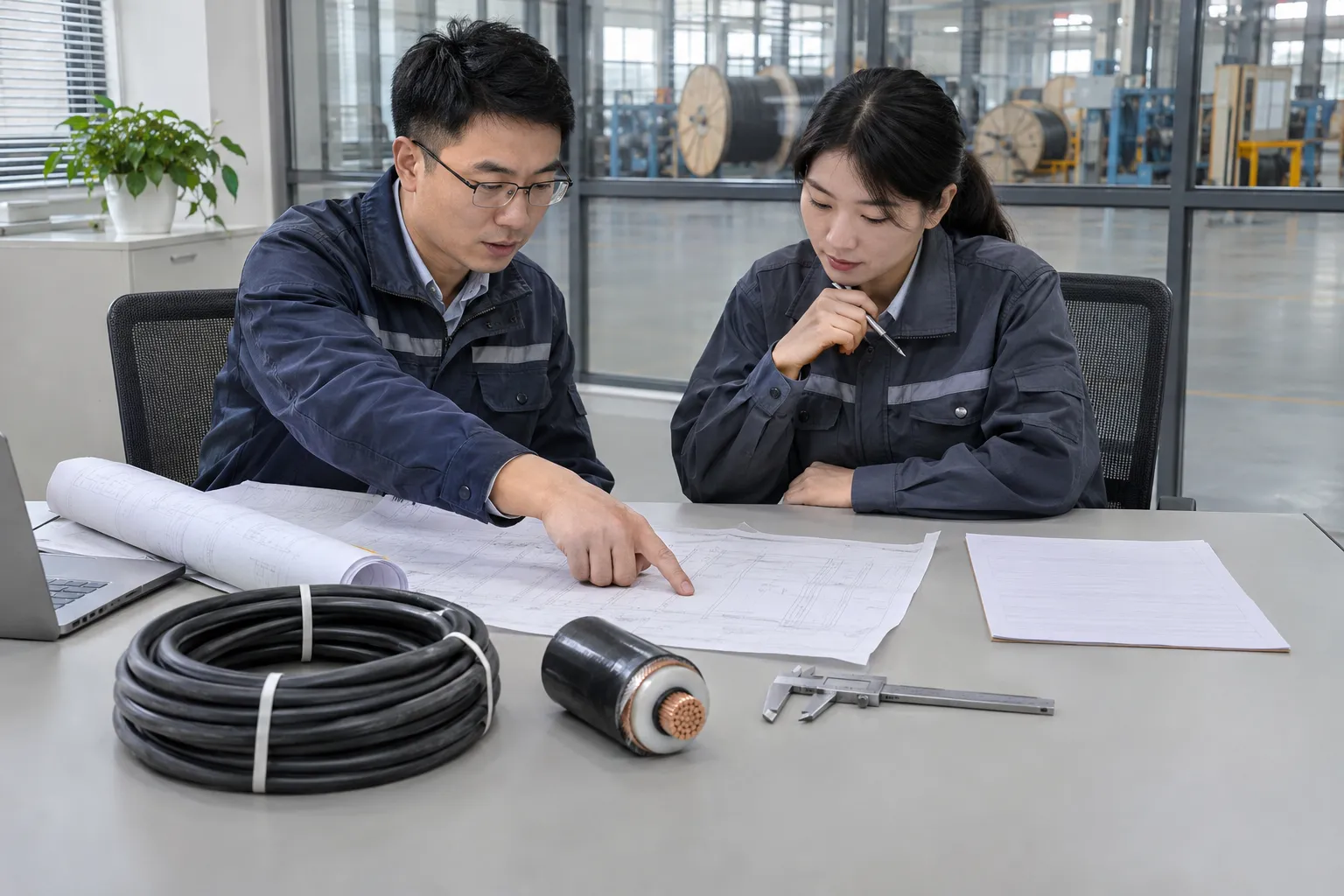
State the exact required cable rating, such as 15 kV, 25 kV, or 35 kV.
Do not simply request “MV cable.” The voltage class determines the insulation system and influences the complete cable design.
Specify whether the project requires copper or aluminum conductor, along with the required cross-section.
If the conductor size has not been finalized, provide the required ampacity, installation method, route length, and allowable voltage drop so that technically suitable options can be evaluated.
Single-core cable is commonly used for higher-current applications, substations, and certain duct-bank installations.
Three-core cable can provide a compact option for many distribution and industrial systems.
The correct choice depends on the electrical design, installation arrangement, termination method, and available route space.
Installation conditions directly affect cable construction and allowable current capacity.
State whether the cable will be installed in:
Underground duct banks
Direct-burial trenches
Cable trays
Tunnels
Indoor substations
Outdoor industrial areas
For direct-burial or demanding routes, additional protection such as armor, water-blocking features, or a reinforced sheath may be required.
Identify the required project standard and any special testing requirements.
Also state whether the project requires routine-test reports, third-party inspection, factory acceptance testing, or specific documentation before shipment.
If the project specification requires a specific metallic screen, armor type, sheath material, flame-retardant construction, or water-blocking design, include it in the RFQ.
These details can materially affect both price and production scheduling.
Provide the total quantity in meters or kilometers, plus the preferred cable length per drum.
Drum length matters because it affects manufacturing planning, packing, transportation, site handling, and the number of joints required during installation.
State the final delivery location, preferred port if applicable, and any project-specific packing requirements.
Export packing, wooden drum construction, labeling, container loading, and destination documentation should be confirmed before production begins.
Provide the required on-site date, not only the purchase order date.
This allows the supplier to account for production, testing, packing, inland transportation, sea freight, customs clearance, and final delivery.
If the cable will be supplied with terminations, joints, lugs, cable cleats, or other accessories, identify the required voltage class and compatibility requirements.
The cable and accessories must be selected as a complete system.
The lowest unit price does not always represent the lowest project cost.
When comparing quotations, buyers should confirm that each offer is based on the same cable construction and commercial conditions.
Check the following points:
Is the voltage class the same?
Is the conductor material and cross-section the same?
Is the cable single-core or three-core?
Are the screen, armor, and sheath requirements equivalent?
Are the standards and test documents included?
Is the stated drum length suitable for the installation plan?
Does the delivery schedule include testing and export packing?
Are shipping terms and destination requirements clearly stated?
A quotation should be compared line by line, not only by total price.
Many quotation delays are avoidable.
Common issues include:
Requesting “medium-voltage cable” without a voltage class
Omitting conductor material and cross-section
Not stating the installation method
Leaving single-core or three-core construction unspecified
Not identifying the required standard
Providing no quantity or preferred drum length
Requesting an urgent delivery date without project details
Not confirming destination and packing requirements
Clear project information helps suppliers recommend the correct cable construction and provide a more reliable delivery schedule.
Medium-voltage cable lead time depends on the complete project requirement—not only on voltage class or cable size.
The best procurement approach is to define the cable construction, installation conditions, standards, quantity, drum length, destination, and required delivery date before requesting a final quotation.
Explore Jianyun Cable’s Medium Voltage Power Cable solutions for utility, industrial, renewable-energy, and infrastructure projects.
For a project-specific quotation, send your cable specification, quantity, installation method, required delivery date, and destination through Jianyun Cable’s inquiry page.

