
Keep up to date with our latest company news and relevant industry knowledge.
Time: 2026-11-11 11:34:53 Source: Henan Province Jianyun Cable Co., Ltd.
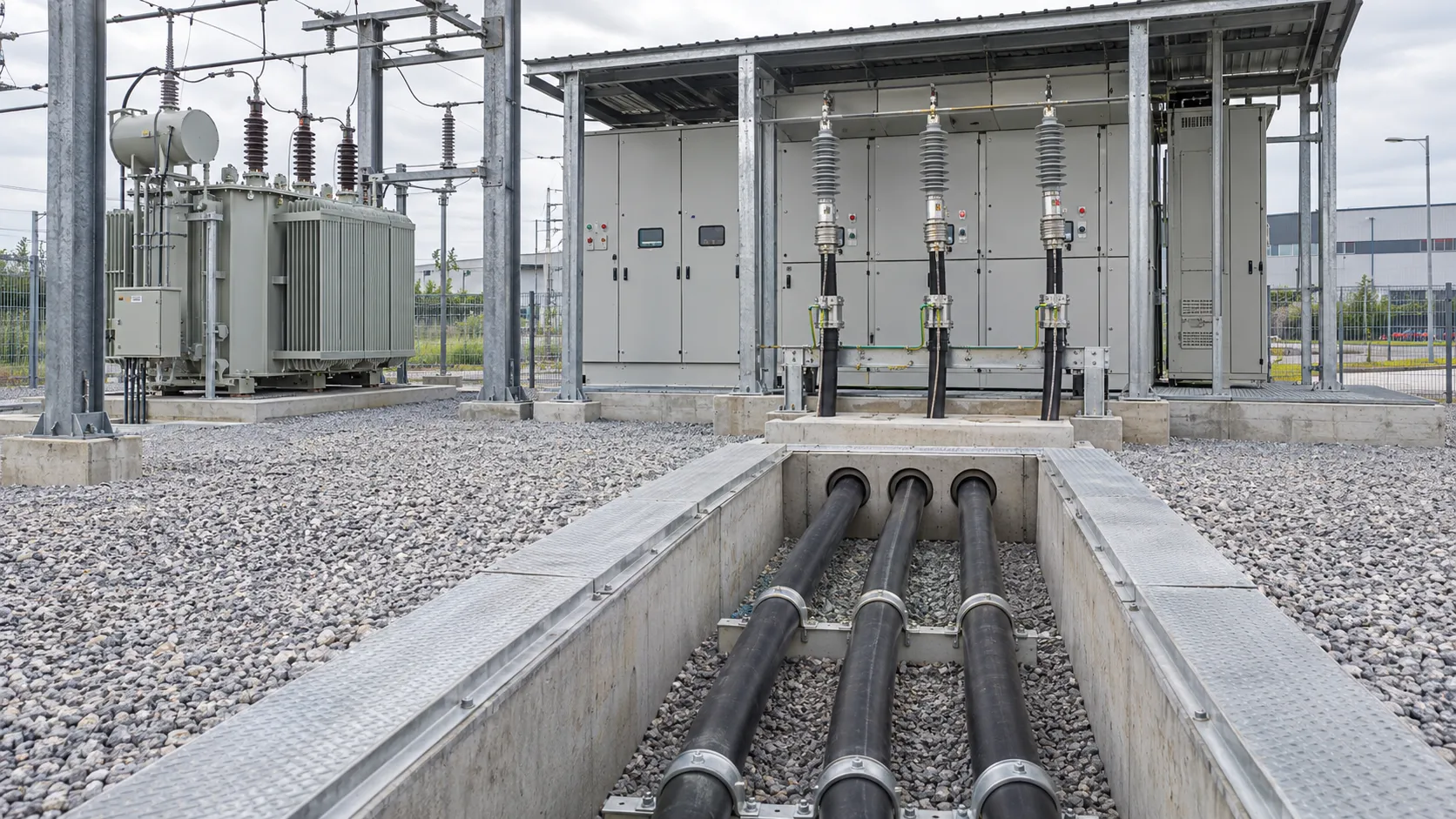
Medium-voltage cable selection starts with one basic question: what voltage class does the system actually require?
For utilities, industrial facilities, renewable-energy projects, and large commercial developments, the wrong voltage selection can increase material cost, complicate installation, and create compatibility issues with switchgear, terminations, and joints.
15 kV, 25 kV, and 35 kV cables are all used in modern distribution systems. However, they are designed for different network conditions and should not be treated as interchangeable options.
Choosing a higher voltage cable does not automatically make a project better.
As voltage class increases, the cable typically requires more insulation and may have a larger outside diameter, higher weight, larger bending radius, and higher accessory cost. It may also require different terminations, joints, connectors, and installation equipment.
The correct cable is the one that matches the system voltage, maximum operating voltage, installation condition, applicable standard, and project design life.
Before requesting a quotation, confirm the exact voltage rating stated in the project specification.
15 kV cable is widely used in medium-voltage distribution systems, industrial facilities, commercial developments, utility feeders, and some renewable-energy applications.
It is often selected where the distribution system and connected equipment are designed around the 15 kV class.
Typical applications include:
Industrial plant power distribution
Commercial and institutional campuses
Utility distribution feeders
Substation-to-load connections
Renewable-energy collection systems
Underground or duct-bank distribution routes
For many projects, 15 kV cable provides a practical balance of electrical performance, cable size, installation convenience, and cost.
However, it should only be specified when it matches the actual system requirement. A 15 kV cable is not suitable simply because it is more economical if the system requires a higher voltage class.
25 kV cable is commonly used in utility distribution systems, larger industrial facilities, and projects that need a higher voltage class than standard 15 kV systems.
It may be selected for longer distribution routes, higher-capacity feeders, or utility networks with 25 kV equipment and operating practices.
Typical applications include:
Utility primary distribution feeders
Large industrial developments
Campus distribution systems
Mining and processing operations
Renewable-energy projects with higher collection voltage
Infrastructure projects with long cable routes
Compared with 15 kV cable, 25 kV cable may require a larger cable structure and different accessories. Buyers should confirm that switchgear, connectors, terminations, and joints are designed for the same voltage class.
35 kV cable is generally used for larger distribution systems, renewable-energy collection networks, substations, heavy industrial facilities, and infrastructure projects requiring higher voltage capability.
It is often selected where the project needs to move more power over a distribution-level network while maintaining a practical cable solution.
Typical applications include:
Wind and solar collection systems
Substation outgoing feeders
Large manufacturing facilities
Mining operations
Data-center power infrastructure
Utility and municipal distribution upgrades
Because 35 kV cable usually has a larger outside diameter and higher material cost, it should not be selected only as a precaution for possible future expansion. The network design, system voltage, equipment rating, installation method, and project budget must all support the decision.
| Voltage Class | Typical Project Use | Main Consideration |
|---|---|---|
| 15 kV | Standard distribution, industrial, commercial | Good balance of performance and installation practicality |
| 25 kV | Utility feeders, larger industrial and infrastructure projects | Must match system equipment and accessory rating |
| 35 kV | Renewable energy, substations, large-capacity distribution | Higher cable size, accessory requirements, and project cost |
The table is a planning guide only. Final selection must be based on the project electrical design and applicable specification.
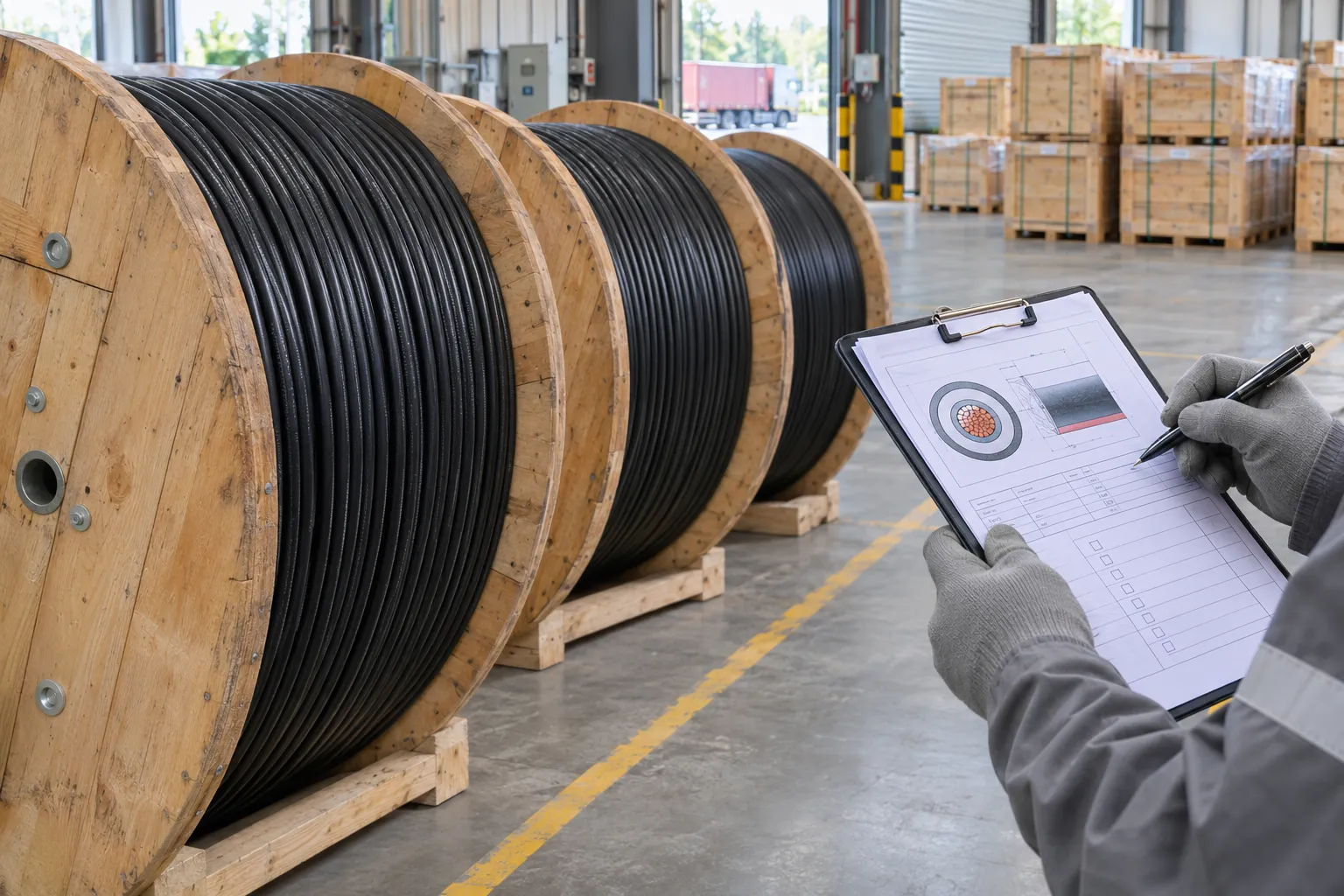
A complete cable inquiry helps suppliers provide an accurate and technically relevant quotation.
Provide the required cable voltage class: 15 kV, 25 kV, 35 kV, or another project-specific rating.
Do not simply request “medium-voltage cable.” The voltage class determines insulation requirements and affects the overall cable construction.
Copper provides higher conductivity for the same conductor size. Aluminum is lighter and can offer a cost-effective solution when the system design allows a larger cross-section.
The choice should consider ampacity, voltage drop, installation method, termination requirements, weight, and project budget.
Single-core cable is often used in higher-current applications and certain duct-bank or substation projects.
Three-core cable may provide a more compact installation option for some distribution systems.
The correct construction depends on the cable route, system design, installation method, available space, and termination arrangement.
Installation conditions directly affect cable selection and ampacity.
Specify whether the cable will be installed in:
Underground duct banks
Direct burial
Cable trays
Tunnels
Indoor substations
Outdoor industrial areas
For direct-burial or mechanically demanding routes, the project may require additional sheath protection, armoring, water-blocking features, or a specific cable construction.
State the applicable project standard, test requirements, delivery location, required drum length, total quantity, and preferred delivery date.
If the project requires third-party inspection, routine-test reports, packing requirements, or special export documentation, include these requirements in the RFQ.
Avoid these common issues when preparing a medium-voltage cable inquiry:
Requesting “MV cable” without stating the voltage class
Omitting conductor material and cross-section
Not specifying single-core or three-core construction
Ignoring installation conditions
Not confirming termination and joint compatibility
Providing no information about the required standard
Requesting pricing without quantity, drum length, or destination
Clear information helps prevent quotation delays and reduces the risk of ordering an unsuitable cable configuration.
15 kV, 25 kV, and 35 kV cables serve different distribution needs. The correct choice is based on the actual system voltage, required capacity, installation method, conductor preference, accessories, and project specification.
A cable should not be selected because it is the lowest-cost option or the highest available voltage class. It should be selected because it fits the complete electrical and installation design.
Explore Jianyun Cable’s Medium Voltage Power Cable solutions for utility, industrial, renewable-energy, and infrastructure applications.
For a project-specific recommendation, send your voltage class, conductor preference, cable construction, installation method, standard, quantity, and delivery location through Jianyun Cable’s inquiry page.

