
Keep up to date with our latest company news and relevant industry knowledge.
Time: 2026-11-04 11:56:41 Source: Henan Province Jianyun Cable Co., Ltd.
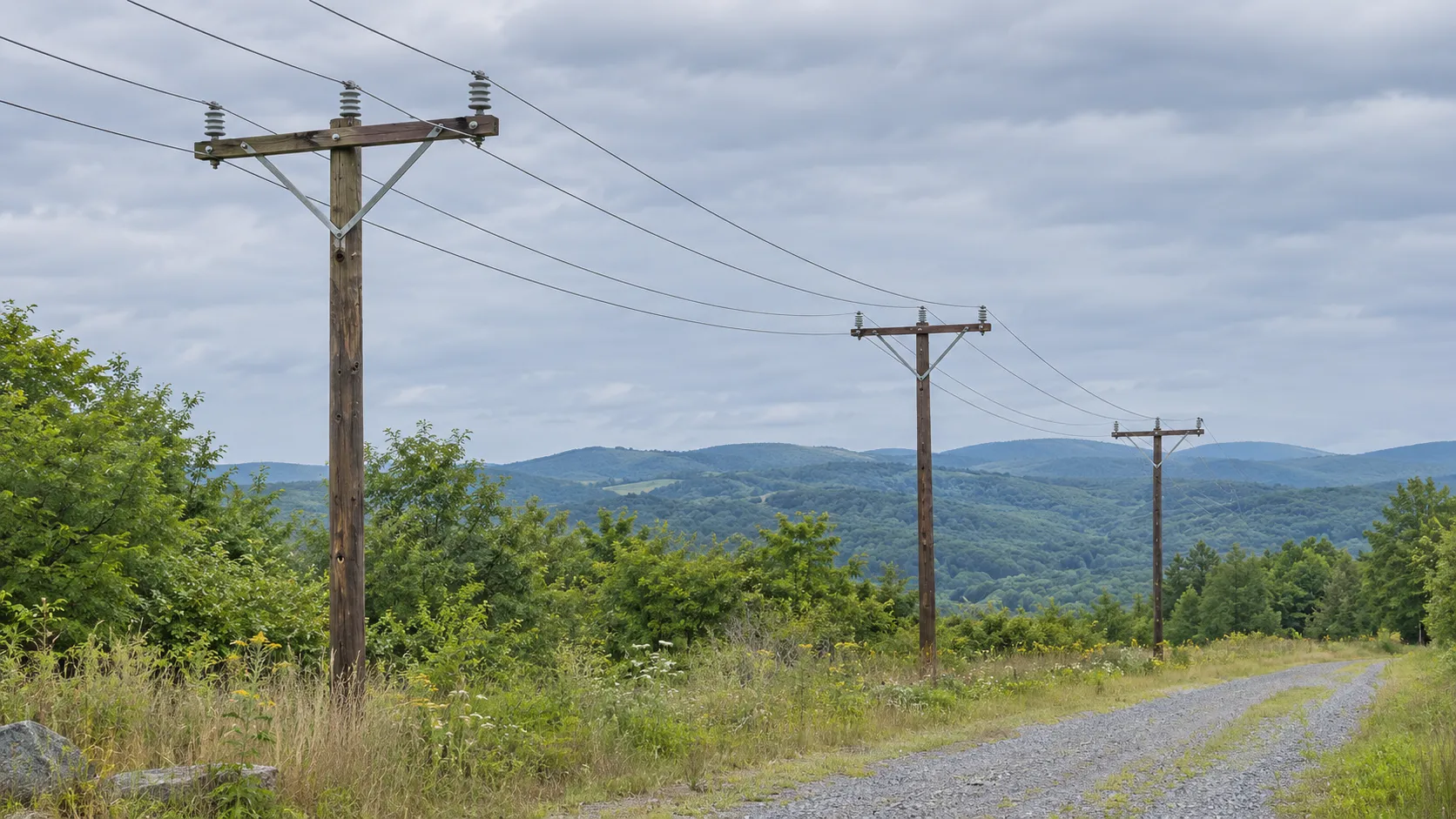
Modern grid upgrades require more than choosing the largest conductor size available. For overhead distribution and transmission projects, the right conductor depends on span length, mechanical loading, corrosion exposure, electrical requirements, and the project’s applicable standard.
AAC, AAAC, and ACSR are three common bare aluminum conductor types. They are not interchangeable.
| Conductor Type | Best Fit | Main Advantage | Main Limitation |
|---|---|---|---|
| AAC | Short spans and urban distribution | High conductivity and low weight | Lower tensile strength |
| AAAC | Humid, coastal, and corrosive locations | Good strength and corrosion resistance | Not always ideal for the longest spans |
| ACSR | Long spans and high mechanical loads | Steel core provides higher tensile strength | Core coating and corrosion conditions need review |
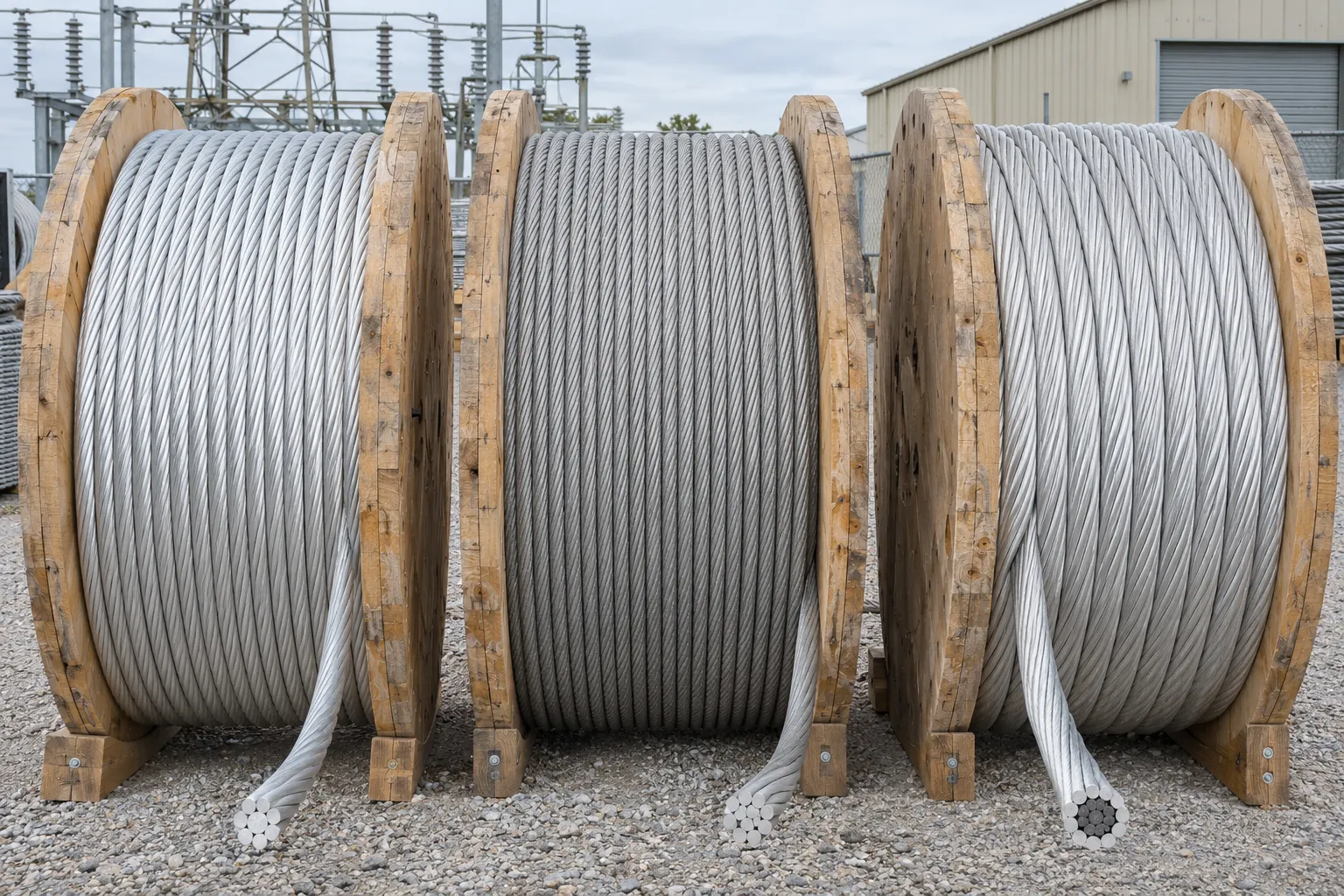
AAC stands for All Aluminum Conductor. It uses stranded aluminum without a steel reinforcement core.
AAC is commonly selected for primary and secondary distribution where span lengths are controlled and high mechanical strength is not the main requirement. It offers good conductivity and lower weight than steel-reinforced options.
Choose AAC when the project has:
Short spans between poles
Moderate wind and ice loading
Urban or suburban distribution routes
A focus on conductivity and lighter conductor weight
AAAC stands for All Aluminum Alloy Conductor. It uses aluminum-alloy wire to provide more mechanical strength than AAC while maintaining good electrical performance.
Because it does not use a steel core, AAAC is often a practical option for humid, coastal, and industrial locations where corrosion resistance is an important consideration.
Choose AAAC when the project has:
Moderate-to-long spans
Salt exposure, humidity, or industrial pollution
A need for better corrosion resistance
Distribution-line applications requiring a balance of strength and conductivity
ACSR stands for Aluminum Conductor Steel Reinforced. It uses aluminum strands around a coated steel core. The aluminum carries current, while the steel core adds tensile strength.
ACSR remains widely used where the line must handle longer spans, more demanding terrain, heavier loading, or stricter sag-control requirements.
Choose ACSR when the project has:
Long spans, road crossings, or uneven terrain
High wind or ice loading
Higher tensile-strength requirements
Greater sag-control needs
The steel-core type, coating, aluminum-to-steel ratio, and stranding construction should all be stated clearly in the specification.
A similar nominal size does not mean two conductors have the same electrical or mechanical performance.
Before approving a conductor, confirm:
Conductor type and stranding construction
DC resistance
Rated tensile strength
Outside diameter and weight
Operating temperature and ampacity assumptions
Sag-tension requirements
Environmental exposure
Required standard and test documents
For overhead-line projects, see Jianyun Cable’s AAC, AAAC, and ACSR Bare Conductor range.
A complete RFQ helps suppliers quote accurately and prevents costly clarification later. Include:
AAC, AAAC, or ACSR requirement
Required cross-section and stranding
Applicable standard
Project location and corrosion environment
Maximum span and loading requirements, if available
Required electrical and mechanical test data
Total quantity, drum length, and delivery location
AAC is often suitable for shorter spans and standard distribution. AAAC offers a useful balance of strength and corrosion resistance. ACSR is commonly selected when long spans and higher mechanical loads drive the design.
The best conductor is the one that matches your actual route, loading conditions, environment, and technical specification—not simply the lowest price per kilometer.
Need a project-specific recommendation? Send your conductor type, size, standard, installation environment, and quantity through Jianyun Cable’s inquiry page.

